Emerald Fennell's 'Wuthering Heights' Casting Ignites Hollywood and Literary Firestorm
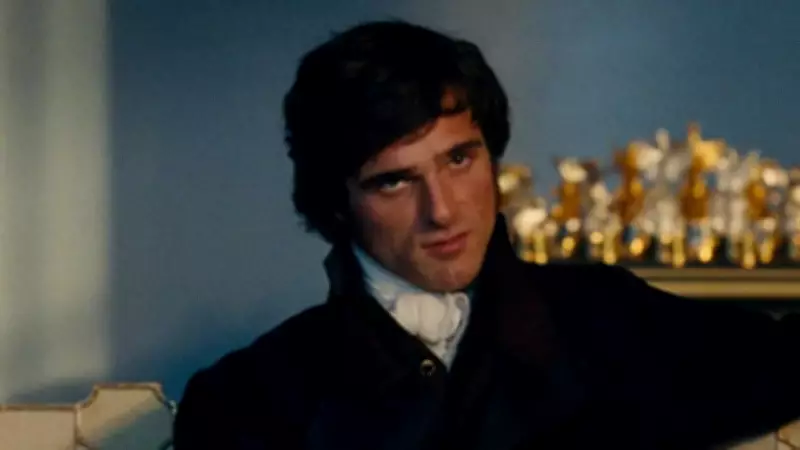
When director Emerald Fennell unveiled her bold new cinematic interpretation of Emily Brontë's timeless novel 'Wuthering Heights', the announcement sent shockwaves through both Hollywood and literary circles worldwide. The revelation that heartthrob Jacob Elordi would portray the tormented Heathcliff alongside Margot Robbie as the passionate Catherine Earnshaw immediately captured global attention, merging two of cinema's most sought-after stars with one of literature's most haunting and complex love stories.
The internet erupted with polarized reactions almost instantaneously. While many celebrated the casting as a daring and contemporary approach to a classic narrative, significant criticism emerged, particularly targeting Elordi's selection as Heathcliff. This controversy has sparked a much broader conversation about what it truly means to adapt a literary masterpiece like 'Wuthering Heights' for modern audiences in 2026, touching upon themes of race, representation, and artistic interpretation.
Understanding the Essence of 'Wuthering Heights'
Before delving into the casting controversy, it's essential to revisit the novel's core elements. 'Wuthering Heights' stands apart from conventional romance narratives. Set against the wild, windswept Yorkshire moors, the story follows Heathcliff, a mysterious foundling adopted by Mr. Earnshaw, and his intense, destructive relationship with Catherine Earnshaw, a woman who ultimately chooses social status and financial security over their profound connection.

This fateful decision unleashes a tempest of obsession, vengeance, and heartbreaking consequences that span generations. Emily Brontë crafted not a comforting love story but a raw, often brutal exploration of outsider status, emotional intensity, and human suffering. The novel's refusal to romanticize pain and its deep psychological complexity have cemented its status as a literary landmark for nearly two centuries.
The Jacob Elordi Casting Controversy: Race and Representation
The debate surrounding Jacob Elordi's casting as Heathcliff has proven particularly intense and persistent. At the heart of this controversy lies Heathcliff's racial identity within Brontë's original text. Literary scholars and devoted readers note that Brontë deliberately described Heathcliff using terms like 'gypsy' and 'Lascar' (a historical term for South Asian sailors), strongly suggesting he was not white. This otherness fundamentally shapes his character's experiences of prejudice, exclusion, and relentless struggle within the narrative.
Critics argue that casting a white Australian actor like Elordi effectively erases this crucial dimension of Heathcliff's identity. They contend this decision risks reducing Heathcliff to merely another brooding romantic figure, thereby diluting the novel's powerful commentary on race, class, and social alienation. The concern is that such casting choices might transform the story's tragic depth into a more conventional, palatable cinematic romance.
Artistic Interpretation Versus Fidelity to Source Material
Early promotional materials for Fennell's adaptation have received praise for their visual style and the actors' performances. However, some longtime 'Wuthering Heights' enthusiasts express skepticism about whether the film will preserve Heathcliff's darker, more frightening qualities. They worry the adaptation might soften his edges to make him more universally appealing, potentially undermining the character's complexity and the story's raw emotional power.
Director Emerald Fennell has vigorously defended her creative decisions, asserting that Elordi perfectly embodies her vision of Heathcliff and possesses the emotional range required for the role. Margot Robbie has similarly urged audiences to reserve judgment until viewing the completed film, expressing confidence in their collective artistic approach.

Expert Perspectives on the Casting Debate
Academic voices have added substantial depth to this ongoing discussion. Claire O'Callaghan, a Victorian literature specialist at Loughborough University, emphasizes that Heathcliff's ambiguous identity makes him an inclusive character who resonates across diverse cultures and communities, particularly those historically marginalized or affected by colonialism.
'The ambiguity makes Heathcliff's character really inclusive,' O'Callaghan explains. 'He ends up speaking to all kinds of people, cultures, and communities, especially those who felt the impact of colonialism, who were othered, abused, and oppressed.'
Andrea Kaston Tange, another Victorian literature professor at Macalester College, interprets Heathcliff's difference as Brontë's subtle commentary on Northern England's colonial wealth and historical amnesia. 'Heathcliff is symbolic,' Tange notes. 'When you name someone, call them whatever you want, and then erase where they really came from — there's a long history of that.'
Both scholars challenge the notion that Brontë was unaware of racial dynamics, pointing to the Brontë siblings' childhood writings about colonial themes and characters of color. O'Callaghan describes claims of Brontë's racial naivety as 'naive' themselves, highlighting the author's deliberate and powerful narrative choices.
Historical Context and Industry Patterns
Casting white actors as Heathcliff is not unprecedented; legendary performers like Laurence Olivier, Richard Burton, and Ralph Fiennes have all undertaken the role. James Howson made history as the first actor of color to portray Heathcliff in an English-language film with Andrea Arnold's 2011 adaptation. Despite this milestone, many view each subsequent white casting as another missed opportunity for meaningful representation.
Soraya Giaccardi Vargas, a senior researcher at USC's Lear Center, contextualizes this issue within broader media patterns. 'It's not about one movie,' Vargas states. 'It's about decades of erasure. BIPOC communities are still massively underrepresented in media. So, whenever there's a shot to cast an actor of color and producers go another way, it stirs up questions: Do these communities really matter to the people making these decisions?'
Fennell's Defense and Additional Casting Choices
At the Los Angeles premiere, Emerald Fennell addressed the backlash by emphasizing her personal interpretation, indicated by quotation marks in the film's title. 'You can only really make the movie you imagined when you first read it,' she explained, referencing her teenage encounter with the novel.
However, critics question whether this personal vision adequately engages with the text's racial dimensions. Kaston Tange acknowledges that perspectives change with maturity but stresses directorial responsibility. 'I get it: you read it when you were young, maybe you missed things. But you're not 15 anymore. You're directing a movie. You have to pay attention to the whole story.'
Interestingly, Fennell's adaptation casts actors of color as Nelly Dean and Edgar Linton, characters Brontë explicitly described as white. This decision has drawn mixed reactions, with some scholars arguing it complicates the narrative without clear purpose. Tange suggests it 'muddies the waters for no good reason,' while O'Callaghan reiterates that the novel encompasses far more than romance, exploring hate, cruelty, passion, and haunting in equal measure.
Renewed Interest in Brontë's Classic
Despite—or perhaps because of—the controversy, Fennell's adaptation has dramatically revived public interest in 'Wuthering Heights'. Sales data reveals a remarkable surge: in the United States, print copies more than doubled to 180,000 in 2025. The United Kingdom witnessed an even more dramatic increase, with January 2026 sales soaring to over 10,600 copies, a staggering 469% rise from the previous year's 1,875 copies.
O'Callaghan views this renewed engagement positively, noting that many viewers discover the novel's true complexity through the adaptation discourse. 'People watch the trailer, check out the movie, and get totally surprised — the book isn't what they think it'll be,' she observes. While acknowledging that no film can fully capture Brontë's layered masterpiece, she concludes, 'if it sends people back to the book, that's a win.'
The ongoing debate surrounding Emerald Fennell's 'Wuthering Heights' highlights enduring tensions between artistic vision, faithful adaptation, and contemporary values of representation. As audiences await the 2026 release, the conversation continues to evolve, ensuring that Emily Brontë's haunting tale remains as relevant and provocative today as it was upon its initial publication.