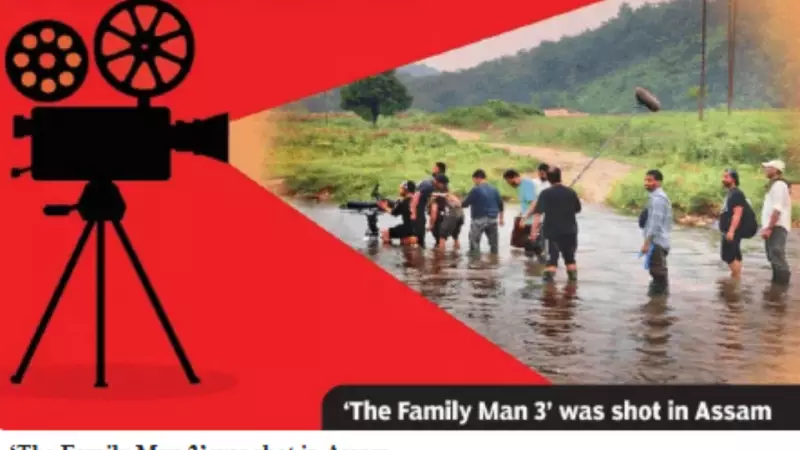
For decades, the visual shorthand for India's cinematic 'badlands' was a familiar one: the dusty highways and grudge-holding men of the Uttar Pradesh-Bihar belt. That compass is now pointing decisively North-East. Once barely on the mainstream filming map, the region has become, in just three years, the preferred backdrop for Hindi cinema and streaming's biggest crime and thriller titles.
From Folklore to Frontier Politics: The New Cinematic Canvas
Filmmakers are actively mining the Northeast's unique cultural and geopolitical landscape. They are exploring local folklore, cross-border politics, dense forest corridors, and trafficking routes. This provides a fresh set of tensions and terrain where stories of drug deals, political beheadings, border breaches, and tested relationships can unfold.
The shift is evident in major productions. Director Anubhav Sinha's 'Anek' was inspired by conversations about the stalled 2015 Naga Peace Accord and questions of identity. The Varun Dhawan-starrer 'Bhediya' drew from Arunachal Pradesh's shape-shifting werewolf legends. Kangana Ranaut's 'Emergency' was shot across Assam, including Kaziranga and Karbi Anglong, while 'Fighter' staged key action sequences at the Tezpur Air Force Station.

The OTT surge cemented this trend. Shows like 'Jaanbaaz Hindustan Ke' utilized Meghalaya's dense Tura jungles. 'Paatal Lok 2' filmed deep across Kohima and Assam, employing Nagamese and local actors. The upcoming 'The Family Man 3' is set in hill and border towns like Kohima, Khonoma, Jakhama, and Jotsoma.
Safety, Logistics, and the Infrastructure Push
According to Simanta Shekhar, chair of the Assam State Film Finance and Development Corporation, this cinematic migration was enabled by improved infrastructure like roads and airports. He also dispels the myth of the region being unsafe. "There is less instability and crime indices are low, and people roam till midnight," he states, adding that the woman-centric societies of most Northeastern states are reassuring for visiting crews.
Line producer James Handique, who facilitates shoots in the region, confirms that crews have faced no tensions during productions, with Manipur being a current exception due to unpredictable shutdowns. The primary challenge remains logistics. Accommodation, equipment availability, and transport can still force productions to consider shifting to similar terrains in Thailand or Malaysia mid-shoot.
Governments are now responding. Handique notes expansions in homestays, community tourism projects, road improvements, and investments in film infrastructure. Assam's new film policy, awaiting cabinet approval, promises lucrative subsidies and faster permissions. However, flying a 300-person crew from Mumbai remains costlier than shooting in Bangkok.
Beyond Stereotypes: Cultural Consultants and Nuanced Storytelling
When filmmakers focus on the region's darker aspects, authorities like Simanta Shekhar don't object, provided the storytelling is fair. "They can show it, but in a positive way of how it's tackled," he says. Handique agrees, citing that The Family Man 3's depiction of Nagaland as a narcotics corridor from Myanmar is factually accurate and, if done responsibly, can raise awareness.
To ensure authenticity and move beyond clichés, a new writers' room is being formed. Handique has handpicked regional writers and experts to connect them with national creative teams. Folklorist Professor Meghna Choudhury, part of this initiative, hopes filmmakers will look beyond "forests, insurgency and inaccessibility."
On the ground, local involvement is crucial. For 'Paatal Lok 2', cultural consultant Anungla Longkumer ensured Naga tribal costumes were stylistically and coloristically correct, with authority to remove anything that might hurt community sentiments. Filmmaker Tiakumzuk Aier served as a dialect coach and actor, while his troupe from Dreamz Unlimited provided significant local crew support. Handique recalls daily crews of 2,000, with 200-300 locals gaining valuable experience.

As Longkumer emphasizes, the region is far more than the "headhunter or warrior tribe stereotype." With states sharpening their incentives and local talent ensuring nuanced portrayal, the Northeast has firmly established itself as Bollywood and OTT's most compelling new frontier.