The Art of Speed Painting: Vilas Nayak's Journey from Introversion to International Stage
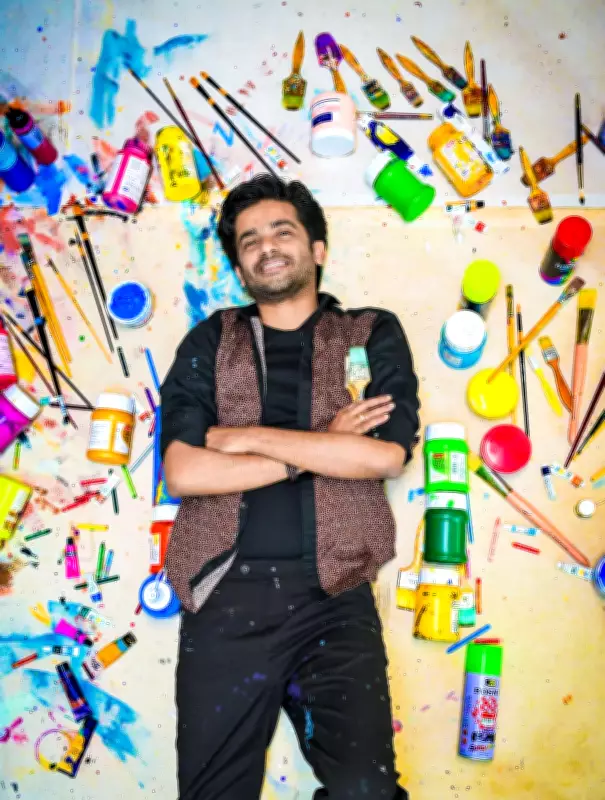
He makes it look completely effortless — paint flying through the air, music swelling in the background, an image emerging before the audience even fully grasps what they're witnessing. But as acclaimed speed painter Vilas Nayak reveals, the magic is anything but spontaneous. It is meticulously rehearsed, refined, and sometimes practiced over a hundred times before ever reaching the stage.
From Hesitation to Habit: A 22-Year Journey
For Vilas, speed painting began unexpectedly during his college years, when friends and lecturers first nudged him to perform. "I was an extremely introverted kid. Going on stage was my biggest challenge," he confesses. What began as hesitation slowly transformed into habit — and eventually into a lifelong calling. "It's been 22 years now. I wanted to give people a chance to watch art unfold right in front of them," he explains, highlighting his mission to make the creative process visible and accessible.
The Delicate Balance of Performance Art
When Vilas steps onto a stage, he faces the dual challenge of completing a painting while navigating everything that comes with live performance. "Most of the time I'm well prepared, I know exactly how much time I have," he says. Yet unpredictability remains inevitable. The music might end sooner than anticipated. The audience could fall unexpectedly silent. Doubt can creep in at any moment.

He identifies a critical tension in his work: "If I focus too much on entertaining, the canvas suffers. If I concentrate only on the details, the audience disengages." This requires a precise balance. "In those five minutes, adrenaline, insecurity, instinct and control all collide," he elaborates, describing the intense psychological landscape of each performance.
The Hidden Labor Behind the Magic
What appears effortless to audiences represents countless hours of unseen work. "Most reality shows give you less than three minutes," Vilas notes, explaining the pressure of television formats. Completing a large-scale painting in just two-and-a-half minutes demanded extraordinary practice. His process reveals the gradual refinement:
- The first attempt might take 10 minutes
- After 20 repetitions, it drops to seven minutes
- After a hundred practices, it finally reaches the target two-and-a-half minutes
He photographs every rehearsal, studies errors meticulously, and refines both strokes and timing. "People see five minutes on stage," he observes. "They don't see the months of preparation behind it."
The Unending Pursuit of Perfection
Applause doesn't automatically translate to personal satisfaction for Vilas. "There are shows where the audience gives me a standing ovation, and I'm still thinking about the mistakes I made," he admits. Even after 1,000-plus performances and 15 years as a full-time professional artist, the self-assessment continues relentlessly. "I often feel I'm not doing enough," he reveals, demonstrating the artist's perpetual drive for improvement.
Bengaluru: The Gateway to Global Recognition
Moving to Bengaluru in 2006 marked a definitive turning point in Vilas's career. Coming from a small town, the city exposed him to diverse cultures, varied musical influences, different audiences, and valuable mentors. "Before I traveled extensively internationally, Bengaluru was my gateway to the world," he acknowledges gratefully.
It was here that he met senior artists who guided his development, performed at large-scale festivals that expanded his visibility, and found the confidence to stand before 20,000 people at Palace Grounds. Many early shows were completely unpaid, but each became an essential stepping stone. "I'm profoundly thankful to the people who gave me those initial opportunities," he reflects.

Speed Painting as Immersive Experience
For Vilas, music isn't merely background — it provides structure and drives storytelling. "If I'm painting about peace, I'll play 'Heal the World'," he illustrates. The audience simultaneously listens and watches the narrative unfold visually. Though not formally trained in music, he admits, "I sing when I'm alone." Often, inspiration arrives through sound first. "For me, speed painting isn't just visual — it's an emotional, completely immersive experience," he concludes, defining his unique artistic philosophy.