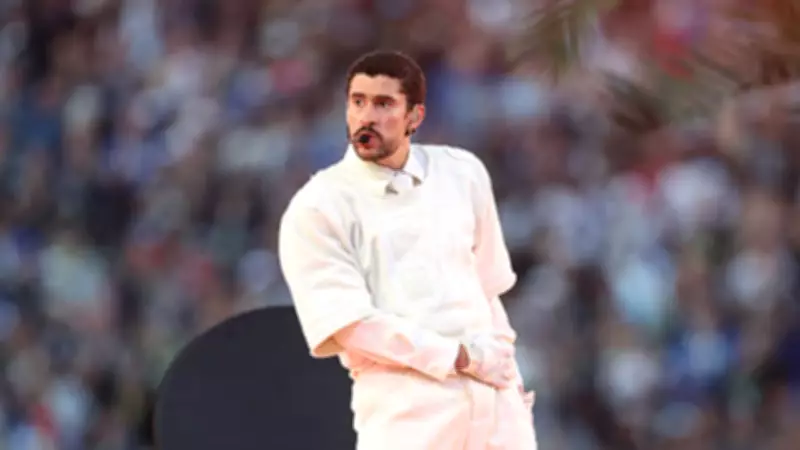
Bad Bunny Delivers Theatrical Puerto Rican Tribute at Super Bowl LX Halftime Show
Bad Bunny served as the opening act for the Apple Music Super Bowl LX halftime set on Sunday night, delivering a theatrical and deeply personal tribute to his homeland of Puerto Rico. The performance at Levi's Stadium masterfully wove hit after hit into a vibrant postcard of Puerto Rican life, creating a tableau that blended sugar-cane work scenes with street-corner moments filled with dancers, drums, musicians, and neighbors.
Intimate Moments Within a Massive Spectacle
The enormity of the Super Bowl event was evident throughout, yet the show found an intimate heartbeat through surprise cameos and a real wedding ceremony on the field. This blurred the lines between grand spectacle and communal ritual, making the performance feel both globally significant and personally resonant. Some of the most poignant details were subtle, such as Bad Bunny wearing a white jersey with the name "Ocasio" (his family name) and the number 64—a wink to heritage that flashed by quickly but held deep meaning for millions of fans.
A respectful handshake with reggaeton elders and a closing call for togetherness transformed the pop concert into a cultural imprimatur, firmly placing Puerto Rican and Latino identity on America's largest stage. Pride swelled across the island and in diaspora communities as the set was hailed as a colorful and powerful tribute to cultural identity.

Hidden Details and Symbolic Storytelling
Many of the night's most revealing moments came through wardrobe and staging rather than lyrics. Fans eagerly deciphered the symbolism in Bad Bunny's football-style jersey, which featured personal references that became immediate talking points online. Throughout the set, he raised little props, such as passing a Grammy award to a child near the stage and pausing for a real couple's wedding under the stadium lights.
These actions recontextualized the star as part of a community, rather than a distant celebrity above it. Carefully choreographed nods to reggaeton pioneers were strategically sprinkled throughout, offering an understated tribute to the artists who paved the way. Elements of production that might have seemed like mere flourishes instead carried the weight and permanence of cultural history.
Cultural Pride and Subtle Political Commentary
While the music and dance numbers were spectacular, the true richness of the halftime show came from its cultural callbacks and subtle political critique. Images of Puerto Rican neighborhoods, power grids, and family gatherings evoked the island's trauma and perseverance in the face of challenges. The set design, built to recreate familiar storefronts and plazas, felt like a heartfelt tribute to the spaces that shaped Bad Bunny as a performer.
The inclusion of mainstream star power, such as a surprise duet with Lady Gaga, never strayed too far from the artist's origins. As expected, the performance sparked widespread chatter beyond the stadium. While some critics accused it of being too bold in its cultural focus, supporters celebrated it as a long-overdue moment for Latino representation in American pop culture.
By centering Spanish lyrics, Caribbean beats, and imagery of daily Puerto Rican life, Bad Bunny provided not only entertainment but also a profound statement. He suggested that Latin culture deserves a central place on the nation's most important stage, not merely a peripheral one. Ultimately, the performance was more than a musical feat; it was a declaration of heritage, a celebration of history, and a powerful expression of community pride.