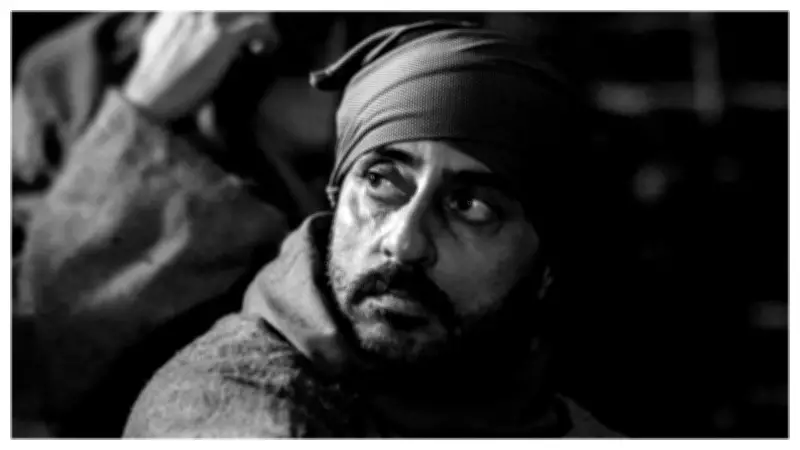
Ashwath Bhatt Brings 'Avalanche' to Ahmedabad, Reflects on Career and Cinema
Versatile actor Ashwath Bhatt, celebrated for his powerful performances in films such as The Diplomat, Sita Ramam, Kesari, and Raazi, is set to stage his acclaimed play Avalanche for the first time in Ahmedabad this Sunday, February 15, as part of the Bharat Rang Mahotsav. In an expansive conversation, Bhatt shares his deep connection with Gujarat, his artistic journey, and insightful perspectives on the Indian entertainment industry.
Revisiting Gujarat and Embracing Comedy
Bhatt fondly recalls previous visits to Ahmedabad, where he performed Ek Mulaqat Manto Se years ago and filmed a short project at the National Institute of Design. "I remember shooting at the Sabarmati Riverfront; it felt like a smaller version of the Thames in London. You should now have an Amdavad Eye just like the London Eye," he jokes. He also mentions enjoying Gujarati thali in Vadodara during a documentary shoot, highlighting his appreciation for the region's culture.
Despite being known for intense roles in Tamil, Telugu, Malayalam, Bengali, and Kashmiri cinema, Bhatt is eager to break into comedy. "I am open to everything if the role is good. I manifested comedy, and I am doing out-and-out commercial comedy right now. I would love to explore humour and comedy on screen," he asserts. He acknowledges that his serious looks often lead to typecasting, citing director Vikram Bhatt's comment about his "amazing eyes" as a reason. "Directors have told me, 'I want to use your eyes and looks.' But I tell them I can do comedies as well. If I have been able to do it in theatre, I can do it on camera too," Bhatt adds, emphasizing his versatility.

OTT Revolution and Industry Dynamics
Bhatt praises the Over-The-Top (OTT) platform boom as a transformative force in entertainment. "It is a brilliant platform. Before OTT, a lot of talent got wasted. It has created its own stars, who would have gone unrecognised otherwise," he notes. He points out that actors in their 50s or 60s now gain recognition, unlike in the late '90s or early 2000s when opportunities were limited to commercial Hindi or art cinema. "Small films are now getting platforms to be showcased," he adds, underscoring the democratizing effect of digital streaming.
However, Bhatt expresses concern about the challenges facing independent cinema. "These days, even OTT is not accepting films unless you have a theatrical release, and if it doesn't work there, OTT reduces its price. But what about small films then? We need to create spaces for independent cinema; else it won't survive," he warns. He criticizes the dominance of big-star movies in theatres, which often leaves smaller films with odd-hour screenings. "You do not give shows to smaller films, except at odd hours, and then you say audience nahi jaa rahi hai. The audience wants to watch good films, but they also need shows," he explains.
On Nepotism and Star Culture
Addressing the nepotism debate in Bollywood, Bhatt offers a nuanced view. "Indian audience is very star-driven, and that's the reason why the Khans, Kapoors and Kumars exist," he observes. He doesn't oppose star kids outright, comparing it to professionals promoting their own children. "I don't believe in nepotism; a doctor promotes his own son, and a businessman promotes his own children. There's nothing wrong with promoting your own child," he says. His issue arises when talent is sidelined unfairly. "My problem is when a genuinely talented person is cast, but you get them kicked out of the film for your own kids even when your kid has delivered flops."

Art as Healing and the Legacy of Manto
Bhatt credits art with transforming his perspective on personal trauma. "Art came into my life and changed the way I was looking at trauma. I started laughing again and understood the power of red nose clowning. It healed me, taught me a lot about life," he shares. This healing journey inspired his Theatre Garage Project, which focuses on "finding something in nothing" and spreading joy in places like orphanages and cancer hospitals. "Accepting is the key; the clown is the master of acceptance," he reflects, drawing from his family's experiences with cancer.
Having portrayed writer Saadat Hasan Manto on stage for nearly 25 years, Bhatt says, "Playing Manto has made me evolve as a person. Reading him makes me understand how hypocritical and loving a human can be out of nowhere." He admires Manto's unflinching honesty, noting that his harsh Urdu words often offended people, leading to reservations about his work. "Manto exposed the hypocrisy, but it also deeply touches you," Bhatt adds. He expresses interest in performing more of Manto's works, such as Chacha Sam Ke Naam Khutoot, and stories by Anton Chekhov, Premchand, and Kafka.
Giving Back to Kashmir and Personal Growth
As a Kashmiri Pandit who left the region as a teenager, Bhatt carries emotional baggage but remains committed to his roots. "I always look for a reason to go back to Kashmir, be it for plays or film shoots. I do not have a house there, but it is still my motherland," he says. He actively contributes to his community, finding happiness in giving back. "Whenever you face anything traumatic like caste-based violence, injustice, or prejudices, there are always two choices: you can be a better person or a bitter person. You have to choose which one you want to become," he concludes, highlighting his resilience and positive outlook.