Anurag Kashyap's Fearless Reflections on Modern Indian Cinema
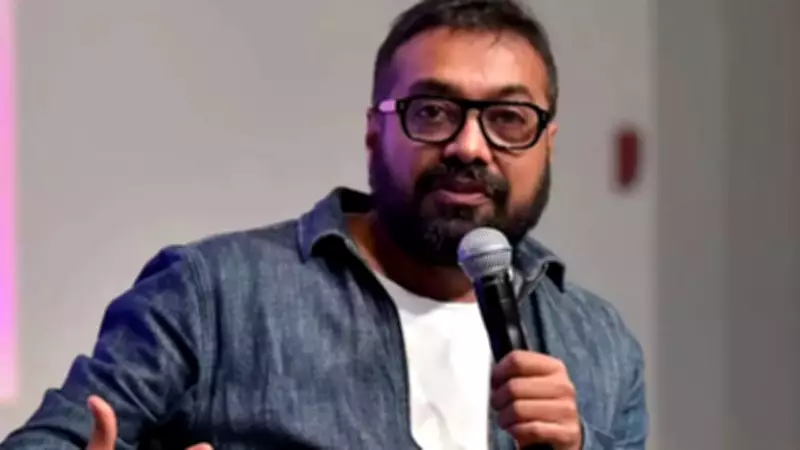
Bollywood actor-director Anurag Kashyap recently delivered a thought-provoking session at the 17th Bengaluru International Film Festival, where he shared his unfiltered perspectives on cinema, politics, and the shifting landscape of audience behavior. The discussion, titled Fearless Film Making, was moderated by renowned film critic Baradwaj Rangan, providing a platform for Kashyap's candid observations about the current state of Indian filmmaking.
The Changing Climate of Filmmaking
Reflecting on how the environment surrounding film production has transformed over the years, Kashyap made a striking admission about his own career trajectory. He acknowledged that the type of films that once defined his creative identity may no longer be feasible in today's climate. "In today's times, making films like Gangs of Wasseypur or Black Friday is impossible," he stated frankly. "Some subjects have become politically sensitive and lead to controversies that filmmakers must navigate carefully."
Drawing Inspiration from Global Filmmakers
Kashyap urged Indian directors to look beyond national borders for creative inspiration, pointing specifically to filmmakers working under more restrictive conditions. "Directors from countries like Iran or Russia are making films despite facing far greater restrictions than us," he noted. "Indian directors should draw inspiration from their resilience and ability to tell bold stories within challenging frameworks."

Analyzing Recent Films and Industry Trends
When discussing the recently released film Dhurandhar, Kashyap offered nuanced praise while expressing reservations about certain creative choices. "This is a good example of a courageous mainstream film. I liked the film, but I didn't like some of the ideologies," he commented. He specifically mentioned that certain political insertions could have been avoided without diminishing the film's impact.
Kashyap also weighed in on the frequent labeling of films as propaganda, arguing that the term itself is often misused. "Calling films 'propaganda' or 'promotion' is itself a form of propaganda," he remarked. Drawing a comparison with Hollywood, he added, "Hollywood's Marvel films propagate American supremacy, but no one criticises them from that perspective with the same frequency."
Addressing Cultural Hypocrisy and Double Standards
The filmmaker addressed the controversy surrounding the teaser of the Kannada film Toxic, calling it an extremely brave attempt that revealed societal double standards. "The outrage expressed against the teaser reveals our cultural hypocrisy," he stated. "When male actors appear shirtless on screen or display excessive machismo, no one questions it. But when a woman celebrates her sexuality, it becomes hard for society to accept."
Upcoming Projects and Industry Observations
In exciting news for literary and film enthusiasts, Kashyap revealed that he is producing a Kannada film adaptation of celebrated writer Vivek Shanbhag's novel Ghachar Ghochar. "The film is currently in the scripting stage and will later be made in Hindi as well," he shared, adding that details about the director and cast will be announced soon.
Commenting on evolving viewing habits, Kashyap observed that audiences today increasingly watch films on their mobile phones, making it harder for slow-paced narratives to hold attention. "This is the result of changes in technology, not the fault of the audience," he analyzed thoughtfully.
Historical Perspective on Political Cinema
When questioned about political films and resistance in cinema, Kashyap offered a historical perspective that emphasized timing. "In Germany, films against Hitler came only after Hitler died. Everything requires its own time," he said, underlining his belief that cinema often reflects society in hindsight rather than in the moment.

Throughout the session, Kashyap's comments revealed a filmmaker deeply engaged with both the artistic and socio-political dimensions of cinema, offering valuable insights into the challenges and opportunities facing contemporary Indian filmmakers.