Amaal Mallik Engages in Bollywood's Power Structure Debate Following AR Rahman's Remark
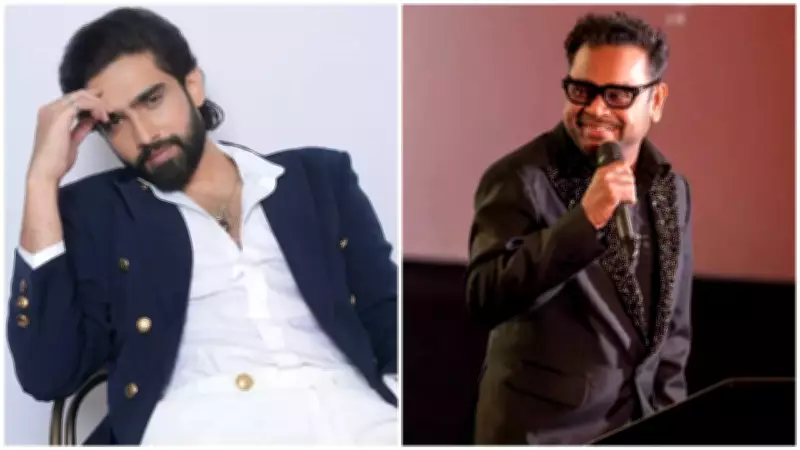
The recent observation by Oscar-winning composer AR Rahman regarding perceived communal bias within Bollywood has ignited a significant industry-wide discussion. Adding his perspective to this evolving conversation, prominent singer-composer Amaal Mallik has expressed nuanced views, acknowledging the validity of Rahman's underlying concerns while challenging the specific communal framing of the issue.
Industry Figures Voice Opposition to Rahman's Communal Interpretation
Several distinguished personalities from the entertainment world, including Rani Mukerji, Kangana Ranaut, Javed Akhtar, and Manoj Muntashir, have publicly opposed Rahman's characterization of the situation as having communal undertones. This collective response underscores the sensitivity and complexity of the topic within the film fraternity.
Amaal Mallik's Detailed Analysis of Industry Power Dynamics
In a comprehensive interview with Faridoon Shahryar, Amaal Mallik elaborated on his stance. He affirmed that Rahman's identification of certain power structures in the industry carries substantial weight. From an industry perspective, what he has said is largely correct. However, I do not agree with the communal aspect of it, Mallik stated, redirecting the focus toward contemporary business models.

He explained that beyond discussions of nepotism and groupism, the current landscape is heavily influenced by music labels. Forget nepotism and groupism — today, every label is comfortable working with its own set of artistes. They promote those artistes because they bring revenue. In today's time, labels have become the real decision-makers, Mallik emphasized, highlighting a shift in creative control.
The Role of Creative Groupism and Artistic Synergy
Delving deeper into collaboration patterns, Mallik pointed out that creative groupism has long been a feature of Bollywood, often arising from artistic compatibility rather than exclusionary practices. This is the era of management and agencies. There is groupism, both in good and bad ways, he noted.
To illustrate his point, he cited enduring creative partnerships: You can see how Mani Ratnam sir works almost exclusively with Rahman sir, or how Anurag Basu mostly collaborates with Pritam da. I once told Anurag Basu sir that I love his work, and he said he only thinks in Pritam's musical language. These creative synergies naturally form.
Mallik added a crucial caveat regarding meritocracy: Labels are comfortable with their artistes — and there's nothing wrong with that. But if someone is making better music, they should be given priority, whether it's AR Rahman or a newcomer.
Even Legends Face the New System's Constraints
Amaal Mallik further addressed the evolving power dynamics, suggesting that even the most celebrated composers are not immune to the current system's limitations. The industry wants to work with big names like AR Rahman and Pritam da. There are only a few such composers, yet none of them are working as much as Pritam da. There are several big composers and many newcomers too. It's not about targeting anyone, he clarified.
He described a systemic shift over the past decade and a half: Over the last 15 years, a new system has come into place where labels prefer to stick to their own artistes and won't wait for anyone to say yes — not even me or AR Rahman. That's just how things work today. And if AR Rahman can't challenge this system, how can someone like me? This reflection underscores the pervasive nature of these industry changes.
Clarifying Rahman's Intent: A Tip of the Iceberg
Mallik was careful to clarify that Rahman's comments should not be misinterpreted as stemming from personal insecurity. The only way forward is to focus on making good music. I don't run behind doing 15 films at a time. I understand what he is trying to say. This is not AR Rahman's insecurity — he is far too big for that, he asserted.

He framed Rahman's remark as indicative of a broader issue: He is only showing the tip of the iceberg. He is pointing out that even someone of his stature can be sidelined. The bigger players today have a bigger say and are overpowering the system. This interpretation positions the controversy as a symptom of deeper structural shifts within Bollywood's music industry.
Context: AR Rahman's Original Statement and Aftermath
The debate originated from AR Rahman's comments during a recent interaction with BBC Asian Network, where he discussed receiving fewer work offers in Bollywood. People who are not creative have the power now to decide things, and this might have been a communal thing also, but not in my face. It comes to me as Chinese whispers that they booked you, but the music company went ahead and hired their five composers. I said, 'Oh, that's great, rest for me, I can chill out with my family', Rahman had remarked.
Following significant online backlash, the acclaimed composer issued a formal apology via a video statement on social media, clarifying that he had no intention to hurt any sentiments. This sequence of events set the stage for the ongoing industry introspection, with figures like Amaal Mallik contributing thoughtful analyses that separate structural critiques from communal interpretations, thereby enriching the dialogue about Bollywood's evolving ecosystem.