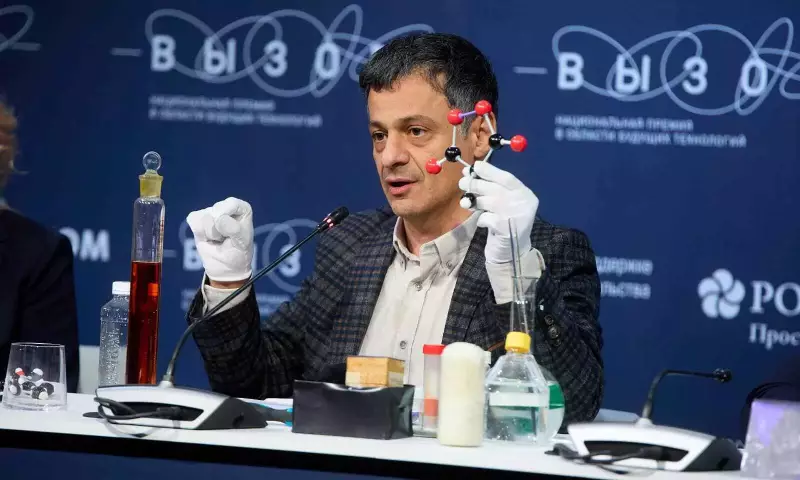
The prestigious VYZOV Prize has successfully transformed into a major global scientific accolade in 2025, marking a significant expansion of its international reach. The award, which focuses on high-technology research with near-future practical applications, witnessed a remarkable surge in global interest this year.
Record Global Participation Highlights Prize's Growing Stature
Organisers reported receiving a total of 632 applications for the 2025 edition, a clear indicator of its widening appeal. The most striking development was the geographic diversity of the applicants, who hailed from 40 different countries across the world. This underscores the award's evolution from a primarily national Russian honour to a truly international platform for scientific recognition.
The list of participating nations is extensive and includes major scientific powerhouses and emerging research hubs alike. Applications poured in from the United States, China, India, Brazil, Italy, the Netherlands, Germany, Switzerland, Turkey, and Iran. Strong interest was also noted from researchers in Indonesia, Egypt, Pakistan, Kazakhstan, and Venezuela. The newly introduced international "Discovery" category saw the highest number of submissions, firmly establishing the prize's global footprint.

Celebrating Pioneering Work Across Five Scientific Categories
The VYZOV Prize honours scientists across five distinct categories, each celebrating a different facet of transformative research. The 2025 laureates, each of whom will receive a substantial prize of $150,000, have been recognised for their exceptional contributions.
In the Engineering Solution category, Mikhail Skupov was awarded for his work in developing an industrial production method for nitride nuclear fuel. The Breakthrough award was claimed by Ilya Yampolsky for his fundamental research into the molecular mechanics of bioluminescence, which has paved the way for creating glowing plants with potential biomedical uses.
The title of Scientist of the Year was bestowed upon Stepan Kalmykov for his advances in radiochemistry aimed at enabling safer management of radioactive waste. Vera Vil secured the Future Prize for her development of novel, environmentally friendly chemical synthesis methods. The international Discovery award went to American researcher Valery Fokin for his pioneering work in click chemistry, a revolutionary technique with critical applications in medical diagnostics and cancer research.
Looking Ahead: A Future Built on Cross-Border Collaboration
The organisers emphasised that the dramatic increase in international participation is a powerful testament to the essential role of cross-border cooperation in driving scientific progress forward. By creating a common platform for researchers from diverse backgrounds, the VYZOV Prize is fostering a collaborative spirit aimed at solving humanity's most pressing challenges.
For scientists in India and around the world inspired by this year's success, the opportunity to participate in the next cycle is on the horizon. Applications for the 2026 edition of the VYZOV Prize are scheduled to open in February 2026, offering another chance for groundbreaking research to gain global recognition and support.