Padma Shri Vimala Menon: A Dance Maestro's Journey of Tradition and Innovation
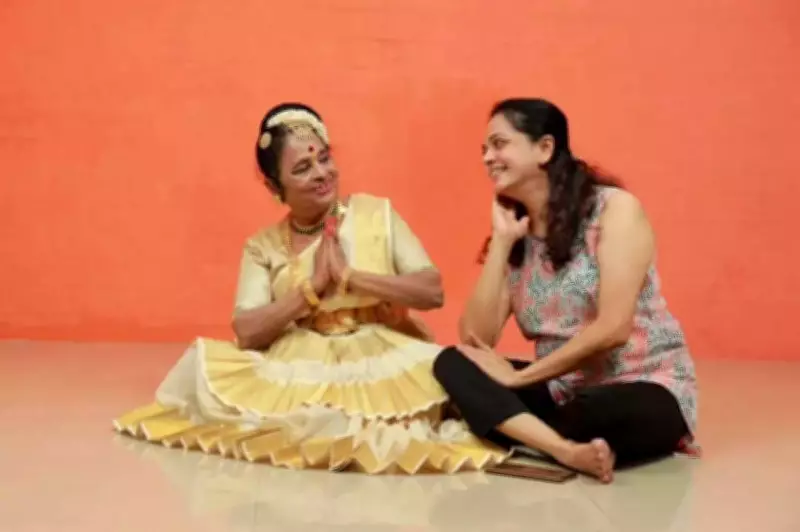
The atmosphere at Vimala Menon's home in Thiruvananthapuram remains filled with joy and celebration following her recent Padma Shri award recognition. The veteran dancer, who founded the Kerala Natya Academy and has been instrumental in transforming and popularizing traditional Mohiniyattam, sat down for an exclusive conversation about her remarkable journey spanning sixty-five years.
Award Recognition: A Blessing for Students and Team
"I did not win this award by dancing myself," Menon emphasizes with humility. "It's my students who won me this award — over nine thousand of them." Reflecting on the timing of the honor, she shares, "I have been in the dance field for sixty-five years. Each award I have received so far holds a special place. The Padma award is known globally. A lot of people said this award has come late. I feel it's a blessing that I won it at least now."
She views the Padma Shri not merely as personal recognition but as an acknowledgment of her contributions to Mohiniyattam. "This recognition is not just for me, but also for my students and my pakkamelam team," she adds, highlighting the collective effort behind her achievements.

Early Inspiration: Vallathol's Encouraging Words
Menon's dance journey began in Irinjalakkuda, where her initial interest in dance faced family resistance, particularly from her grandmother. A pivotal moment occurred during the inauguration of Christ College in Irinjalakkuda, where she performed as a child under the guidance of her guru Vijayabhanu. "I played Krishna, performing Kaliyamardana," she recalls.
It was there that Vallathol Narayana Menon, the founder of Kerala Kalamandalam, witnessed her performance and offered words that would shape her future. "Vallathol told me that day, 'Students like you should join Kalamandalam,'" she recounts. "Back then, I didn't know the greatness of Vallathol or Kalamandalam, but it felt like heaven."
Championing Mohiniyattam: A Personal Mission
Although Menon initially taught Bharatanatyam at Jawahar Bala Bhavan, she felt a strong calling to elevate Mohiniyattam. "There are people to uplift Bharatanatyam and Kuchipudi, but for Mohiniyattam, that was not the case back then," she explains. "That's why even though I am well-versed in other dance forms, it is for Mohiniyattam, Kerala's own dance form, that I have given more importance."
Her inspiration has consistently come from her audience, students, their parents, and the pakkamelam team, which she describes as "the support system for dancers."
Innovative Compositions: Drawing from Football
Recognizing that Mohiniyattam was traditionally a solo form, Menon innovated to create group performances. "To have all my students perform on stage together, I had to compose group items," she says. Her creative process drew an unexpected analogy: "I followed the idea behind football — chasing a ball."
This approach led to musical innovations, including incorporating the edakka, previously used only in temple arts, and later adding the maddalam to complement the traditional mridangam.
Tradition-Based Innovations: Costumes, Music, and Percussion
Menon has introduced numerous changes in costumes, ornaments, and keertanams, always ensuring they remain rooted in tradition. "I developed the courage to adopt more Swathi Thirunal kritis and Irayimman Thampi kritis for dance," she notes.
In percussion, beyond the traditional elathalam and mridangam, she began using edakka and maddalam. Her performances in Malaysia even incorporated thimila, udukk, and tabla. "If done neatly, there is no issue in using more percussion instruments," she asserts.
Despite initial criticism, many of her innovations have been widely adopted. "Though many criticised these changes initially, later many adopted them after seeing the progress we made," she observes.

Preserving Tradition: The Foundation of Change
Menon stresses that any evolution in dance must respect its origins. "Changes are necessary, but they should be rooted in the tradition and system of the dance form," she advises. "Any change — be it in costume or ornaments — should be based on the art form's theory."
She cautions against excessive modernization, noting that "using too many colours or excessive make-up reduces the beauty of the form, which is based on lasya."
Teaching Methods: The Importance of Direct Guidance
Menon expresses concern about contemporary learning trends. "The current generation does not want to study an art form along with its basics," she remarks. "They want to learn just enough for competitions, often from videos online."
She warns that errors in adavus and mudras learned from digital sources can become ingrained without correction. "Errors cannot be fixed if the guru is not at hand," she emphasizes, questioning the efficacy of online instruction. "How can a teacher correct a student's posture or hand movements without being physically present?"
Family Legacy: Daughter Vindhuja Menon's Journey
Menon's daughter, actress and dancer Vindhuja Menon, grew up immersed in dance. "As a child, my daughter would wake up hearing dance instructions," Menon shares. "I never taught her separately. She danced along with the students and performed."
Vindhuja's talent flourished, earning her the Kalathilakam title at the Kalolsavam during her school years. She later established an academy in Malaysia, where Menon noticed her teaching mirrored her own meticulous approach. "When I visited, I realised she teaches just like me — leaving no room for error," Menon says proudly, adding that her granddaughter is now continuing the family's dance tradition.
Through her decades of dedication, Vimala Menon has not only preserved Mohiniyattam but has also innovated within its traditional framework, ensuring its relevance and beauty for future generations.