Ruma Devi: Stitching a Legacy of Empowerment in Rajasthan
In the serene villages of Rajasthan, embroidery has been an integral thread woven into the fabric of daily existence for generations. Women meticulously stitch intricate mirror work into vibrant blouses, repurpose aged fabrics into cozy quilts, and embroider patterns that silently narrate centuries of cultural heritage. For the majority, these exceptional skills remain confined within domestic walls—unseen, uncompensated, and frequently unacknowledged. However, for Ruma Devi, embroidery transcended mere tradition; it became a powerful vehicle for liberation and transformation. Today, she is celebrated nationwide as a pioneering social entrepreneur and artisan leader, honored with the prestigious Nari Shakti Puraskar in 2018 and later the Padma Shri, India's highest civilian accolades for women, for her relentless efforts in empowering rural women through traditional crafts. Over the years, her visionary initiatives have organized and sustained thousands of rural women artisans across Rajasthan via craft-based livelihood programs. Yet, the path to this remarkable achievement was paved with rejection, adversity, and an indomitable spirit that refused to be extinguished.
A Childhood Forged in Adversity
Ruma Devi was born in the arid Barmer district of Rajasthan, within a small desert village where opportunities for girls were severely restricted and societal expectations were rigidly defined. Her early years were shadowed by profound loss, as she tragically lost her mother during childhood and navigated life under challenging circumstances. Formal education soon became an unattainable dream. Following a common trajectory for girls in rural Rajasthan, she was married at a young age and integrated into her husband's household, where her days were consumed by domestic duties and survival. Yet, beneath the tranquil rhythm of village life, Ruma harbored an ambition she could not fully articulate—a fervent desire to achieve something beyond the predetermined script of her existence. This very ambition would soon exact a heavy personal toll.
When Aspiration Sparked Conflict
After marriage, Ruma began to observe a critical oversight that many had ignored. The women surrounding her possessed extraordinary craft skills, including intricate embroidery, mirror work, and patchwork techniques handed down through generations. Despite this, these crafts seldom generated any meaningful income. Middlemen frequently purchased their creations at pitifully low prices, while numerous women stitched merely to pass time, unaware that their artistry held value beyond village confines. Ruma initiated small-scale experiments, gathering women to stitch collectively and exploring avenues to sell their work in local markets.

In a conservative rural milieu, a young woman venturing beyond traditional boundaries was met with resistance. Accounts of her early life indicate that Ruma's entrepreneurial endeavors ignited tension within her household. At one juncture, her determination to pursue work outside the home reportedly culminated in severe conflict, leading to her being expelled from her residence. For many, such a moment would have marked the end of their aspirations. For Ruma Devi, it became the pivotal turning point that fueled her resolve.
Building an Empire from Thread and Resilience
With minimal financial resources and limited support, Ruma persevered with embroidery—the singular skill she and countless women in her community possessed. Gradually, she forged connections with local organizations dedicated to rural artisans. Eventually, she aligned with the Gramin Vikas Evam Chetna Sansthan, an organization focused on rural development. Through this platform, Ruma began organizing women artisans into self-help groups, revitalizing traditional embroidery techniques while simultaneously linking them to broader markets. The concept was straightforward yet potent: instead of vending their work cheaply to intermediaries, women could collaboratively produce handcrafted garments, bags, textiles, and accessories that embodied authentic Rajasthani craftsmanship.

Over time, the movement gained momentum. What commenced with a mere handful of women gradually expanded into a vast network encompassing thousands of artisans across rural Rajasthan. Many of these women had never earned independent income previously. The impact was immediate and profoundly personal. Women who had rarely ventured beyond their homes began contributing to household finances. Some started educating their children, while others gained newfound confidence from realizing their work held significance.
From Village Craft to National Acclaim
As the collective's endeavors garnered attention, Ruma Devi started representing rural artisans at craft fairs, exhibitions, and design platforms throughout India. Her journey eventually led her to national stages, including the prestigious Lakmé Fashion Week, where traditional rural embroidery shared space with contemporary designers. For many observers, this moment bore quiet symbolism: a village artisan gracing a domain typically reserved for elite fashion.
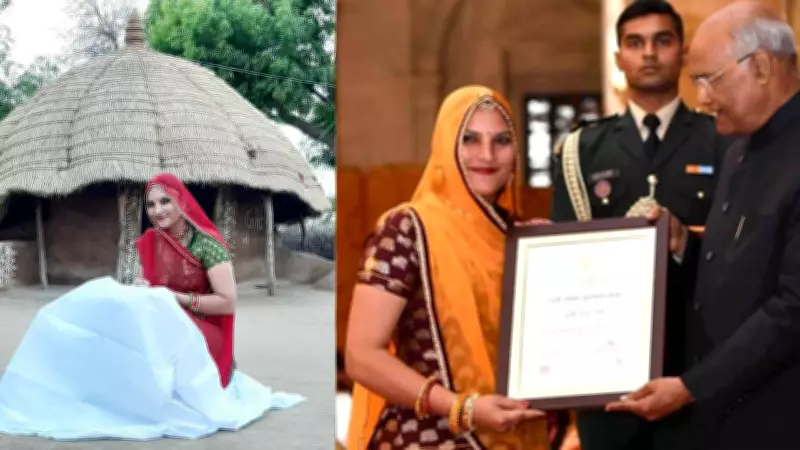
The most significant recognition arrived in 2018 when the Government of India conferred upon her the Padma Shri, one of the nation's highest civilian honors. This award celebrated not only her personal odyssey but also the livelihoods she helped forge for over 20,000 rural women artisans.
A Quiet Revolution Woven with Thread
Despite national acclaim, Ruma Devi often discusses her work with humility. For her, the transformation was never about personal triumph; it centered on altering how rural women perceive themselves. In numerous villages, embroidery was once dismissed as "merely women's work," performed casually between chores. Today, through Ruma's endeavors, that same craft has evolved into a wellspring of dignity, income, and independence. Her narrative also serves as a poignant reminder of opportunity's fragility—a moment of rejection could have permanently silenced her ambitions.
Instead, it propelled her to construct something greater than herself. From a village girl with limited education to a national awardee standing before the President of India, Ruma Devi's journey embodies the quiet strength of the communities she represents. In the countless embroidered mirrors, threads, and patterns crafted by the women she collaborates with, her legacy continues to flourish, one meticulous stitch at a time.