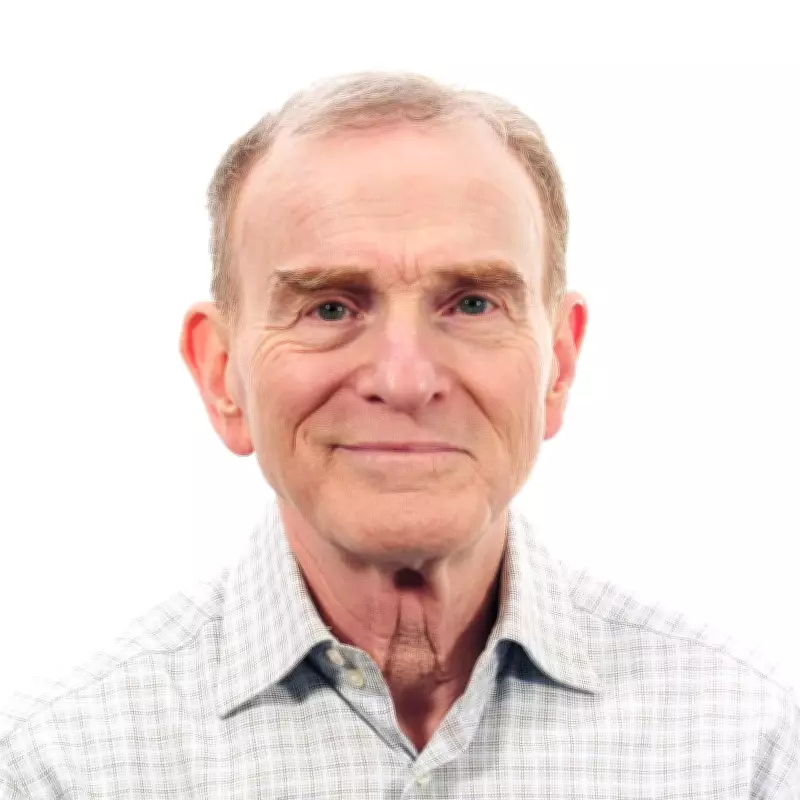
Nobel Laureate Randy Schekman Highlights Scientific Impact and Personal Mission at Infosys Prize 2025
Randy Schekman, the distinguished scientist who shared the 2013 Nobel Prize in Physiology or Medicine for his groundbreaking discovery of how cells organize molecular transport via vesicles, served as the chief guest at the Infosys Prize 2025 ceremony in Bengaluru. In an exclusive interview with Habeeba Salim, Schekman delved into why Parkinson's disease has become his latest scientific mission and how his Nobel-winning work continues to benefit millions, particularly diabetics worldwide.
The Life-Saving Impact of Vesicle Transport Discovery
When asked about the real-world implications of his vesicle transport research, Schekman provided a compelling explanation that connects basic cell biology to everyday health. "Diabetics in India and across the globe depend critically on insulin," he noted. "What many people are unaware of is that a significant portion of this insulin is manufactured using the very same yeast employed in baking bread and brewing beer. This is a direct and tangible example of how fundamental cell biology touches and transforms daily human life."
Schekman elaborated on the biological foundation of this process. Human existence is sustained by approximately 100,000 distinct protein molecules—long chains of amino acids that fold into enzymes and structural proteins responsible for building and maintaining our bodies. These proteins are synthesized within our cells, and many, such as insulin or neurotransmitters enabling nerve cell communication, must be exported. This export occurs through tiny vesicles, a cellular transport system that evolved billions of years ago.

"I was incredibly fortunate to select yeast as my model organism for studying protein export," Schekman recounted. "Within the initial two years of research, I successfully isolated the genes that orchestrate this pathway, mapped their interactions, and identified the proteins they encode. Later, when the human genome was sequenced, we made a pivotal discovery: humans possess identical genes to yeast. This was not surprising, given that this process evolved around 2 billion years ago, and evolution consistently reuses effective mechanisms."
This revelation enabled the burgeoning biotech industry in San Francisco to harness yeast as a platform for producing vital human proteins that are naturally exported from cells, like insulin. Within a few short years, scientists could insert the human insulin gene into yeast, equipping it with the necessary signals for recognition and secretion. Today, roughly one-third of the global supply of recombinant human insulin is generated in massive fermentation vats of yeast, a direct legacy of Schekman's foundational work.
A Strong Critique of Elite Science Journals
Schekman, a vocal advocate for open science, expressed significant frustration with elite scientific journals. "The so-called elite, high-profile journals fiercely resisted open access for years, perceiving it as a threat to their substantial profit margins," he stated. "The two largest commercial publishers boast some of the highest profit margins globally—not in absolute dollar terms, but in percentage margins. They rely on what is essentially free labor: scientists who peer-review papers for them, while institutions pay exorbitant license fees for journal access."
He further criticized the system for imposing hefty fees on open-access publication, exploiting the pressure young scholars feel to publish in these prestigious venues to advance their careers. Publishing a full-length open-access paper can now cost a researcher approximately $12,000.
Schekman also questioned the editorial judgment at these journals. "Final decisions are often made by 'professional editors'—individuals who may have once been scientists but no longer engage in active research. In my view, many lack the nuanced judgment required for critical decisions, especially with complex new technologies. Although they deny it, they are frequently influenced by the desire to publish 'shiny objects'—sensational papers that generate media buzz and coverage."

This pressure, he argued, can lead to the publication of work that appears exciting but later proves erroneous. Schekman cited the infamous case of UK doctor Andrew Wakefield's paper, which falsely suggested a link between childhood vaccination and autism. "Even after the paper was retracted and Wakefield was found to have manipulated data and lost his medical license, he has cultivated a second career promoting anti-vaccine views alongside figures like RFK Jr.," Schekman noted, highlighting the lasting damage such publications can cause.
Geopolitics in Science: Advice for Nations Like India
Addressing the growing influence of geopolitics on scientific research and funding, Schekman offered thoughtful advice for countries such as India. "India possesses enormous human potential. The tragedy is that much of this potential is only realized when individuals relocate abroad," he observed. "I am cautious about advising politicians, as they face numerous competing challenges, but fundamentally, nations like India must increase investment in the basic infrastructure of scientific research and cultivate environments where their brightest minds can thrive domestically."
He emphasized that talented individuals should not feel compelled to move to Western Europe or the United States to conduct top-tier scientific work. Creating supportive ecosystems at home is crucial for retaining and nurturing scientific talent.
A Childhood Anecdote: The Microscope That Sparked a Career
Schekman shared a charming and poignant anecdote from his childhood that encapsulates his journey into science—a story he humorously suggested might end up on his tombstone. "Growing up in Southern California, I received a toy microscope for my 11th birthday. I visited a local dry riverbed, collected a jar of pond scum, brought it to my bedroom, placed a drop on a slide, and peered through the plastic lens. I was utterly astonished by the multitude of tiny organisms swimming before my eyes," he recalled.
One evening at dinner, he attempted to describe this microscopic world to his father, who responded with skepticism, attributing it to a vivid imagination. "Offended by his doubt, I resolved to acquire a real microscope. I took on odd jobs—babysitting, mowing lawns, delivering newspapers—and saved diligently toward a goal of $100, a considerable sum in 1962. I hid the money in my bedroom closet, but I could never reach the full amount because my mother occasionally borrowed some for groceries," Schekman explained.
Frustrated one Saturday, he cycled to the local police station. "I informed the duty officer that I wanted to run away from home because my mother was stealing my money, preventing me from buying my microscope. They called my father, who arrived and met with the captain. I'm sure he was angry, but the outcome was that we went to a local pawn shop. In the front window was a Bausch & Lomb monocular microscope—my dream instrument. We purchased it for $100," he said.
That microscope became his pride and joy. Throughout high school, he entered science fairs with projects on microorganisms using that very instrument. After leaving for university, the microscope was stored away, but his parents preserved it and later mailed it to him when he lived near Berkeley with his own family. Today, it is displayed at the Nobel Museum in Stockholm, accompanied by a caption in English and Swedish recounting how young Randy Schekman attempted to run away from home to pursue his scientific career.
Personal Mission: Combating Parkinson's Disease
Schekman revealed another deeply personal and exciting area of his current work. "My wife passed away from Parkinson's disease. I was invited to lead a new initiative that brings investigators together to study the basic science of Parkinson's," he shared. This effort is supported by the Sergey Brin Family Foundation. Sergey Brin, co-founder of Google, and his mother carry a mutation in one of approximately 20 known genes associated with familial forms of Parkinson's.
"While Brin is not yet ill, he is at risk and has invested over a billion dollars in Parkinson's research," Schekman noted, underscoring the significant commitment to advancing understanding and treatment of this debilitating condition. This personal connection fuels Schekman's dedication to unraveling the mysteries of Parkinson's, marking a poignant extension of his lifelong scientific journey.