Campuses Must Confront Discrimination: Supreme Court's Stay on UGC Equity Regulations Reveals the Hurdles
Universities possess a unique rhythm, one that transcends the cacophony of classrooms, protests, or convocation speeches. It is the softer sound of students debating over tea, lingering on staircases long after lectures conclude, simultaneously discovering ideas and forging friendships. For anyone who has studied in a university and later returned as an educator, this cadence is intimately familiar. It is within these informal spaces that students often begin to voice discomforts they hesitate to commit to writing. "Sir, I do not know if this counts as discrimination," a student once confided, "but I feel invisible here." No formal incident ensued, no complaint was lodged, yet that pause carried more weight than any official file ever could.
Our campuses have long endured such silences. Discrimination in higher education seldom manifests as a single dramatic event. Instead, it accumulates gradually through being overlooked in classroom discussions, receiving vague feedback, or sensing that certain students navigate academic life with greater ease. As sociologists often observe, institutions inflict wounds not merely through explicit rules but through ingrained habits.
The UGC's 2026 Equity Regulations: A Bold Response to a Persistent Reality
It is this lived experience that the University Grants Commission's Promotion of Equity in Higher Education Institutions Regulations, 2026, aimed to address. Applicable to all higher education institutions nationwide, these regulations speak with unprecedented firmness. They mandate the establishment of Equal Opportunity Centres, Equity Committees chaired by institutional heads, round-the-clock helplines, equity monitoring mechanisms, and designated ambassadors across hostels and departments. Discrimination is broadly defined, considering not only intent but also effect, focusing on whether dignity and equality are compromised. The message was unequivocal: silence is no longer acceptable, and equity is no longer optional.

Why Regulation Became Inevitable in Higher Education
These measures did not emerge in a vacuum. Indian higher education reached this juncture after repeated institutional failures. The Thorat Committee, formed in 2007 following reports of caste discrimination at AIIMS, revealed how exclusion rarely appears as explicit rules. Instead, it surfaces in grading patterns, mentoring relationships, laboratory access, peer networks, and everyday academic culture. Subsequent inquiries, often prompted by student suicides in central universities, echoed this conclusion: discrimination is cumulative, psychological, and structural.
An institutional inevitability also played a role. Over the past decade, courts have repeatedly acknowledged the persistence of caste-based exclusion on campuses while highlighting the inadequacy of existing grievance mechanisms. The 2012 regulations recognized discrimination in principle but relied heavily on internal discretion, leading to uneven and often symbolic compliance. As constitutional concerns mounted without an effective institutional response, regulation transitioned from a policy preference to an administrative obligation. Thus, the 2026 regulations represented less an expansion of power and more an attempt to institutionalize concerns long acknowledged in law.
Reflecting a State's Impatience: The Framework's Binding Nature
The 2026 regulations reflected a state that had lost patience with hesitation. Equity was no longer framed as a counseling concern or moral aspiration; it became a binding administrative duty, backed by monitoring requirements, reporting obligations, and serious sanctions. This framework did not stem from executive impulse alone. Draft regulations were placed in the public domain, scrutinized by parliamentary committees, and revised after consultations with universities, faculty bodies, and civil society. Provisions that risked deterring complaints, such as clauses discouraging so-called false complaints, were consciously removed. What emerged was an effort to translate longstanding constitutional unease into institutional design.

For many students, particularly those from marginalized backgrounds, this shift offered reassurance. Over the years, I have witnessed students opt against complaining due to opaque, slow, or unsafe processes. Time was rarely neutral in these narratives; delay often favored the institution. From this perspective, the promise of timelines, helplines, and visible structures held significant meaning.
Where Unease Persists: The Role of Process in Campus Culture
Simultaneously, for those immersed in university life daily, a quiet unease lingered—not because equity was unwelcome, but because processes shape campus culture as profoundly as outcomes. The regulations mandated swift action: Equity Committees must meet within 24 hours of receiving information, submit reports within 15 working days, and take action within a week. While urgency is understandable given how delay has historically disadvantaged complainants, discrimination cases are rarely straightforward. They involve power dynamics, perceptions, academic discretion, and long histories of interaction.
When inquiries move too rapidly, they risk oversimplifying context and leaving all parties dissatisfied. Research on procedural justice consistently shows that people care deeply about how decisions are made, not just the decisions themselves. Students often seek recognition before resolution, desiring that the institution takes time to comprehend their experiences. When processes appear rushed or mechanical, they can feel transactional, as if the goal is closure rather than understanding.
Authority and Trust: Critical Concerns in Implementation
This concern intensifies when examining authority structures. Under the regulations, the head of the institution chairs the Equity Committee and oversees implementation, even when complaints involve the head, maintaining a largely internal framework. Our campuses have grappled with such designs before. Committees lose credibility when decision-making and institutional self-interest are too closely aligned. Safeguards like independent members, external investigators for complex cases, and clearer separation between inquiry and enforcement are not procedural luxuries; they are essential for students to trust that the process exists for their benefit.
Addressing Fears of Misuse and Building Trust
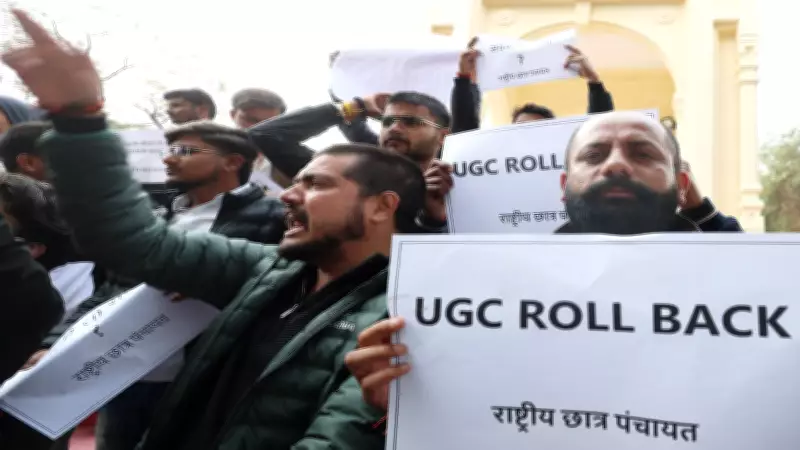
In this atmosphere, protests emerged, alleging that the regulations operate as a law against upper castes and that backward groups might misuse the framework. These anxieties warrant serious consideration rather than dismissal, as universities are fragile communities where trust is paramount. Legally, however, this claim lacks foundation. The regulations are facially neutral, creating no caste-specific offences or presumptions. Any student, faculty member, or staff can be an aggrieved person or respondent, with liability based on conduct and effect, not identity.
A framework does not become discriminatory merely because it addresses historical patterns of exclusion. Constitutional law has long distinguished between formal and substantive equality. The fear of misuse is not novel; courts have repeatedly held that such possibilities cannot justify dismantling protective frameworks. The solution lies in safeguards, not abandonment. The regulations incorporate layered processes: complaints are examined by multi-member committees, reports must be reasoned, and criminal law is invoked only where a prima facie offence exists. Moreover, assuming that upper caste automatically implies accused misunderstands how power operates on campuses, flowing through seniority, institutional position, language, networks, and authority, not caste alone.
Supreme Court's Stay: A Focus on Design and Process
These underlying concerns gained prominence when the Supreme Court placed the 2026 regulations in abeyance. The Court expressed prima facie reservations about vagueness and potential misuse, suggesting the framework be reconsidered by a committee of eminent jurists, while allowing the 2012 regulations to continue temporarily. Importantly, the Court did not question the reality of campus discrimination or the need for institutional mechanisms to address it. Its concern centered on design and process: how harm is defined, how authority is structured, and the speed of institutional action.
The stay should be interpreted not as a rejection of equity but as a reminder that regulation lacking procedural care can undermine the very legitimacy it aims to build. The lesson is not that equity regulation was misguided, but that its design must inspire confidence across all constituencies.
Conclusion: The Path Forward for Equity in Universities
Universities impart more than syllabi; they teach students what occurs when power is challenged and discomfort is expressed. Equity enforced through fear, paperwork, or hasty compliance will not endure. Equity fostered through a fair, meticulous, and credible process stands a better chance of being believed. The student who confessed to feeling invisible was not seeking punishment; she was inquiring whether the university could perceive her clearly. If the equity framework can assist institutions in learning how to do so, it will have fulfilled its purpose. Regulation was inevitable; its success hinges on the process.