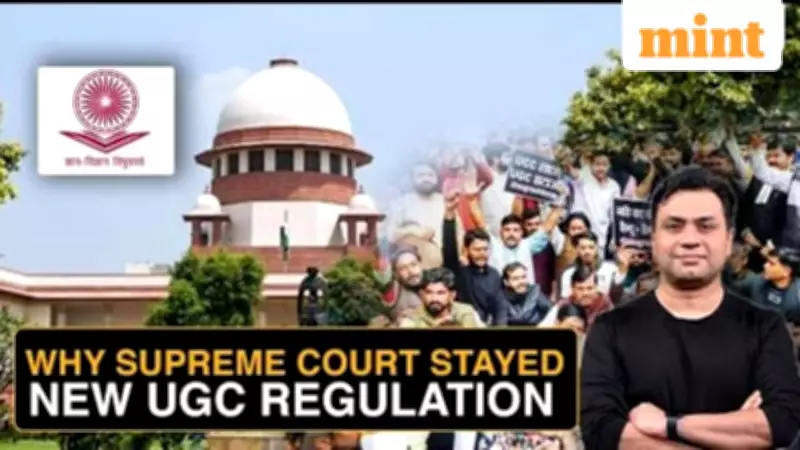
Supreme Court Halts UGC's Caste Equity Regulations: A Detailed Analysis
In a significant development, the Supreme Court of India has issued a stay on the new caste equity regulations introduced by the University Grants Commission (UGC). This decision has sparked widespread debate, with many questioning whether this move represents a regression in the ongoing efforts to promote social justice and inclusivity within the country's higher education system.
Court Proceedings and Key Observations
A bench comprising Chief Justice Surya Kant and Justice Joymalya Bagchi presided over the case, where multiple pleas challenging the UGC regulations were heard. The court has formally issued notices to both the Central Government and the UGC, demanding their responses to the legal challenges. During the proceedings, the justices made a critical observation, noting that the implementation of these regulations could lead to serious consequences, a statement that underscores the complexity and sensitivity of the issue at hand.
Overview of the UGC Regulations
The contentious regulations, officially notified on January 13, 2026, mandated that all higher education institutions across India establish dedicated equity committees. These committees were tasked with a dual responsibility:

- Investigating and addressing complaints related to discrimination based on caste, among other factors.
- Actively promoting equity and inclusivity within academic environments.
This initiative was part of a broader strategy to combat systemic inequalities and ensure a fair and supportive atmosphere for students from marginalized communities, including Scheduled Castes, Scheduled Tribes, and other disadvantaged groups.
Implications of the Supreme Court's Stay
The temporary suspension of these regulations raises several important questions and potential implications:
- Legal and Administrative Uncertainty: Higher education institutions may face confusion regarding their ongoing equity initiatives, potentially delaying or halting progress in addressing discrimination cases.
- Impact on Marginalized Students: Students from underrepresented backgrounds might experience increased vulnerability without the formalized support structures that the equity committees were designed to provide.
- Broader Social Justice Debate: This development reignites discussions on the balance between regulatory measures and institutional autonomy, as well as the effectiveness of top-down approaches in fostering genuine inclusivity.
As the legal process unfolds, stakeholders from academia, government, and civil society will closely monitor the outcomes, which could shape the future of equity policies in Indian higher education for years to come.