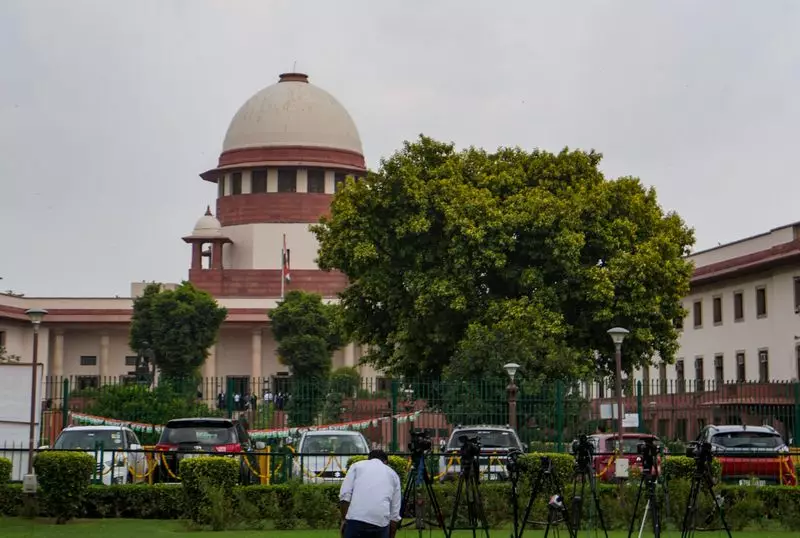
The Supreme Court of India has prolonged its order that temporarily halts criminal proceedings against an economics professor from Ashoka University. The case stems from a social media post the academic shared last year.
Legal Proceedings and the Supreme Court's Intervention
On Monday, a bench comprising Justices Aniruddha Bose and Sanjay Kumar decided to continue the stay on the trial. This legal protection was initially granted to Professor Sabyasachi Das on February 5, 2024. The court's latest directive means the lower court in Haryana's Sonipat district cannot move forward with the case for now.
The controversy began after Professor Das posted research on a social media platform in July 2023. The work suggested potential irregularities in voting patterns during the 2019 Lok Sabha elections. Following this, an individual named Naveen Kumar filed a formal complaint. Based on this complaint, a local court in Sonipat took cognizance of the matter in September 2023.

Charges and the University's Stance
The professor faces serious charges under sections of the Indian Penal Code. These include Section 153A, which deals with promoting enmity between different groups, and Section 505, related to statements conducing to public mischief. The police had filed a chargesheet against him after investigating the complaint.
Ashoka University, a prominent private institution, found itself in the spotlight during this episode. Initially, the university distanced itself from the professor's research, stating it had not undergone a rigorous peer-review process. However, the institution later clarified its position, affirming its commitment to academic freedom and stating that Professor Das remained a valued faculty member.
Wider Implications and Next Steps
The Supreme Court's decision to extend the stay is a significant development in this closely watched case. It highlights the ongoing legal and academic debates surrounding freedom of expression, research, and social media discourse in India. The court has scheduled the next hearing for July, when it will further examine the professor's petition to quash the entire criminal case against him.
This case is being monitored by academicians, legal experts, and civil society groups. Many see it as a test case for the boundaries of academic research and commentary on public platforms. The Supreme Court's final ruling could set an important precedent for similar situations in the future.