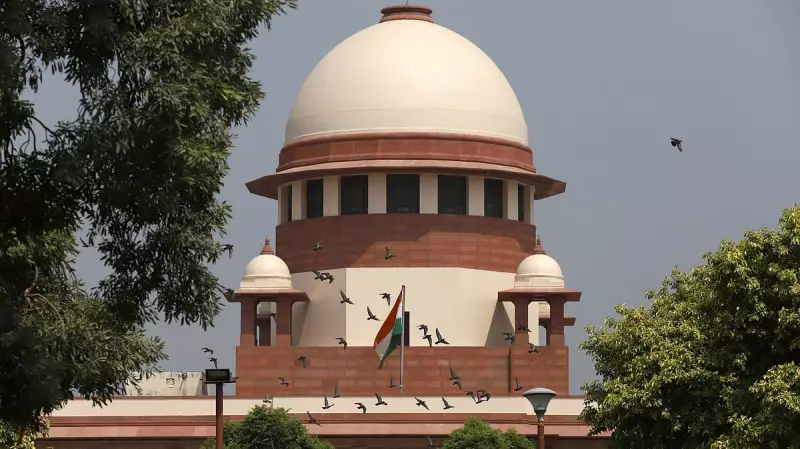
In a landmark judgment with far-reaching implications for educational institutions across India, the Supreme Court has firmly stated that the rules governing admissions to academic courses cannot be modified once the process has commenced. The apex court delivered this verdict on January 8, 2026, drawing a parallel with established principles in recruitment processes.
The Core Principle: 'Rules of the Game Cannot Be Altered'
The bench, while adjudicating on a case related to admission procedures, emphatically applied the maxim that 'the principle rules of the game cannot be altered once the game has begun'. This doctrine, frequently invoked in matters of public employment and recruitment, has now been explicitly extended to cover admission processes for various educational courses, including professional degrees like MBBS.
The court's reasoning hinges on ensuring fairness, transparency, and the protection of legitimate expectations. Candidates prepare for admissions based on a predefined set of criteria, including eligibility, selection methodology, and reservation policies. Any mid-course alteration, the court held, would be inherently arbitrary and could jeopardize the chances of applicants who had relied on the originally notified rules.

Implications for Universities and Colleges
This ruling places a significant onus on educational institutions, universities, and state authorities to finalize all admission-related regulations well before the start of the admission cycle. It mandates that the framework must be set in stone at the outset, preventing authorities from making changes that could disadvantage a section of aspirants after they have applied or even appeared for entrance tests.
The judgment effectively curtails the discretionary power of authorities to tweak rules regarding:
- Eligibility criteria (academic or age-related)
- Weightage for different components of selection
- Reservation matrix or quota distribution
- Important dates in the admission calendar
A Precedent for Fairness in Educational Access
By aligning the standards for educational admissions with those for government recruitment, the Supreme Court has reinforced the constitutional principles of equality and non-arbitrariness in the educational sphere. The verdict, reported by Ashish Tripathi, serves as a stern reminder to all governing bodies that the admission process is a sacred contract with the student community. Any deviation from the published rules mid-session will be viewed as a violation of this contract and is therefore not permissible under the law.
This decision is expected to bring greater predictability and justice to lakhs of students who compete for limited seats in higher education institutions annually. It empowers students to challenge any arbitrary changes made after the admission notification has been issued, ensuring a level playing field for all candidates.