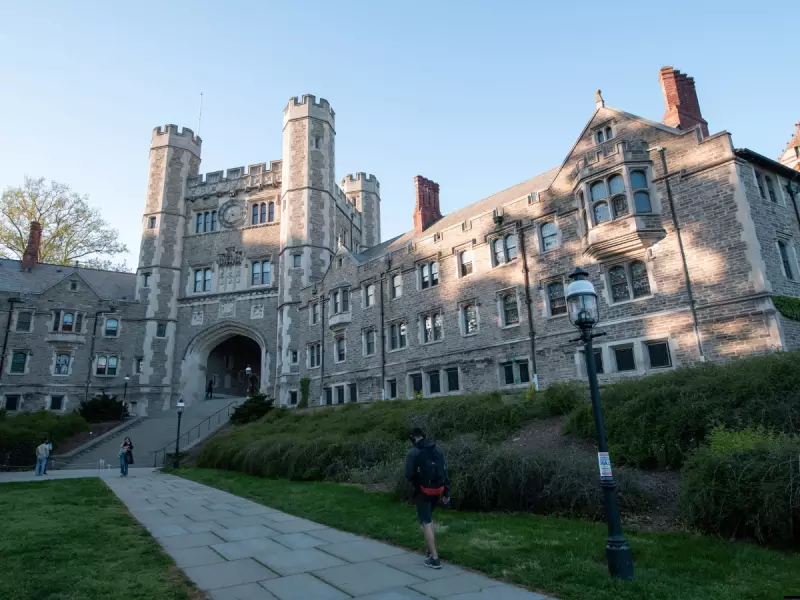
Princeton University, a prestigious Ivy League institution, is now confronting significant legal challenges following the disclosure of a cybersecurity incident. Three separate lawsuits have been filed against the university, all stemming from a data breach that compromised personal information linked to students, faculty, alumni, and donors. These cases highlight growing anxieties about how educational giants handle and protect sensitive data.
Details of the Princeton Data Breach
The breach was first made public by Princeton in November. According to the university's Office of Information Technology, the incident occurred in early November, with a follow-up update issued on December 5. The intrusion involved an unauthorized individual gaining access to a database managed by University Advancement.
This database held a wealth of information connected to the university's extensive network of students, faculty members, alumni, and financial supporters. However, in its official statements, Princeton has maintained that investigators found no direct evidence that highly sensitive personal or financial data—such as Social Security numbers, passwords, or credit card details—was exposed or stolen.

In response to the breach, the university provided additional guidance to faculty and staff on identifying phishing attempts and bolstering system security. Princeton has also clarified that the November 10 incident was not connected to other cyberattacks recently reported at fellow Ivy League campuses.
Legal Action and Consolidated Lawsuits
The legal fallout began swiftly. The first lawsuit was filed by David Ramirez in the U.S. District Court for the District of New Jersey on November 18. As reported by the Daily Princetonian, Ramirez's complaint alleges that Princeton failed to implement adequate security measures to safeguard its community's data.
The lawsuit characterizes the potentially accessed information as a "gold mine" and accuses the university of negligence and breach of contract. Ramirez is seeking relief for himself and a proposed class of approximately 100,000 affected individuals, demanding compensation for monetary losses, injunctive relief, and the return of any alleged profits.
On the same day, a second lawsuit was filed by Henggao Cai, followed by a third from Gary Penna on November 24. In a significant procedural move, Judge Robert Kirsch ordered on December 9 that all three cases be consolidated into a single master lawsuit. The lead case is now titled Ramirez v. Princeton University, with the Cai and Penna cases listed as member cases under it.
Princeton spokesperson Jennifer Morrill stated to the student newspaper that the university "believes these claims are without merit, and we plan to contest them vigorously." The legal process remains in its early stages, with no court rulings on the merits of the claims yet.
A Wider Ivy League Cybersecurity Crisis
The situation at Princeton is not an isolated event but part of a disturbing pattern of cybersecurity failures across elite American universities in recent months.

- Harvard University disclosed in late November that a phone-based phishing attack compromised systems used by its Alumni Affairs and Development Office. While contained quickly and not involving passwords, it has already triggered a class-action lawsuit.
- The University of Pennsylvania reported a more severe breach in late October, where attackers accessed and released large volumes of personal data, including bank transaction details. This has resulted in eight lawsuits against the university.
- Dartmouth College disclosed a fall cybersecurity incident linked to an Oracle software vulnerability, exposing Social Security numbers and financial data. Law firms are investigating potential claims.
- Columbia University faced a major cyberattack over the summer that disrupted IT systems and affected nearly 870,000 servers. Sensitive data was compromised, leading to a class-action settlement where Columbia University Irving Medical Center paid $600,000 to plaintiffs.
As universities increasingly depend on digital infrastructure, these incidents demonstrate how rapidly a data breach can escalate into a severe legal and reputational crisis. For students, alumni, and donors worldwide, including many in India with ties to these institutions, these events underscore why robust data security has become a non-negotiable pillar of modern campus governance and trust.