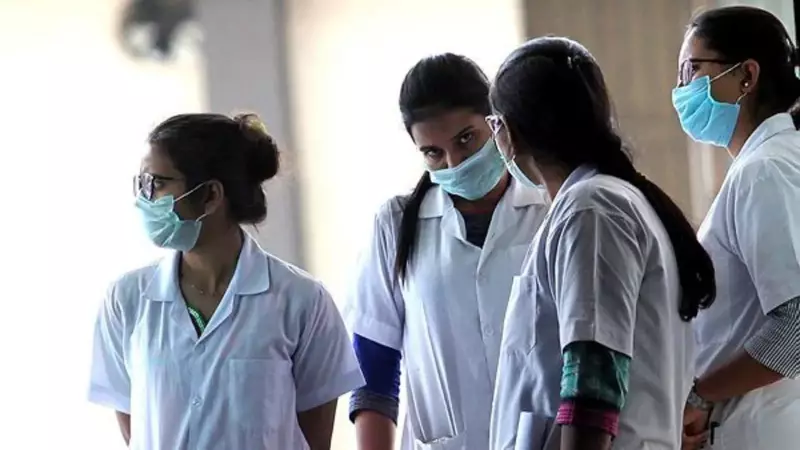
In a landmark decision poised to reshape medical education in India, the National Medical Commission (NMC) has removed a key restriction, now permitting for-profit companies to establish and run medical colleges. This move overturns the long-standing rule that allowed only non-profit entities to enter this sector.
Policy Shift Announced in Vijayawada
The significant regulatory change was officially announced by NMC Chairman Dr. Abhijat Chandrakant Sheth during a press conference at Dr. NTR University of Health Sciences in Vijayawada on Wednesday, January 8, 2026. Chairman Sheth stated that a recent board meeting of the commission led to the deletion of the condition that limited the establishment of medical colleges to Section 8 (non-profit) companies.
"Earlier only non-profit Section 8 companies were allowed to set up medical colleges but a recent board meeting has removed this regulation," Sheth explained. This action paves the way for both non-profit and for-profit corporate entities to participate in setting up medical institutions under a Public Private Partnership (PPP) framework. The announcement followed Chairman Sheth's meeting with Andhra Pradesh Chief Minister N. Chandrababu Naidu.

Rationale Behind the Move and the PPP Model
The commission believes this strategic opening will catalyze a more efficient utilization of available resources for medical education. By enabling partnerships between public and private entities, the NMC aims to address the critical shortage of medical seats and infrastructure.
Sheth clarified that the implementation of the PPP model falls under the prerogative of individual state governments. He cited Gujarat as a state where such arrangements are already running successfully. A key assurance provided was that hospitals operating under this PPP mechanism would remain under the purview of state governments, ensuring that patients receive treatment either free of cost or at subsidised rates.
Focus on Quality and Future-Ready Education
To safeguard educational standards amidst this expansion, the NMC chairman highlighted the commission's proactive measures. The NMC has formulated its own accreditation process and Standard Operating Procedures (SOPs) to maintain and monitor quality.
Sheth reiterated that the core aim is to make quality medical education accessible to common people while aligning with international standards. As part of enhancing the curriculum, the NMC has made clinical research compulsory. Furthermore, medical education will now integrate Artificial Intelligence (AI), futuristic technologies, and digital healthcare to prepare a new generation of doctors for modern challenges.
This policy revision marks a significant turn in India's approach to scaling up medical education, leveraging private capital and expertise while aiming to keep public welfare and quality at the forefront.