University of Jammu Committee Recommends Removing Jinnah, Sir Syed, Iqbal from Political Science Syllabus
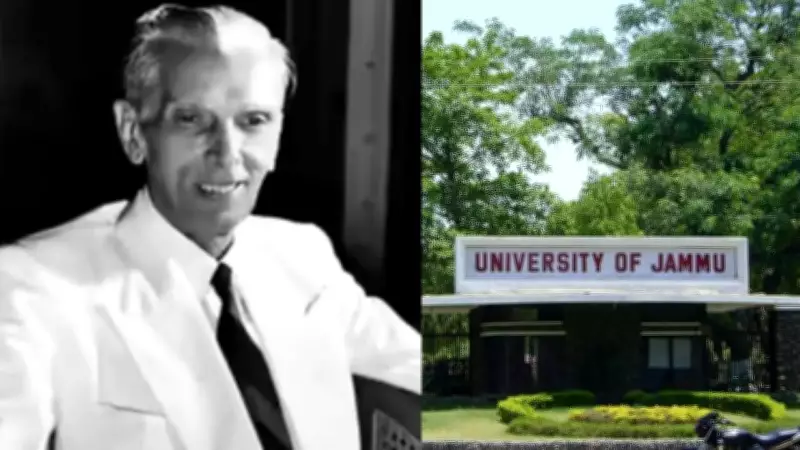
The Departmental Affairs Committee (DAC) of the University of Jammu has made a significant recommendation to remove topics related to three prominent historical figures from the MA Political Science curriculum. The committee has specifically targeted content concerning former Pakistan Governor-General Muhammad Ali Jinnah, Aligarh Muslim University founder Syed Ahmad Khan, and poet-philosopher Mohammad Iqbal.
Protests Trigger Curriculum Review
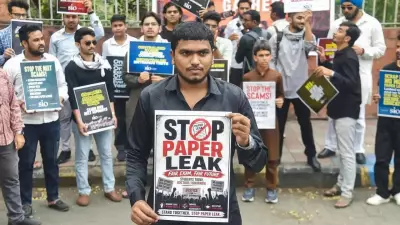
This recommendation comes directly in response to organized protests by the Akhil Bharatiya Vidyarthi Parishad (ABVP), the student wing affiliated with the Rashtriya Swayamsevak Sangh. The ABVP had raised objections specifically to the inclusion of Muhammad Ali Jinnah under the module titled "Minorities and the Nation," which forms part of the revised syllabus implemented under the National Education Policy (NEP) 2020 framework.
The committee's unanimous resolution covers both the one-year and two-year postgraduate programmes in Political Science. This formal recommendation has now been forwarded to the Board of Studies (BoS), which is scheduled to convene an online meeting on March 24 to deliberate on this matter further and make a final decision.

Department's Defense and ABVP's Opposition
Prior to the committee's recommendation, the Political Science department had vigorously defended the syllabus structure. Department Head Professor Baljit Singh Mann had explained that the curriculum was intentionally designed to provide students with comprehensive, multiple perspectives on modern Indian political thought.
The original syllabus included a diverse range of thinkers spanning the ideological spectrum: from Vinayak Damodar Savarkar and MS Golwalkar to Mahatma Gandhi, BR Ambedkar, Jawaharlal Nehru, and Sardar Vallabhbhai Patel, alongside the three controversial figures now under scrutiny.
ABVP Jammu and Kashmir, led by secretary Sannak Shrivats, had staged protests demanding immediate withdrawal of the chapters featuring Jinnah, Sir Syed, and Iqbal. The student organization argued that teaching figures associated with the two-nation theory and the Partition of India raised what they termed "serious concerns" and potentially undermined national sentiments.
Call for Alternative Curriculum Content
Shrivats issued a clear warning that protests would intensify if the university administration failed to revise the syllabus according to their demands. The ABVP leader specifically called for the inclusion of personalities who have made what they consider positive contributions to minority welfare in India, suggesting alternative historical figures who align more closely with their ideological perspective.
The DAC's resolution explicitly highlighted the concerns raised by the ABVP during their protests, indicating that the student organization's activism directly influenced the committee's decision-making process. The recommendation now awaits formal approval from the Board of Studies before any implementation can occur.
This development represents a significant moment in the ongoing debates about curriculum content, historical representation, and educational policy in Indian universities, particularly concerning how controversial historical figures are presented in academic settings.