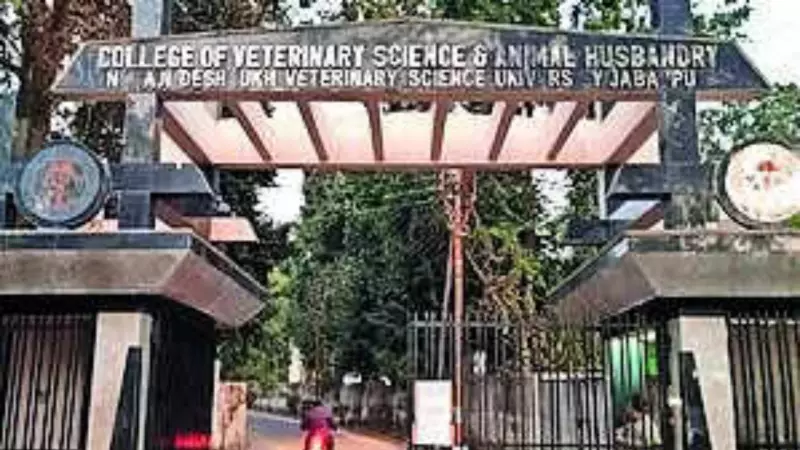
A government-funded research initiative in Madhya Pradesh, aimed at exploring the potential of traditional cow products in fighting cancer, has become embroiled in a major financial controversy. The project, based at the Nanaji Deshmukh Veterinary Science University in Jabalpur, is now under official scrutiny for the alleged misuse of substantial public funds.
Probe Uncovers Questionable Expenditures
Following complaints regarding the diversion of research money, Jabalpur Collector Raghvendra Singh ordered a detailed investigation. He formed a two-member committee headed by Additional Collector RS Marawi to examine the accounts. The preliminary audit revealed shocking details of how the research grant was spent on purposes completely unrelated to the scientific study.
"During preliminary scrutiny of documents, it was found that the research money was spent on purposes not related to the project," Marawi confirmed. The committee's findings point to severe financial mismanagement.

Where Did the Research Money Go?
The investigative report highlighted several alarming expenditures charged to the research fund:
- Approximately Rs 3 lakh was spent on air travel, with no supporting evidence of any research-related tours or conferences.
- A vehicle was purchased from the head of the research project itself.
- Nearly Rs 15 lakh was used for vehicle repairs, petrol, and diesel.
- Close to Rs 1.75 crore was allocated for raw materials and machines, which were procured at rates significantly higher than the prevailing market prices.
- About Rs 15 lakh went towards furniture and electronic items.
- Another Rs 5 lakh was paid under various other heads from the research fund.
A High-Hopes Project With Little Output
The scheme, known as the Panchgavya project, was launched with much fanfare in 2011. The state government had sanctioned a generous sum of Rs 3.5 crore for research into treating serious diseases like cancer using gobar (cow dung), gaumutra (cow urine), and milk. The goal was to provide scientific validation to ancient traditional knowledge.
However, the probe found little to show in terms of actual research output or scientific breakthroughs by the time the programme concluded in 2018. The significant investment appears to have yielded minimal tangible results, raising serious questions about the project's execution and oversight.
University Response and Awaiting Action
University Vice-Chancellor Mandeep Sharma stated that the research programme had officially ended in 2018. He claimed that all technical and financial records were approved at the relevant time. "We are gathering details of the project and will officially share information with the media after reviewing the records," Sharma told the press.
The inquiry report has been formally submitted to the Collector. Further administrative action will now be decided based on the findings. This case has shifted the focus from the potential of traditional medicine to troubling concerns about accountability and the stewardship of public funds in academic research.