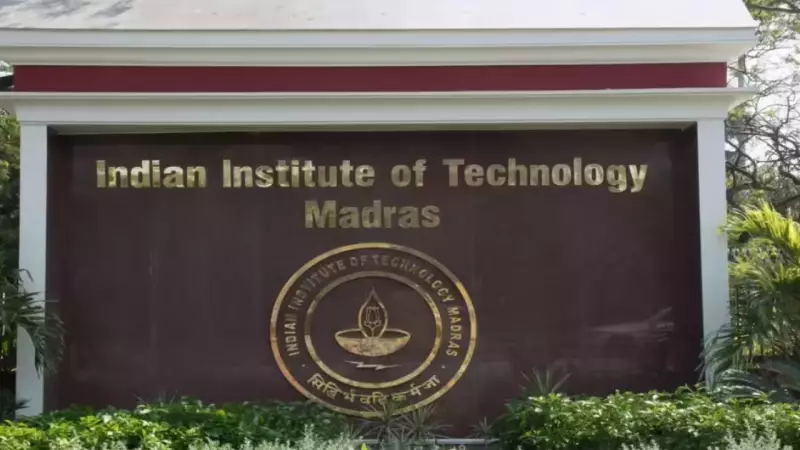
In a major push to internationalise its research and entrepreneurial ecosystem, the Indian Institute of Technology Madras (IIT Madras) is setting up new overseas offices in five countries. This strategic expansion aims to connect Indian technological innovation directly with global markets, capital, and collaborative opportunities.
Five Nations, One Strategic Goal
The prestigious institute has identified the United States, the United Kingdom, Germany, Dubai, and Malaysia as the first five locations for its new international centres. These offices will operate under the IIT-M Global Research Foundation. According to the institute's director, V Kamakoti, a core objective is to attract foreign investments into Indian startups emerging from its ecosystem.
This is not IIT Madras's first foray abroad. The institute established a campus in Zanzibar, Tanzania, two years ago, marking its initial step in global education. The new offices, however, are focused on a broader mandate of research, consultancy, and commercialisation.

Invitations Driving Global Expansion
T Madhav Narayan, CEO of the IIT Madras Global Research Foundation, revealed that all five centres were established following direct invitations. The Indian diaspora played a key role in facilitating the move in the US, while the UAE government initiated the push in Dubai. In Malaysia, the invitation came from the Selangor state government.
The nature of these centres varies. While the UK and Germany presences are anchored more in academic partnerships, others have a stronger commercial focus. Narayan expects the number of such overseas offices to grow to ten within the next three years, stating that more invitations are already on the table.
The Four Pillars of Global Outreach
Why is India's top-ranked engineering institute planting flags in already mature tech economies? Narayan outlines four clear reasons for this global strategy.
First, to assist Indian deep-tech startups that have moved beyond the lab stage but are not yet global. These growth-stage companies need access to larger international customers, deeper pools of capital, and diverse markets.
Second, to undertake international research and consultancy projects that require physical proximity. Certain work cannot be done entirely from India and benefits from being close to industry hubs, regulators, and foreign collaborators.
Third, to advance cross-border education initiatives, including skilling, upskilling, and a select set of advanced joint academic programmes.
Fourth, and perhaps most crucially, is to achieve speed. For technologies that have crossed a high maturity level (Technology Readiness Level 5 and above), the offices will enable faster intellectual property (IP) licensing and commercialisation, allowing patents to work at what Narayan terms a "quantum speed" not currently possible from India alone.
Focus on Cutting-Edge Domains
The international centres will specifically advance research and consultancy in several frontier technology domains. These include:
- Data Science and Artificial Intelligence (AI)
- Quantum Computing
- Cybersecurity and Blockchain
- Space Technology
- Advanced Mobility
This global network positions IIT Madras not just as an Indian educational powerhouse, but as an emerging node in the worldwide innovation landscape, directly funneling Indian talent and invention into the global economy.