IIT-Delhi's Durban Moment: Why Caste and Race Scholarship is Essential for IITs
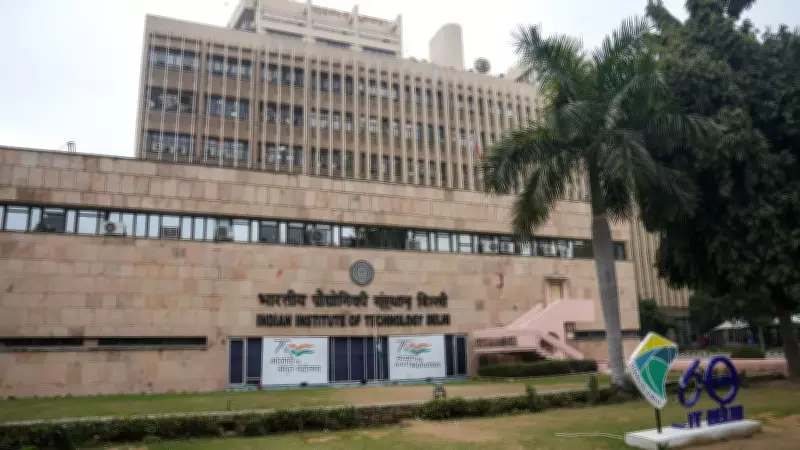
The recent decision by IIT-Delhi to initiate a probe into the academic conference titled "Critical Philosophy of Caste and Race" has sparked significant debate. This move raises profound questions about academic freedom, institutional governance, and the place of critical social inquiry within India's premier technological institutions. The conference, held from January 16 to 18, is under scrutiny following social media criticism, highlighting the broader role of universities in a society marked by deep inequalities.
Caste Does Not Exist in a Vacuum
Caste remains one of the most persistent systems of inequality globally, influencing access to education, employment, entrepreneurship, and dignity. The conference was organized under the banner "Celebrating 25 Years of Durban: Indian Contributions to Combatting Caste and Racism" and hosted by the Department of Humanities and Social Sciences (HSS). IIT-Delhi itself recognizes knowledge in humanities and social sciences as a core institutional value. IITs are mandated to pursue teaching and research not only in science and technology but also in arts and humanities. Undermining this autonomy weakens the institution's intellectual credibility.
Furthermore, IITs do not operate in a social vacuum. They recruit students, hire faculty, collaborate with industry players, and shape India's future workforce. This makes social understanding crucial for developing better technology and products that serve everyone. Research consistently shows that ignoring social aspects in technology and product development can lead to discrimination on digital platforms. Ignoring caste in discussions within technology institutions impoverishes both scholarship and practice, making it a necessity rather than an ideological excess to examine caste within such spaces.

The Durban Precedent and Its Echoes
The backlash against this conference echoes a critical historical moment: the 2001 UN World Conference Against Racism (WCAR) in Durban, South Africa. India actively resisted the recognition of caste discrimination within the global anti-racism framework, arguing that caste was a purely internal social matter. The IIT conference explicitly revisited Durban not as a closed chapter but as a living legacy. As the conference concept note highlights, "Durban" operates as a "lieu de mémoire", a site of memory that continues to shape struggles against caste and racism worldwide.
The conference brought together participants from Durban 2001 with contemporary scholars and activists to assess changes, stalling points, and unfinished work in global anti-caste advocacy. Suppressing or delegitimizing such reflection reproduces the same silencing that marked the Durban event, where caste was rendered unspeakable. This controversy fits a broader pattern where research focused on caste faces serious scrutiny in Indian academia.
Policing Knowledge and Academic Freedom
The conference foregrounded intellectual traditions historically marginalized, including the literary and cultural interventions of Dalit, Adivasi, and indigenous writers, and global legal advocacy from discriminated communities. The conference program was publicly available, organizers were established academics, and institutional permissions were obtained. Thus, the issue is not procedural irregularity but the content of knowledge itself. Questioning the legitimacy of such scholarship amounts to policing knowledge, a shift that should alarm anyone committed to academic freedom.
Academic freedom is already eroding in Indian institutions, with India ranking 156 out of 179 countries in the Academic Freedom Index. This is not merely about one conference; it concerns what knowledge is considered legitimate, who produces it, which histories are allowed in institutional spaces, and whether universities can sustain critical inquiry when it becomes socially and politically uncomfortable. What we see at IIT-Delhi is a smaller but structurally similar moment to Durban, where caste becomes contentious not due to lack of scholarly grounding but because its open discussion disrupts comfortable narratives about merit, modernity, and national progress.

Defending the Right to Think Differently
The probe into the conference should be read as a test case for Indian higher education. At stake is not agreement with every argument made but the freedom to question, challenge, and critique. Universities are among the few spaces where we can examine deep inequalities without fear, and such attempts should be encouraged. Suppressing inquiry does not make caste disappear; it ensures that caste inequality remains unexamined, unchallenged, and intact.
If we want universities that serve democracy and help build the nation, we must defend spaces where caste, race, and structural injustices can be studied openly. Rather than surrendering to social media chatter, India's premier institutions should take a stand and lead by example, demonstrating that intellectual courage and institutional excellence go hand in hand. This moment calls for a reaffirmation of academic freedom and a commitment to inclusive scholarship in IITs and beyond.