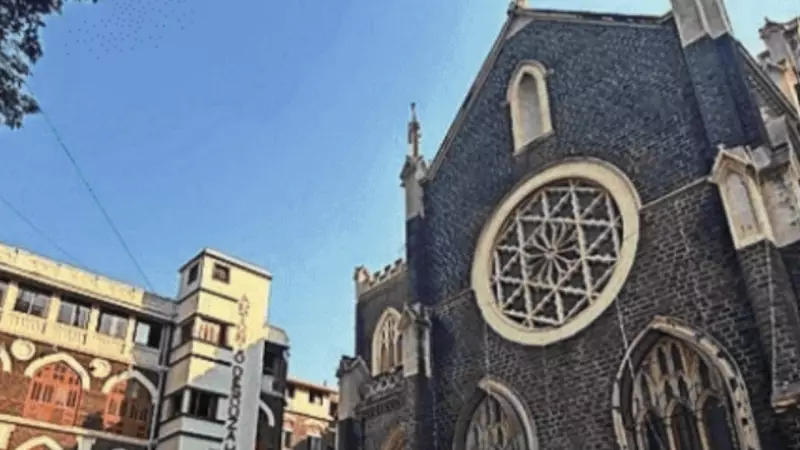
In the ever-changing landscape of Mumbai, where history is often paved over by progress, a quiet institution near Byculla station has stood the test of time for two centuries. The Antonio D'Souza School, a beacon of education tucked behind the historic Gloria Church, recently joined an elite group of city landmarks that have celebrated a bicentenary, a rare feat for any establishment.
From Mazagaon Island to Byculla: A Journey Through Time
The school's remarkable story begins not in its current location, but on the island of Mazagaon. Its roots are deeply intertwined with the Gloria Church, originally established in 1548 as a private chapel in the mansion of Captain Antonio Peso. The institution that would become the school was born from a generous endowment.
In 1795, a Goan merchant named Antonio De Souza donated Rs 40,000 to the trustees of the church. His vision was clear: to establish a free primary school dedicated to the education of Roman Catholic children. This philanthropic act laid the cornerstone for an educational legacy that would span generations.

Shaping Icons: The School's Illustrious Alumni
Over its long and distinguished history, Antonio D'Souza School has been a nurturing ground for talent that would go on to define modern India. Its classrooms have echoed with the early footsteps of individuals who left an indelible mark on the nation's cultural, literary, sporting, and political spheres.
Among its most famous sons is the legendary showman Raj Kapoor, a cornerstone of Indian cinema whose influence resonates globally. The school also counts Nissim Ezekiel among its alumni, a poet celebrated as the father of modern Indian English poetry and a towering literary figure in postcolonial India.
A Living Monument in a Modern Metropolis
Today, the school stands as a living monument across the road from the bustling Byculla railway station. Its endurance for over 200 years places it in a rarefied category alongside ancient landmarks like the Babulnath temple and the Elephanta Caves. In a city that constantly reinvents itself, the school's continued operation is a testament to the enduring value of foundational education and community commitment.
The story of Antonio D'Souza School is more than a chronicle of dates and donations. It is a narrative of continuity, of a simple mission—providing free, quality education—that has weathered the storms of time. It serves as a physical reminder of Mumbai's layered history, where a philanthropic act from the 18th century continues to impact lives in the 21st, proving that some institutions are built not just of brick and mortar, but of vision and legacy.