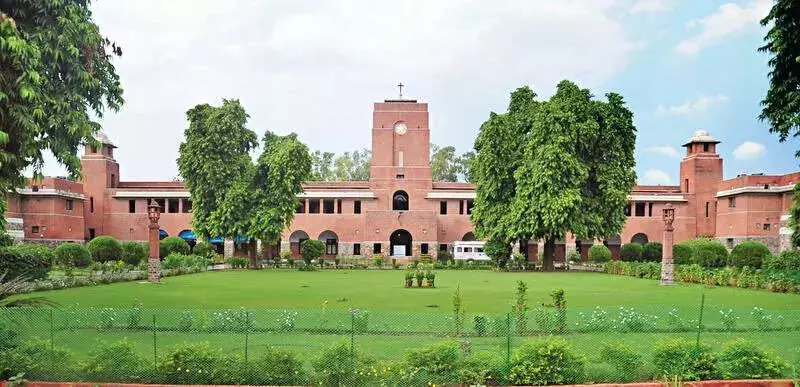
In an unprecedented move within Delhi University (DU), the prestigious St. Stephen's College has decided to engage an external search agency of international repute to assist in selecting its next principal. This decision, announced on December 15, has once again cast a spotlight on the long-running governance tussle between the college and the university, which has persisted for nearly a decade.
A Search for Leadership Through Global Expertise
The college's supreme council, the church-run governing body of this minority institution, issued a call for proposals from search agencies. Interested firms have been directed to submit their lowest quotations, terms, and all relevant details in a sealed envelope addressed to the council's search committee chairman within seven days. The explicit goal is to leverage global expertise to identify suitable candidates for the principal's post, a role that has been a persistent flashpoint.
The core of the disagreement lies in the appointment process itself. Delhi University insists that all appointments must strictly adhere to its statutes and University Grants Commission (UGC) norms. St. Stephen's, however, asserts its right to greater autonomy as a constitutionally protected minority institution. The current principal, John Varghese, was appointed in 2016 through a direct public advertisement by the supreme council for an initial five-year term, a method that bypassed the standard DU procedure. His subsequent extensions have also been mired in legal controversies.

The Unique Rulebook: Morning Assemblies and Disciplinary Control
This latest development coincides with ongoing scrutiny of the college's internal rulebook, which significantly diverges from the norms followed by other DU colleges. A key point of difference is disciplinary jurisdiction. At the time of admission, St. Stephen's students must sign a declaration submitting themselves to the principal's disciplinary authority, not the university's rules.
The college's code of conduct includes several distinctive mandates:
- Mandatory Morning Assembly: All first-year students must attend assembly from Monday to Thursday at 9 AM. Attendance records are a critical factor for awarding scholarships and prizes.
- Strict Attendance Policy: Students are required to attend all lectures, tutorials, and practicals unless granted formal leave. Medical leave applications must be submitted within seven working days and countersigned by parents or authorities.
- Dress and Conduct Code: The rulebook emphasizes dignified dress and behavior in academic settings, the mess, café, and library.
Past Controversies and the Path Forward
These unique rules have frequently drawn objections from student and teacher groups. The issue escalated last year when approximately 100 suspended students were barred from exams via an email from the principal's office due to low assembly attendance. Principal John Varghese later clarified the situation, apologized to students and parents, and called the email a "miscommunication" sent without his prior clearance.
The decision to hire an international search agency is more than a procedural change; it is a strong reaffirmation of the college's quest for independent governance. As the seven-day deadline for agency proposals passes, the academic community watches closely. This move sets a new precedent within Delhi University and ensures that the debate over institutional autonomy, minority rights, and centralized university governance will continue to be a defining narrative for St. Stephen's College.