10 Oldest Universities in the World: Ancient Institutions That Shaped Modern Education
Long before contemporary campuses, student unions, and global rankings existed, there were venerable centers of learning where scholars congregated to debate philosophy, law, astronomy, and theology. What renders the following universities truly extraordinary is not merely their antiquity, but their remarkable continuity. Throughout history, these institutions have endured wars, revolutions, plagues, and political upheavals that reshaped civilizations. Some played pivotal roles in defining what constitutes a "university" in the modern sense, introducing foundational concepts such as degree programs, academic faculties, and intellectual freedom. Others served as crucial repositories of knowledge during turbulent historical periods, preserving wisdom for future generations.
University of al-Qarawiyyin in Fez, Morocco
Founded in 859 CE by Fatima al-Fihri, this institution is widely recognized as the oldest existing university in the world. Originally established as both a mosque and an educational center, it rapidly evolved into a premier learning hub within the Islamic world. The university offered comprehensive education across diverse disciplines including theology, law, mathematics, astronomy, and grammar. Scholars from across North Africa, the Middle East, and even Europe journeyed to Fez to study at this prestigious institution. Its library houses priceless ancient manuscripts, some dating back over a millennium. Remarkably, it continues to function as a university today, maintaining its original character while adapting to contemporary higher education in Morocco.
Al-Azhar University in Cairo, Egypt
Established in 970 CE during the Fatimid Caliphate, Al-Azhar initially served as a Muslim educational institution connected to the Al-Azhar Mosque. It quickly grew to become one of the most revered centers of learning in the Muslim world. For centuries, it exerted profound influence over theological and legal discourse across vast regions. Gradually expanding its curriculum beyond purely Islamic subjects, it incorporated modern sciences such as medicine, engineering, and commerce. Today, Al-Azhar functions as both a religious institution and a comprehensive university with international branches attracting students from around the globe.

University of Bologna, Bologna, Italy
Founded in 1088, the University of Bologna holds the distinction of being Europe's oldest university and is credited with pioneering the modern university system. This institution introduced revolutionary concepts including structured degree programs and academic guilds. It gained particular renown for its exceptional courses in Roman law, drawing students from throughout Europe. The term "alma mater" (nourishing mother) became famously associated with this university, reflecting its foundational role in higher education. The University of Bologna remains one of Italy's most prestigious academic institutions to this day.
University of Oxford, Oxford, England, United Kingdom
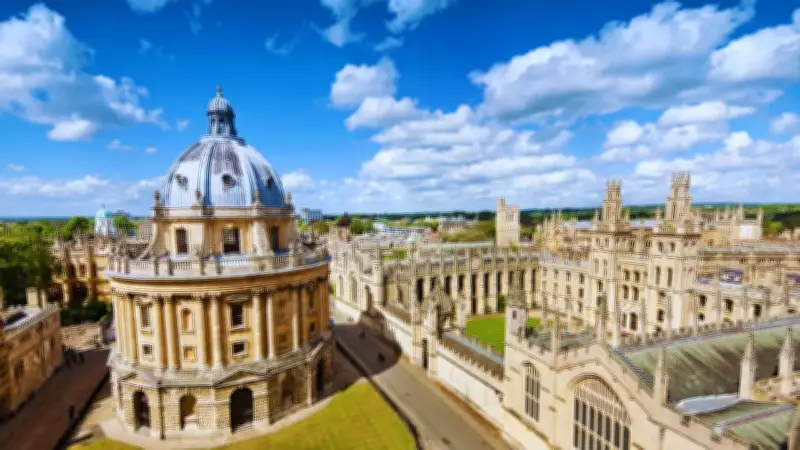
Teaching activities at the University of Oxford commenced in 1096, establishing it as the oldest university in the English-speaking world. This development occurred partly because English students faced restrictions from attending Parisian universities during the 12th century. Oxford operates as a collegiate university, comprising autonomous colleges within a larger university framework. Throughout its illustrious history, Oxford has produced numerous world leaders, groundbreaking scientists, celebrated writers, and Nobel Prize laureates, cementing its global academic reputation.
University of Salamanca in Salamanca, Spain
Founded in 1134 and formally recognized in 1218, Salamanca emerged as one of medieval Europe's leading intellectual centers. It exerted significant influence across multiple disciplines including law, philosophy, and theology. During Spain's imperial expansion, its scholars engaged with critical issues of international law, colonial administration, and human rights, substantially shaping global legal frameworks. The university's magnificent architectural heritage continues to serve as a cultural icon in Spain, while the institution maintains its status as a premier educational establishment.

University of Paris, Paris, France
Dating back to approximately 1150, the medieval University of Paris represented a formidable force in theological and philosophical education. It gained particular fame through its Sorbonne college, which later became synonymous with academic excellence. The university played an instrumental role in developing scholastic philosophy during the Middle Ages. Following its dissolution during the French Revolution, it eventually reorganized into multiple independent institutions that continue its educational legacy.
University of Cambridge, Cambridge, England, United Kingdom
Established in 1209 by scholars who departed Oxford due to academic disputes, Cambridge positioned itself as a rival educational institution from its inception. Like Oxford, it adopted and maintains a collegiate university structure. Cambridge has cultivated a distinguished history of excellence in scientific and mathematical fields, with iconic figures such as Isaac Newton among its associated scholars. Over centuries, it has evolved into one of the world's foremost research universities while preserving its rich historical traditions.
University of Padua, Padua, Italy
Founded in 1222, the University of Padua earned recognition for its progressive educational approaches. It developed outstanding reputations in medicine, astronomy, and philosophy, becoming a strong advocate for academic freedom that attracted independent-minded scholars. The legendary Galileo Galilei served as a professor here during the late 16th century. Its anatomical theater, constructed in 1595, stands as one of the oldest surviving structures of its kind, symbolizing the university's historical contributions to medical science.
University of Naples Federico II, Naples, Italy
Established in 1224 by Emperor Frederick II, this institution represented a groundbreaking development as a state-funded university rather than a church-affiliated institution. This marked a significant step toward the establishment of secular, government-supported higher education. Unlike other medieval universities typically associated with religious bodies, Naples Federico II was conceived as a secular institution designed to serve state administration needs.
University of Siena in Siena, Italy
Formally established in 1240, the University of Siena evolved from pre-existing institutions specializing in law and medicine. During the medieval period, it gained considerable recognition for its exceptional law and medical departments. Despite Italy's numerous political and economic fluctuations over centuries, the university has maintained continuous operation within its original Tuscan environment, preserving its academic heritage through changing times.
These ten ancient universities represent more than historical curiosities—they embody living traditions of scholarship that have survived centuries of challenges. Their endurance through wars, plagues, and societal transformations demonstrates the enduring human commitment to knowledge preservation and intellectual advancement. From North Africa to Europe, these institutions have fundamentally shaped educational systems, legal frameworks, scientific discovery, and cultural development across continents. Their continued operation today serves as powerful testament to the timeless value of higher learning and the remarkable resilience of institutions dedicated to the pursuit of knowledge.