Telangana High Court Directs Inclusion of Karnataka and Andhra Schools in Republic Day Band Competition
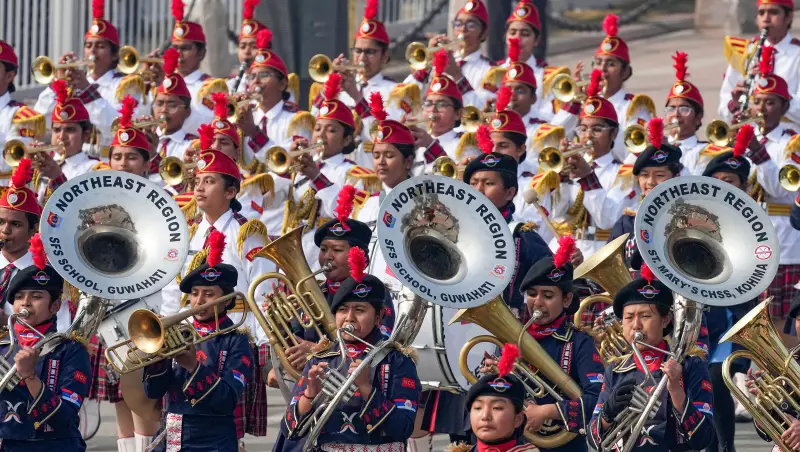
The Telangana High Court has issued a significant ruling, directing the Central government to permit students from two schools—one located in Karnataka and another in Andhra Pradesh—to take part in the National School Band Competition. This prestigious event is scheduled to be held in New Delhi as an integral component of the Republic Day celebrations.
Legal Battle Over Eligibility and Arbitrary Cancellation
The schools involved in this case are PS Shiva Shankarappa EM Residential School from Davanagere in Karnataka and Montessori Indus Residential School from Kurnool in Andhra Pradesh. These institutions approached the Telangana High Court after the Union Ministry of Education overturned a prior decision that had granted them eligibility for the national-level competition.
Advocate Naman Mankadari, representing the schools, presented a compelling argument before the court. He contended that the ministry's action of cancelling the previously announced results of state-level competitions and declaring fresh results was arbitrary, illegal, and in violation of constitutional principles. Specifically, he highlighted that this was done without providing any reasons, prior notice, or an opportunity for a hearing, thereby infringing upon Articles 14 and 21 of the Constitution.

Court's Emphasis on Patriotism and Inclusivity
A single-judge bench presided over by Justice Nagesh Bheemapaka delivered the ruling in favor of the schools. In its decision, the court underscored the profound impact that participation in Republic Day celebrations can have on young minds. It emphasized that such opportunities leave a lasting impression, significantly strengthening the patriotic spirit among students.
The court articulated a broader perspective, stating, "Courts and institutions alike must therefore be sensitive to the enthusiasm and tender emotions of children, and seek to encourage, rather than discourage, their involvement in such national celebrations, so that the spirit of Republic Day remains inclusive, uplifting, and inspiring for all." This statement reflects the judiciary's commitment to fostering a sense of national pride and inclusion among the youth.
Pragmatic Approach and Defense by the Centre
In its ruling, the court adopted a pragmatic and equitable approach, noting that it was not inclined to pass any adverse orders against the students, whom it referred to as "the children of our nation." The bench reasoned that doing so would cause irreparable prejudice to these young learners. Consequently, the court concluded that the interest of justice would be best served by allowing the school teams to participate in the competition.
On the other side, Deputy Solicitor General of India N Bhujanga Rao, appearing for the Centre, defended the ministry's action. He asserted that the cancellation was in accordance with the guidelines issued for the competition. The timeline of events shows that the results were initially announced on December 12, 2025, and subsequently cancelled by the ministry on January 12, 2026.
Background and Organizational Structure of the Competition
The National School Band Competition is being conducted by the Department of School Education and Literacy under the Ministry of Education, in collaboration with the Ministry of Defence. Schools participating in this event are divided into various zones across the country.
The southern zone, which is relevant to this case, comprises educational institutions from several states and union territories, including:
- Chhattisgarh
- Andhra Pradesh
- Telangana
- Tamil Nadu
- Puducherry
- Karnataka
- Kerala
- Andaman and Nicobar Islands
- Lakshadweep
This zoning system aims to ensure fair representation and competition among schools from different regions, highlighting the national character of the event.
The court's decision not only resolves the immediate legal dispute but also sets a precedent for handling similar cases involving student participation in national events. It reinforces the importance of transparency, fairness, and the nurturing of patriotic values through inclusive celebrations.