The Punjab School Education Board (PSEB) has announced sweeping reforms that will significantly change how computer science subjects are examined for Class 10 and Class 12 students. These changes mark a substantial shift in the board's examination methodology, particularly for practical components.
Major Examination Reforms Introduced
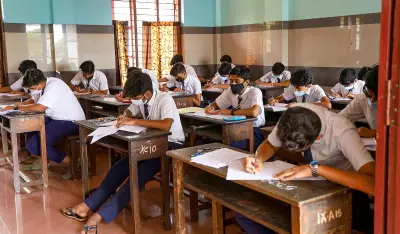
In a decisive move to standardize evaluation processes, the PSEB will now conduct external practical examinations for computer science subjects. This means that practical exams will be assessed by external examiners rather than internal school faculty, ensuring greater objectivity and uniformity in assessment across all affiliated schools.
The board has also decided that question papers for computer science subjects will be set by the board itself, moving away from the previous system where schools had some autonomy in paper setting. This centralization aims to maintain consistent difficulty levels and evaluation standards throughout Punjab.

Implementation Timeline and Scope
These significant changes will take effect from the current academic session 2023-2024, affecting thousands of students across the state. The reforms specifically target computer science education at both secondary and senior secondary levels, reflecting the growing importance of digital literacy in modern education.
The decision was made during a recent meeting of the PSEB, where education officials emphasized the need for more robust assessment mechanisms in technical subjects. Computer science has become increasingly popular among students, necessitating more standardized evaluation methods to properly gauge student competency.
Impact on Students and Schools
For students, these changes mean that practical examinations will carry more weight and require thorough preparation. The external assessment system ensures that all students are evaluated against the same benchmarks, eliminating potential inconsistencies in internal assessment practices across different schools.
Schools will need to adapt their teaching methodologies to align with the new examination patterns. The centralized paper setting requires institutions to cover the entire syllabus comprehensively, as students will face uniformly set questions regardless of their school's individual focus areas.
Education experts believe these reforms will enhance the credibility of PSEB certificates and better prepare students for higher education and professional environments where standardized testing is common. The changes particularly benefit computer science students who often pursue further studies in competitive fields requiring strong practical foundations.
Broader Educational Implications
The PSEB's decision reflects a larger trend in Indian education toward standardized assessment and quality assurance. By implementing external practical exams, Punjab joins other states in strengthening technical education evaluation systems.
These reforms are expected to improve learning outcomes in computer science by creating a more rigorous examination environment. Students will need to demonstrate genuine understanding and practical skills rather than relying on school-specific evaluation leniency.
The board has assured schools and students that adequate notice and guidelines will be provided to ensure smooth transition to the new system. Training programs for teachers and detailed syllabi adjustments are likely to follow as the implementation progresses throughout the academic year.
As digital skills become increasingly crucial in the job market, these reforms position Punjab students to compete more effectively at national and international levels, with qualifications that carry greater weight and recognition beyond state boundaries.