NCERT Withdraws Class 8 Textbook and Issues Unconditional Apology After Supreme Court Ban
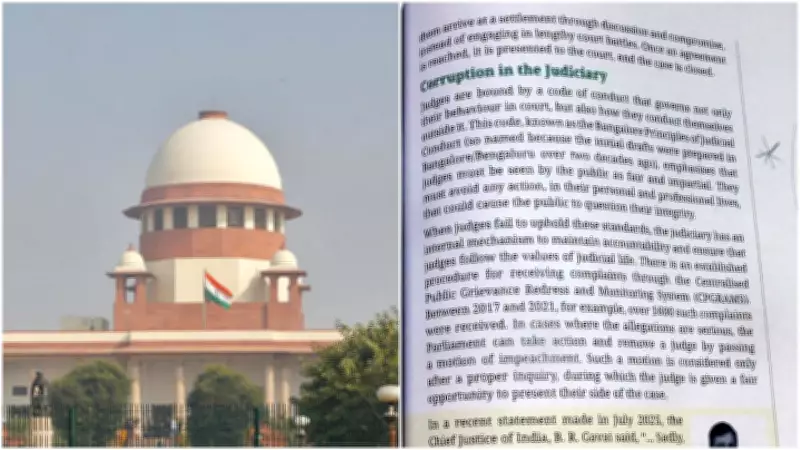
In a significant development in India's educational landscape, the National Council of Educational Research and Training (NCERT) has taken decisive action by withdrawing a Class 8 textbook from circulation. This move comes directly in response to a recent Supreme Court order that imposed a ban on the book, prompting immediate compliance from the council.
Supreme Court Order Triggers Immediate Withdrawal
Following the Supreme Court's directive, NCERT has not only halted the availability of the textbook in the market but has also issued what it describes as an "unconditional" apology. The court's ruling, which was delivered earlier this week, mandated the removal of the book due to concerns that have not been fully detailed in public statements but are understood to relate to content issues.
The council acted swiftly to implement the court's order, ensuring that the textbook is no longer accessible to students, educators, or the general public. This withdrawal marks a critical step in adhering to judicial oversight in educational materials, highlighting the importance of legal compliance in academic publishing.

Apology and Compliance Measures
In its statement, NCERT expressed regret over the situation and emphasized its commitment to upholding educational standards. The unconditional apology underscores the council's acknowledgment of the court's authority and its dedication to rectifying the matter promptly. This incident raises important questions about the review processes for textbooks and the mechanisms in place to address potential controversies before publication.
Educational experts have noted that such withdrawals are rare but necessary when legal boundaries are crossed. The move is expected to have implications for future textbook approvals and content vetting by NCERT, potentially leading to more stringent checks to prevent similar occurrences.
Broader Implications for Education and Governance
This event sheds light on the interplay between judiciary and educational bodies in India, showcasing how court decisions can directly influence academic resources. It also reflects on the broader themes of governance and accountability in public institutions, as NCERT operates under the Ministry of Education.
As the story develops, stakeholders in the education sector are closely monitoring the aftermath, including any potential revisions or replacements for the withdrawn textbook. The unconditional apology from NCERT may serve as a precedent for how educational councils respond to legal challenges, emphasizing transparency and compliance.
In summary, the withdrawal of the Class 8 textbook by NCERT, coupled with an unconditional apology, demonstrates a swift response to Supreme Court directives, reinforcing the role of judicial oversight in maintaining educational integrity in India.