NCERT Removes Controversial Map Showing Jaisalmer as Part of Maratha Empire
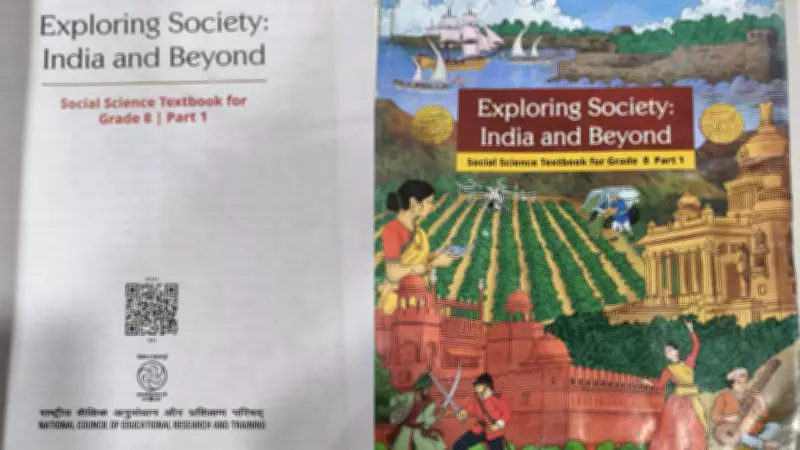
The National Council of Educational Research and Training (NCERT) has taken decisive action by removing a controversial map from its Class 8 Social Science textbook. The map, which inaccurately portrayed the princely state of Jaisalmer as part of the Maratha Empire, has been excised from the updated digital edition for the academic session 2025–26. This move comes after significant backlash and formal objections from various stakeholders who deemed the depiction historically misleading and factually incorrect.
Widespread Opposition from Royal Families and Leaders
The issue ignited strong opposition across Rajasthan, with the former Jaisalmer royal family at the forefront. Maharawal Chaitanyaraj Singh, a member of the former royal family, raised serious objections, labeling the map a grave error and demanding immediate correction from Union Education Minister Dharmendra Pradhan. His concerns were echoed by other former royal families, including those from Mewar and Bundi, who also objected to the depiction of their regions as part of the Maratha Empire.
In August 2025, prominent figures such as Vishvaraj Singh Mewar, his wife and Rajsamand MP Mahima Kumari, and former Bundi royal Bhupesh Singh Hada formally submitted representations to the central government, urging the removal of the incorrect map. Critics argued that there is no historical evidence in official records, archival documents, or authentic sources to support any Maratha dominance, taxation, invasion, or interference in Jaisalmer. Historical accounts consistently state that the Marathas never had control or influence over the region.

NCERT's Response and Correction
Responding to the widespread concerns, NCERT has removed the controversial Map 3.11 from the revised edition of the textbook. The latest digital version now reflects this correction, omitting the disputed content entirely. This decision was confirmed by Maharawal Chaitanyaraj Singh, who noted that objections were initially raised on social media before being formally communicated to NCERT. He welcomed the move, emphasizing that academic institutions have a responsibility to provide accurate and authentic knowledge to students.
Reactions from Historians and Local Residents
Devendra Pratap Singh, Director of the Jaisalmer Fort Palace Museum, described the removal as a positive step. However, he added that NCERT should issue an apology, as the earlier depiction had hurt the sentiments of many people in the region. Following the map's removal, there is a sense of satisfaction among Jaisalmer residents. Historians and locals have emphasized the region's rich and glorious history, citing events like the “Dhai Saka” as testament to its legacy. They argue that questioning such a heritage without solid historical evidence is unacceptable and view NCERT's decision as a necessary corrective measure.
The controversy highlights the importance of historical accuracy in educational materials and the need for institutions like NCERT to engage with stakeholders to ensure factual correctness. The removal of the map is seen as a step toward preserving the integrity of historical narratives and respecting regional identities.