Maharashtra Government Reinstates 3-km Radius for RTE Admissions in Private Schools
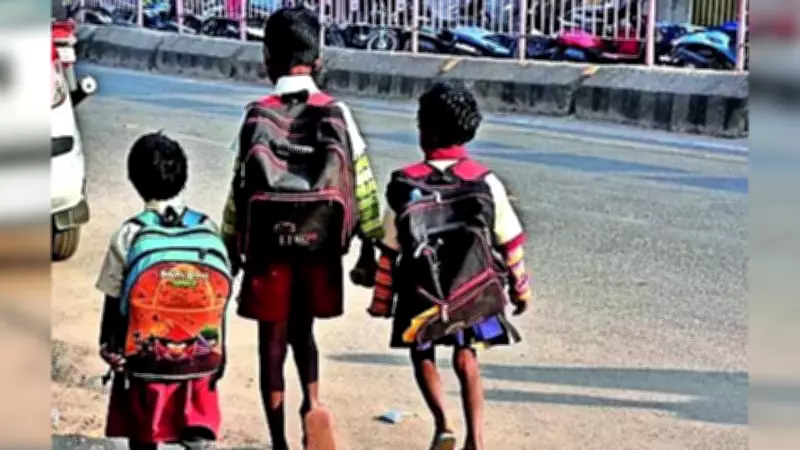
The Maharashtra state government has officially reversed its controversial decision to restrict admissions under the Right to Education (RTE) quota in private unaided schools to a 1-kilometer radius. This significant policy rollback effectively restores the earlier and more expansive 3-kilometer eligibility norm, allowing parents to apply to any private school within a 3-km radius of their residence.
Court Intervention Leads to Policy Reversal
This important reversal comes directly in response to a stay order issued by the Nagpur bench of the Bombay High Court. The court intervened on provisions that were introduced through a government resolution dated February 12, 2024. That resolution had controversially reduced the permissible distance for RTE admissions from the established 3 km down to just 1 km, sparking widespread concern among parents and education advocates.
Understanding the RTE Quota System
Under the landmark Right to Education Act, eligible private unaided schools across India are mandated to reserve 25% of their entry-level seats for children from economically and socially disadvantaged sections. The government provides reimbursement for the fees of these students. Specifically, children of parents whose annual income is less than ₹1 lakh are eligible under the economically weaker section category.

Educational Experts Welcome the Decision
Mahendra Ganpule, former vice-president of the Maharashtra School Principals Association, expressed strong support for the court's decision and the subsequent government reversal. He stated that the earlier 1-km restriction had unnecessarily and severely limited the scope of RTE admissions across the state.
"The new rule needlessly brought a limitation to the provisions of the RTE admissions and it is good that the high court ruled against them," Ganpule explained. "Parents want to send their children to reputed and the best schools possible and don’t mind travelling to do so. The 1-km restriction was artificially constraining parental choice and educational opportunity."
Revised Admission Priority System
With the restoration of the 3-km radius, the government has also clarified the revised admission priority system that will now be implemented:
- First Priority: Students residing within 1 km of a school
- Second Priority: Those within a 1–3 km radius of the school
- Third Priority: Applicants from beyond 3 km, subject to availability of seats
Application Statistics and Deadline Extension
The policy reversal comes at a critical time in the admission cycle. So far, approximately 2,24,000 applications have been received under the RTE quota across Maharashtra for the current academic year.
In a related administrative move, the government has extended the application deadline for RTE admissions from March 18 to March 25. This extension was necessitated by technical delays in opening the online application portal, providing additional time for parents to complete their applications under the restored 3-km eligibility criteria.
Broader Implications for Educational Access
This policy reversal represents a significant victory for educational equity advocates who argued that the 1-km restriction would disproportionately affect families in areas with limited school options. The restoration of the 3-km radius ensures that more economically disadvantaged students can access quality private education through the RTE quota system, aligning with the broader objectives of the Right to Education Act to provide equal educational opportunities regardless of socioeconomic background.