Maharashtra Considers Major Reforms in Junior College Admissions
The Maharashtra school education department is actively considering two significant proposals that could reshape the admission landscape for first-year junior college (FYJC) students across the state. These changes aim to enhance educational access and streamline the transition from school to higher secondary education.
Proposed 50% Reservation for Girl Students
In a move to bolster gender equity in education, the department is evaluating a proposal to increase the existing quota for girls in FYJC from 30% to 50%. This initiative seeks to improve access for female students and encourage their continued participation in education from an early stage. The proposal is currently under review at the office of Minister Dada Bhuse, with officials noting the need to study its broader implications.
A government official highlighted that there have been persistent demands from parents for a 50% reservation for girls in FYJC. "In many colleges, girls already constitute more than half of the student body. When women achieve 50% representation in local self-government bodies, it is logical to extend equal representation in educational institutions. The goal is to incentivize higher secondary education for them," the official explained.

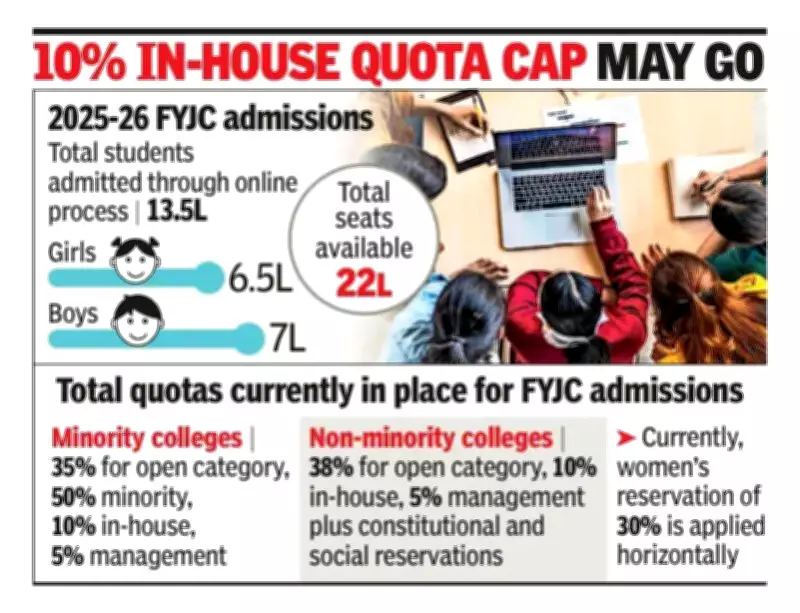
Data from last year reveals that of the 13.5 lakh students admitted to junior colleges through the online process, 48% were girls. With total seats available at 22 lakh, the impact of this policy change requires careful assessment. The official emphasized that if implemented, this policy would ensure that girls do not drop out due to a lack of seats in colleges near their homes. "We aim to make higher secondary education as accessible as possible for them," he added.
A Mumbai college principal, whose FYJC batches consist of 50-60% girls, noted that while girls already outperform boys in some urban colleges, this policy could particularly benefit students from rural areas. However, another principal cautioned that junior colleges offering integrated coaching for competitive exams like IITs might experience some impact from this change.
Easing In-House Quota Restrictions
In another pivotal development, the department is considering the removal of the 10% cap on the in-house quota for junior colleges. This change would allow students from schools attached to junior colleges or managed by the same entity to receive first preference in admissions, facilitating a smoother progression similar to practices in CBSE and ISC schools.
The official detailed that students from affiliated schools could directly secure admission in the 'zero round,' irrespective of cutoffs, providing them with an additional option. "The department plans to not restrict this at 10%. For this arrangement, colleges and schools under the same management can be located in the same building, complex, or even within the same district. In Mumbai, this could extend to the entire Mumbai Metropolitan Region," he stated.
While this proposal is likely to be implemented, it has raised concerns among some educators. A college principal pointed out that it could reduce the number of seats available for meritorious students from outside the institution, particularly in top colleges where the management also operates schools.
Broader Implications and Future Steps
Both proposals are part of a broader effort to reform the FYJC admission process in Maharashtra. The increase in the girls' quota is seen as a step toward gender parity in education, while the easing of in-house quota restrictions aims to create a more seamless educational pathway for students.
As these proposals undergo further scrutiny, stakeholders across the education sector will be closely monitoring their potential effects on student demographics, college admissions, and overall educational outcomes in the state.