Lucknow University Campus Sees Third Day of Religious Tensions at Historic Lal Baradari
Tensions continued to simmer at Lucknow University for the third consecutive day on Tuesday, as students affiliated with the Akhil Bharatiya Vidyarthi Parishad (ABVP) attempted to perform religious activities outside the historic Lal Baradari on the university campus. The ABVP members tried to recite the Hanuman Chalisa, sprinkled Gangajal to purify the area, and raised religious slogans, leading to a confrontation with authorities and other student groups.
Retaliation Against Earlier Namaz Offering
The actions by ABVP students were in direct retaliation to namaz offered by some Muslim students outside the same Baradari on Sunday. This occurred after the students discovered that the entrance to a mosque located inside the 200-year-old Nawabi-era monument had been sealed by Lucknow University authorities. The university cited safety concerns, stating the building poses a risk due to its dilapidated condition.
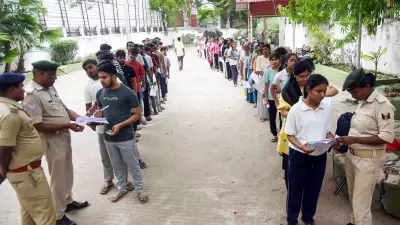
Police and members of the university's proctorial board swiftly intervened to stop the ABVP students. The protesters were detained by police but were later released without further charges, as the situation was brought under control through law enforcement efforts.

Student Leaders Question University's Stance
Student leaders, including Saurabh Singh Bajrangi and Shashi Prakash, argued that the Lal Baradari has historically housed facilities such as a canteen, bank, and community hall, rather than serving as a dedicated place of worship. They posed a critical question: "If Muslim students were allowed to offer namaz, what is the problem with reciting Hanuman Chalisa?" This highlights the ongoing debate over religious equality and access on campus.
Support for Muslim Students and Demands for Prayer Space
Muslim students received backing from several student organizations, including the Samajwadi Chhatra Sabha, the National Students' Union of India (NSUI), and the All India Students' Association (AISA). These groups have demanded that the university either reopen the sealed mosque entrance or allocate a separate, designated area for Muslim students to offer namaz and conduct roza iftari during the ongoing holy month of Ramzan.
These supporting student bodies also staged demonstrations on Monday outside the Baradari, which led to confrontations with right-wing groups and escalated tensions. Police intervention was necessary to restore order and prevent the situation from deteriorating further.
University Response and Legal Actions
In the aftermath of the incidents, police issued challans (legal notices) to some of the students who offered namaz on Sunday and others who supported them. The authorities cited concerns that their actions could have disturbed law and order on the campus.
Lucknow University spokesperson Mukul Srivastava provided additional details, noting that some students who protested against the closure of the Baradari entrance also engaged in acts of vandalism. As a result, the university has issued showcause notices to those involved. Srivastava added, "We have also sought police help in restricting the entry of six former students who were involved in the incident," emphasizing the institution's commitment to maintaining campus security and discipline.
The ongoing situation at Lucknow University underscores broader issues of religious freedom, campus safety, and the management of historic spaces within educational institutions. As tensions persist, the university community awaits further developments and potential resolutions to ensure a peaceful and inclusive environment for all students.