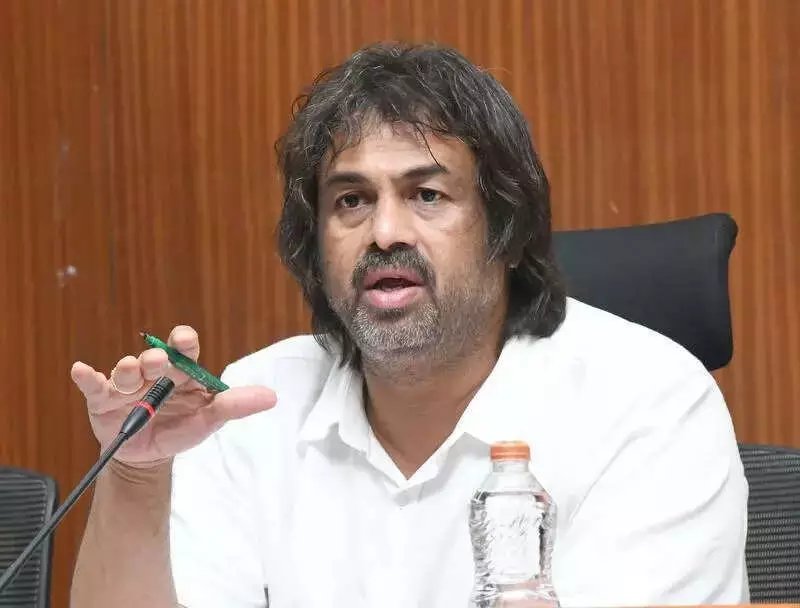
In a significant move to overhaul the state's education system, Karnataka's Primary and Secondary Education Minister, Madhu Bangarappa, has announced a comprehensive plan to address a critical shortage of teachers and expand school infrastructure. The minister revealed that the state is currently facing a deficit of more than 51,000 teaching positions.
Massive Recruitment Drive Underway
Addressing the media at the Zilla Panchayat hall in Kalaburagi on Wednesday, Minister Bangarappa provided a detailed breakdown of the recruitment process. He confirmed that the hiring of 13,000 teachers has already been completed. To tackle the remaining shortage, a decisive plan has been formulated.
The government has ordered the recruitment of 5,800 teachers through the Teacher Eligibility Test (TET) examination. Furthermore, the process to fill an additional 5,000 posts is currently ongoing. The minister emphasized a focused approach for the Kalyan Karnataka region, where a decision has been taken to recruit candidates for 80% of the local teacher vacancies.

Bangarappa gave a firm assurance that 100% of the teacher recruitment will be finalized before the commencement of the next academic year, signaling a strong commitment to staffing schools adequately.
Infrastructure Boost: 300 New Schools for the Region
Alongside filling vacancies, the state is embarking on a major expansion of educational infrastructure in the Kalyan Karnataka region. The minister outlined a two-pronged initiative:
- The Education Department will establish 100 new schools.
- The Kalyana Karnataka Region Development Board (KKRDB) will set up 200 new KPS schools.
These KPS schools are designed as integrated institutions, offering education from LKG (Lower Kindergarten) all the way to 2nd PUC (Pre-University Course) within a single campus. The curriculum in these schools will be enriched with computer education, music, bilingual learning, and skill-based training, tailored appropriately for each class level.
Expressing his vision, Bangarappa stated that he is confident these measures will bring about a qualitative transformation in the education sector within the next three to four years.
Exam Reforms and New Attendance System
The minister also highlighted recent successful reforms in the examination system. He informed that allowing students to attempt the SSLC (Secondary School Leaving Certificate) and II PUC exams three times a year has yielded positive results. Thanks to this policy, 1.1 lakh SSLC students and 56,000 II PUC students passed in 2025.
Looking ahead, from the next academic year (2026-27), the state will implement a mandatory face-to-face attendance system for both teachers and students. This system will also be extended to the II PUC level, aiming to improve engagement and accountability in the learning process.