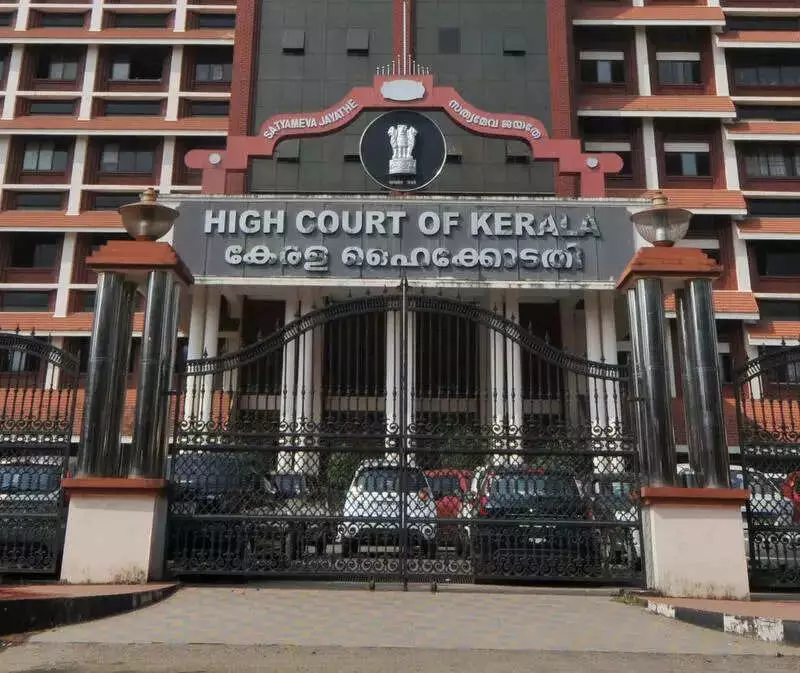
In a significant move to reform religious education, the Kerala High Court has issued a directive to the Travancore Devaswom Board (TDB). The court has ordered the board to constitute a seven-member expert committee within one month. This committee's mandate is to conduct a comprehensive study for the complete restructuring of the syllabus taught in the religious education institutions, known as mathapatasalas, under the TDB's purview.
Court's Directives and Committee Composition
The bench of Justices V Raja Vijayaraghavan and K V Jayakumar delivered the order. The court specified that the committee must comprise individuals with specialized knowledge in diverse fields. These include Sanskrit, the Bhagavad Gita, the Upanishads, temple arts, temple vadyams (percussion instruments), and other temple-related matters.
The committee is required to submit its detailed report to the High Court within four months of its formation. The bench further instructed that the panel must include a retired professor from the Sree Sankaracharya University of Sanskrit in Kalady, and a representative from the Chinmaya International Foundation in Veliyanad, Ernakulam. Additionally, working or retired faculty members from the prestigious Kerala Kalamandalam must be included. The TDB has the liberty to also include eminent academicians proficient in syllabus formulation.

Background and Court's Observations
The High Court was considering a 2019 report from the devaswom ombudsman while hearing a petition filed by Sundaresan Pillai of Punalur. The petition alleged that despite substantial funds being allocated in the budget for the upkeep and functioning of mathapatasalas, the TDB had failed to utilize them adequately.
Upon examining the existing byelaws and prescribed syllabus, the court made strong observations. It found the current framework governing these institutions to be "fundamentally flawed and manifestly deficient." A critical flaw noted was that the scheduling of instructional hours overlapped with students' regular academic school commitments. The court held that this overlap potentially infringed upon the students' right to education and caused undue interference with their mainstream scholastic pursuits.
Proposed Subjects and Budgetary Reforms
The High Court did not just point out flaws but also provided guidance for the new curriculum. It directed the committee to consider incorporating a range of modern and traditional subjects. The proposed subjects for the revised curriculum include:
- Introduction to Vedic chanting and mantra recitation
- Fundamentals of Hindu ethics and moral philosophy
- Temple rituals and traditions
- Traditional Kerala performing arts like Kathakali
- Basic Indian classical music and temple arts
- Indian astronomy and Panchanga basics
- An introduction to the Sanskrit language
- Environment and ecology in Hindu thought
In a crucial move towards financial accountability, the HC also directed the TDB to formulate an annual budget for mathapatasalas in a structured, phased manner. This should begin with essential requirements like developing basic infrastructure and engaging qualified instructors. To prevent the lapse of funds, the court ordered that budgetary allocations be transferred to a separate bank account. This directive aims to ensure transparent and efficient utilization of the funds earmarked for these religious schools.
This landmark order by the Kerala High Court is expected to bring a systematic and scholarly overhaul to the traditional religious education system managed by the TDB, aligning it better with contemporary educational needs while preserving core traditional knowledge.