In today's technology-centric era, where artificial intelligence (AI) provides instant answers, a critical human element remains irreplaceable. The onus of nurturing emotionally intelligent, compassionate, and resilient children falls squarely on parents and educators. While AI excels at processing data, it lacks the capacity for empathy, connection, and understanding that defines human relationships. This makes fostering Emotional Intelligence (EI) more crucial than ever for the holistic development of young minds in India.
The Core of Emotional Intelligence and Its Lifelong Impact
Emotional Intelligence is the fundamental ability to recognize, comprehend, and manage one's own emotions while being sensitive to the feelings of others. This skill set, encompassing self-awareness, self-regulation, empathy, social skills, and resilience, forms the bedrock for building strong relationships and navigating social complexities. Prioritizing EI ensures children grow into adults who can contribute positively to society and maintain healthy interpersonal connections.
Research underscores the pivotal role of a strong parent-child bond in enhancing EI. Studies, including those by Guasp Coll et al. (2020) and Herut et al. (2024), confirm that emotional responsiveness and open expression within families directly boost a child's emotional capabilities. Furthermore, recent findings indicate that effective family communication can significantly elevate students' EI, suggesting its potential inclusion in school health initiatives to support adolescent emotional development.

Classrooms as Crucibles for Compassion and Collaboration
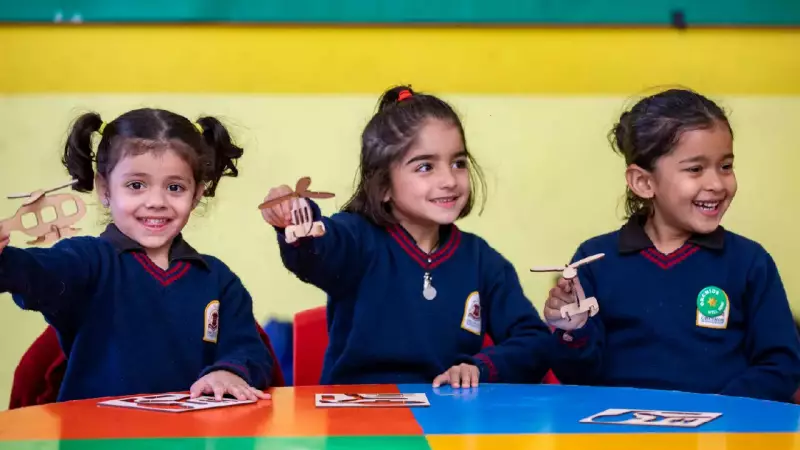
Schools serve as a microcosm of society where children learn to collaborate, respect differences, and work towards common goals. Teachers are instrumental in reinforcing values like kindness and inclusivity, ensuring every student feels valued. Activities designed to promote teamwork—such as group projects and discussions—teach children to appreciate diverse perspectives and listen actively.
Shifting the educational focus towards collaboration prepares children for future professional and social environments. When children work together, share resources, and support one another, they forge stronger bonds and achieve better collective outcomes. Instilling kindness as a core, continuous value cultivates a supportive atmosphere where challenges are met with teamwork and mutual respect.
Spotlight on Orchids The International School's Holistic Approach
One institution proactively embedding these principles into its curriculum is Orchids The International School. Recognizing that education extends beyond academic syllabi, the school emphasizes life skills and emotional quotient (EQ) development. It conducts specialized workshops and interactive sessions focused on problem-solving, time management, and communication—skills essential for academic, personal, and professional success.
The school is deeply committed to inclusive education. A dedicated team of special educators works with students having unique learning needs, creating individualized education plans that allow them to learn at a comfortable pace. Orchids also promotes social integration through awareness programs and sensitization workshops on diversity and inclusion, fostering a compassionate community where every student feels seen and heard.
Orchids drives social and emotional growth through its special Social and Emotional Learning (SEL) modules and the SOCH initiative. From Grade 1 to Grade 10, educators conduct sessions on self-awareness, social awareness, empathy, relationships, responsibility, and decision-making.
Archana Padhye, Head of the Department for Children with Special Needs (CWSN) at Orchids, emphasizes the urgency of this mission. "In the age of artificial intelligence, emotional intelligence is an essential trait for kids," she states. "While AI handles information and logic, only humans are capable of comprehending and reciprocating empathy, connections, and opinions... It helps them to navigate complex situations, understand subtle social cues that AI misses, build real human bonds, and develop resilience. As educators, it’s our responsibility to prepare children not just to use AI, but to lead with humanity, compassion, and resilience in an AI-driven future."

As the world increasingly relies on technology, continuously building and polishing emotional intelligence is non-negotiable. It is the strong foundation that supports truly holistic development, ensuring children grow into well-rounded individuals capable of leading with heart in a digital world.