Delhi's Metro Bridge School: Grocer's Vision Educates Hundreds in Open-Air Classroom
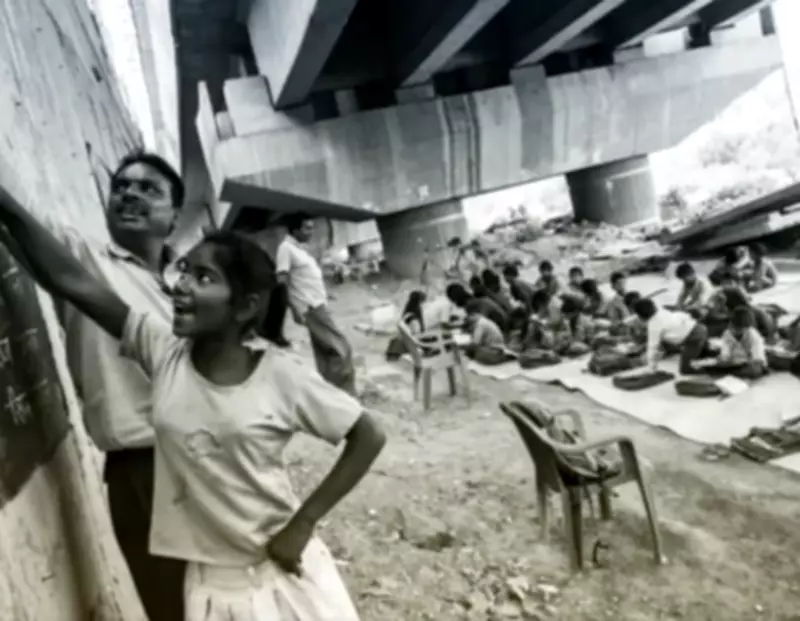
Beneath the elevated tracks of the Yamuna Bank metro station in Delhi, an extraordinary educational initiative quietly unfolds each day. On a dusty stretch of land, a unique classroom materializes where the rumble of passing trains blends seamlessly with the voices of children reciting their lessons. This open-air school, operating under concrete pillars painted with alphabets and numbers, has become a beacon of hope for hundreds of children from nearby slum settlements.
The Unlikely Educator: From Grocery Shop to Classroom
At the heart of this remarkable endeavor stands Rajesh Kumar Sharma, a grocery shopkeeper whose own educational journey was cut short due to financial constraints. In 2006, while walking near the Yamuna riverbanks, Sharma observed children playing in the mud instead of attending school. When he inquired, he discovered their families couldn't afford school fees, with many parents working as daily wage laborers or ragpickers.
Instead of walking away, Sharma returned the next day with a notebook and chalk. He sat down with two children beneath the metro bridge and began teaching basic reading and arithmetic. Within days, more children joined, and within weeks, what began as an improvised effort had organically grown into a functioning school.

The Free School Under the Bridge: An Unconventional Learning Space
Today, the initiative is widely known as the Free School Under the Bridge, an informal educational space operating beneath the Delhi Metro Rail Corporation network. The school has developed a distinctive approach to learning:
- Concrete pillars serve as blackboards, with letters, multiplication tables, and diagrams painted directly on their surfaces
- Children sit on mats spread across the ground, using notebooks and pencils donated by well-wishers
- Daily attendance ranges between 200 and 300 students, managed through shift-based classes
- Volunteer teachers from nearby colleges, working professionals, and local residents contribute their time
- The curriculum includes English, mathematics, and basic science fundamentals
The environment presents unique challenges, with metro trains rumbling overhead every few minutes. Yet the classroom rhythm continues uninterrupted, with children becoming accustomed to the urban background noise.
Sustaining Education Against All Odds
Operating a school without walls means operating without steady institutional funding. Sharma continues running his grocery shop to support his family while dedicating substantial portions of his day to the school. The initiative survives primarily through:
- Small individual donations providing books, stationery, and mats
- Volunteer contributions of chalk, drinking water, and basic teaching materials
- Community goodwill and persistent dedication despite media attention not translating into formal funding
The open-air setting creates practical difficulties during extreme weather conditions—intense summer heat, winter fog, and monsoon rains all disrupt classes. Yet for nearly two decades, the school has persevered through the determination of both teacher and students.
Transforming Lives Through Basic Education
For many children from nearby settlements, the bridge classroom offers their first experience of structured learning. The school provides more than just academic lessons—it establishes routine and aspiration for children who might otherwise spend their days working or wandering.
Some students who begin their education here later transition into formal government schools, having acquired basic literacy skills and confidence through the bridge school's foundation. Teachers who visit the site often describe the environment as simple yet powerful—a place where children learn to read, count, and write in a location that previously held no educational purpose.
A Legacy of Persistence and Community Impact
What makes Sharma's work truly remarkable isn't scale or infrastructure, but persistence. The school didn't emerge from funding programs or institutional planning—it grew from a simple 2006 decision to sit down with two children and begin teaching.

Nearly twenty years later, that decision continues creating ripples through the lives of hundreds of students who have passed through the open-air classroom. In a city where educational opportunities often reflect economic divides, the school under the metro bridge stands as a powerful reminder that learning can emerge in the most unexpected spaces, beginning not with buildings or budgets, but with one person's refusal to ignore a problem and their choice to take action instead.