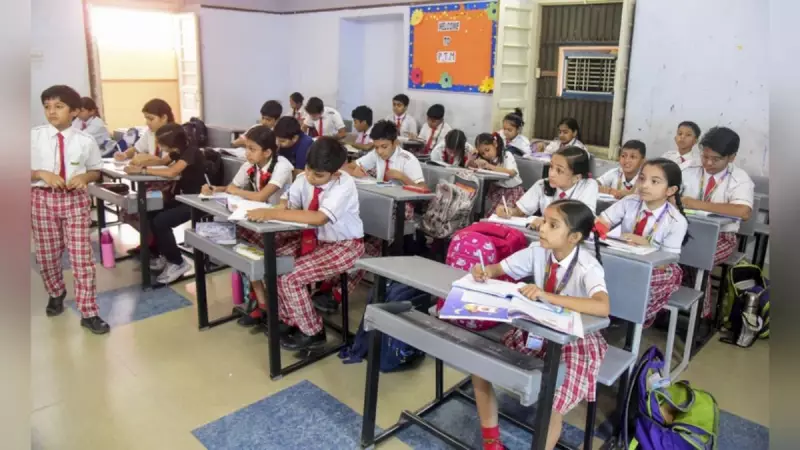
In a decisive move to protect children from hazardous air, authorities have ordered the closure of all schools in Delhi and the National Capital Region (NCR) for two days. The shutdown, covering Monday, December 16, and Tuesday, December 17, 2024, comes as the region grapples with a severe spike in air pollution levels.
CAQM Invokes Stage IV of GRAP Amid 'Severe+' Air Quality
The Commission for Air Quality Management (CAQM) took the stringent step after the air quality index (AQI) in the capital plunged into the 'severe' category. With forecasts predicting little improvement, the panel implemented Stage IV of the Graded Response Action Plan (GRAP). This is the highest alert level under the anti-pollution framework.
The official order mandates the immediate closure of all educational institutions, including schools, colleges, and universities. This directive applies not only to Delhi but also to the surrounding districts in the NCR that fall under the CAQM's jurisdiction. The primary objective is to minimize the health risk to young students, who are particularly vulnerable to the harmful effects of polluted air.

Widespread Impact and Official Directives
The closure affects a vast network of educational institutions across the capital territory and neighboring areas. Parents and students are advised to check official communications from their respective schools for any specific instructions regarding online classes or academic schedules.
Alongside the school closures, Stage IV of GRAP enforces several other emergency measures to curb pollution. Key restrictions include:
- A ban on the entry of most trucks into Delhi.
- Halting all construction and demolition activities, barring essential projects.
- Possible restrictions on private vehicles under the odd-even scheme, though this was not immediately mandated in the current order.
The decision was made following an emergency review meeting by the CAQM. The panel cited meteorological conditions—specifically calm winds and low temperatures—that are trapping pollutants close to the ground, leading to the formation of a dense smog layer over the region.
Health Advisories and Looking Ahead
Health experts have strongly welcomed the precautionary closure. Doctors have been urging people, especially children, the elderly, and those with respiratory or heart conditions, to avoid outdoor exposure. The particulate matter (PM2.5) levels have been recorded at multiple times the safe limits prescribed by the World Health Organization (WHO), posing serious health risks.
Residents are advised to stay indoors as much as possible, use air purifiers, and wear N95 or KN95 masks if venturing outside is unavoidable. The authorities are closely monitoring the situation, and the order will be reviewed based on improvements in AQI readings. The closure underscores the recurring and severe public health challenge that air pollution presents every winter in North India, driven by factors like vehicle emissions, industrial pollution, and agricultural stubble burning.
While the two-day shutdown provides immediate relief for students, the long-term solution lies in sustained, year-round efforts to tackle the root causes of pollution. For now, the focus remains on mitigating exposure during this critical period of dangerously poor air quality.