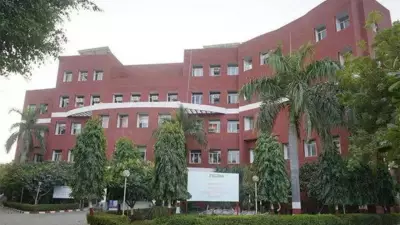
A 16-year-old Class 10 student from St Columba's School in Delhi died by suicide on November 18, an event that has sent shockwaves through the educational community and prompted serious introspection among school principals across the capital.
A Community in Mourning
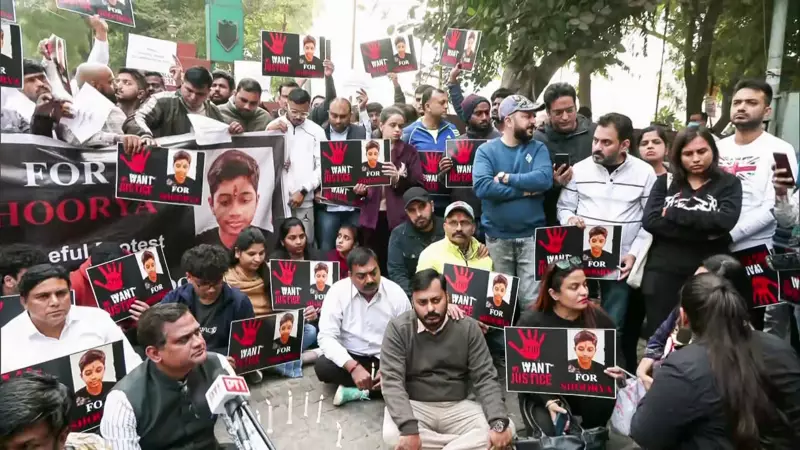
The tragic incident occurred at Rajendra Place Metro Station, leading to protests by students and parents outside the school on Thursday, November 21. The student had allegedly cited harassment by teachers as a contributing factor to his extreme decision.
Br Robert Fernandes, Principal of St Columba's School, did not respond to repeated attempts for comment regarding the allegations and the school's perspective on the matter.

The Delicate Balance of Modern Education
Principals from various Delhi schools expressed their concerns about the increasing challenges in handling adolescent students. Tania Joshi, Principal of The Indian School in Sadiq Nagar, emphasized that "no one expects" such tragedies to occur.
"It is a very impressionable age, and how the children take things matters a lot," Joshi told The Indian Express. She noted this isn't an isolated trend but a phenomenon occurring across cities, with social media playing a significant role in complicating student interactions.
Another principal from a prominent Southwest Delhi school described the current teaching environment as "feeling like walking on eggshells," highlighting a generational shift where students have become more sensitive and exposed.
Multiple Factors at Play
Educators identified several contributing factors to the rising mental health challenges among students. Joshi pointed to "a combination of factors including identity crisis, social media exposure, and isolation."
A principal from Northwest Delhi highlighted that emotional labor has become an unspoken core component of teaching. "Teachers' roles are not just academics. It's behavior management, trust, and understanding. Teachers must take children almost like their foster children," she explained.
Meanwhile, an East Delhi private school principal expressed concern about behavioral correction being misinterpreted as hostility. "If we ignore misbehavior, we cannot do our jobs," she stated, pointing to additional pressures from parents who sometimes speak negatively about teachers in front of their children.
The Changing Landscape of Childhood
Educators noted significant changes in student behavior and exposure compared to previous generations. Vaping, violent online games, and ceaseless social media exposure were identified as forces reshaping modern childhood.
"Ten years ago, this wasn't the case. Children are watching crime, violence, everything. They come to school overstimulated, under-regulated," the East Delhi principal observed.
A former principal of a prestigious South Delhi private school added that media consumption significantly influences student reactions. "They are watching all kinds of movies, crime shows, and violent content. They are smart enough to mimic or manipulate what they see."
Moving Toward Solutions
Despite the challenges, educators emphasized the need for evolved approaches to student discipline and support. The former South Delhi principal stated that punishment-heavy models of discipline are obsolete.
"Corporal punishment is over... that day and age is gone. We have to understand why the child is doing what he or she does. Much more training is needed for teachers; capacity-building programs must address this," she emphasized.
Joshi stressed that "for a child, a teacher has to be a friend, a go-to person. Sensitization is essential." She advocated for collaborative problem-solving between parents and teachers when addressing student issues.
A North Delhi principal called the boy's death "an irreparable loss" but cautioned against interpreting every confrontation as cruelty. "We are trying to create a world where teachers never scold, but if we stop correcting children, we fail at our roles," she noted.

The consensus among educators is clear: "This is not the world we taught in a decade ago." As one principal summarized, "Children have become impulsive, aggressive, sometimes manipulative, and parents are too afraid to say no" - creating a complex environment that demands renewed sensitivity and understanding from all stakeholders in a child's education.