CBSE Introduces Revolutionary Two-Board Exam System from 2026
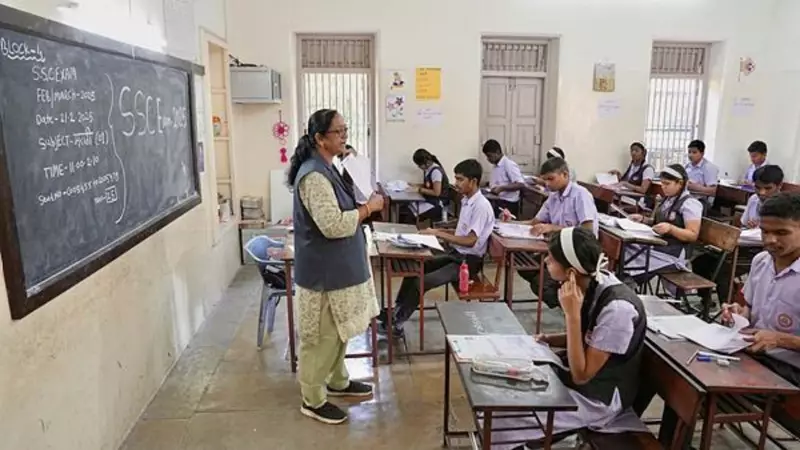
The Central Board of Secondary Education (CBSE) is set to implement a groundbreaking two-board examination system for Class 10 students starting from the 2026 academic session. This transformative approach aims to fundamentally change how students experience board examinations by providing them with multiple opportunities to demonstrate their academic capabilities.
Key Features of the New Examination Scheme
Under the new framework, students will be required to mandatorily appear for the first set of board examinations. Following this initial attempt, they will have the option to improve their performance in three selected subjects from a pool comprising mathematics, science, social science, and two language papers. This strategic limitation ensures that students focus their improvement efforts while maintaining the integrity of the examination process.
CBSE Chairman Rahul Singh, during a recent webinar detailing the scheme, provided crucial insights into the Board's expectations. "We anticipate that approximately 40% of students will opt for the second board examination in each of the main subjects, at maximum," Singh stated, emphasizing that this figure represents a heuristic estimate based on careful analysis of student behavior patterns.

Rationale Behind the Policy Implementation
The two-board exam system represents a direct implementation of the National Education Policy (NEP) 2020 recommendations, specifically designed to eliminate the high-stakes nature of traditional board examinations. Singh clarified that this approach was selected after thorough consideration of multiple options presented in the NEP framework.
"Two board exams is a policy obligation which all of us have to fulfill together," Singh emphasized, highlighting the careful deliberation that went into designing the current scheme. The Board consciously avoided implementing a semester system or anytime examinations due to practical constraints and potential implementation challenges.
Operational Details and Evaluation Process
The practical implementation of this system involves significant operational planning. The Board will conduct the second examination only in subjects where the external assessment component exceeds 50%. This selective approach ensures that the system remains manageable while serving its primary purpose.
Regarding evaluation workload, Singh provided specific numbers: "In the first board exam for class 10, we evaluate approximately 1.5 crore answer books. For the second examination, we expect the evaluation load to be significantly lower, around 20-30 lakh answer books." This reduced volume is expected to facilitate quicker result processing, with the Board committing to complete the entire evaluation cycle by June 30.
Preventing System Exploitation and Maintaining Integrity
A crucial aspect of the new system is preventing what Chairman Singh termed "opportunity shopping" – where students might strategically choose different subjects for different examination sessions. The Board has implemented safeguards to ensure the first examination remains the primary assessment.
"We don't want to encourage opportunity shopping," Singh asserted. "The first exam is the main exam, and students must demonstrate seriousness in approaching it. Those who haven't appeared in three or more subjects in the first board exam won't be permitted to appear in the second board exam."
After the declaration of first examination results, eligible students will be able to register for the second examination. The Board will then finalize the candidate list based on these registrations, ensuring a streamlined and organized process for all stakeholders involved.