CBSE Class 12 Maths Paper QR Code Triggers Rickrolling Prank, Board Confirms Authenticity
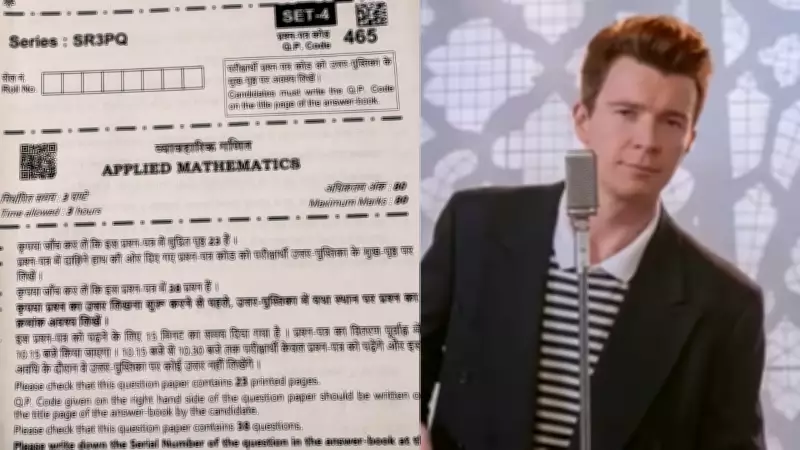
GURGAON: In an unusual incident that has captured national attention, a QR code printed on the Central Board of Secondary Education (CBSE) Class 12 mathematics question paper led to widespread speculation after multiple students reported that scanning it redirected them to a 10-second music video of the 1987 hit song "Never Gonna Give You Up" by singer Rick Astley. This unexpected link, part of the well-known internet prank called "rickrolling," left students surprised and ignited discussions about the authenticity and security of the exam paper, which is conducted nationwide.
Students Express Shock and Doubts Over Exam Paper
According to accounts from students, the QR code, when scanned, immediately directed them to the iconic music video, raising immediate concerns about the legitimacy of the question paper. One student from Noida shared, "It felt like a prank targeted at us. While the maths paper itself was not overly difficult, finding such a link in a high-stakes national exam like CBSE seemed bizarre and unprofessional." This sentiment echoed among many test-takers, who questioned whether the paper had been compromised or if it was a deliberate joke.
Independent Verification and Teacher Insights
The Times of India independently verified the claim by scanning a QR code from a sample question paper, confirming that it indeed redirected to the same Rick Astley video as reported by students. Teachers familiar with CBSE procedures explained that QR codes are typically included on question papers as a security feature to verify authenticity and provide access to paper-related information. However, they noted that such an incident, where a code links to unrelated or prank content, had never been reported before in the board's history.

School authorities clarified that the issue appeared in only a few sets of the mathematics and applied mathematics question papers, suggesting it might be an isolated error rather than a widespread problem. This limited scope has helped mitigate broader panic, but it has still prompted calls for a thorough investigation into how such a lapse could occur.
CBSE Issues Official Statement Confirming Genuineness
In response to the growing concerns, CBSE issued an official statement to address the situation. Sanyam Bhardwaj, Controller of Examinations at CBSE, stated, "Many security features are provided on the Question Papers, including QR codes to verify genuineness in case of suspected security breaches. On March 9, 2026, the examination of Mathematics was conducted for class 12. In a few question paper sets, it appears that when one of the given QR codes is scanned, it links to a YouTube video. This has raised concerns about the veracity of the question papers amongst concerned students and their parents."
The board further emphasized, "It is hereby confirmed by the Board that the question papers are genuine. The security of the question papers remains uncompromised. While the concern about the veracity of the question papers is put to rest, the matter has been viewed seriously and necessary steps are being taken by the Board to ensure that such issues are not repeated in the future." This reassurance aims to alleviate fears among students and parents, while also signaling that CBSE is taking proactive measures to prevent similar incidents.
Broader Implications and Future Precautions
The incident highlights the increasing reliance on digital tools like QR codes in educational assessments and the potential vulnerabilities they can introduce. As CBSE moves forward, experts suggest that enhanced checks and balances in the printing and distribution process of question papers will be crucial to maintain trust and integrity in national exams. The board's commitment to addressing this issue underscores its dedication to upholding high standards in examination security, even as it navigates the challenges of modern technology.