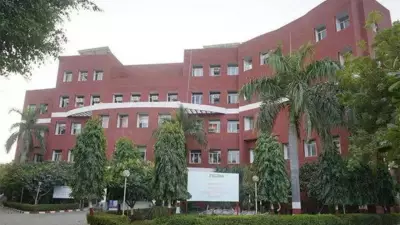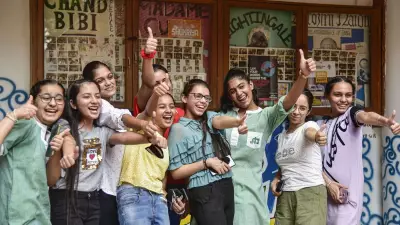
A dynamic one-day science outreach initiative successfully ignited curiosity among young minds in Varanasi. The event, held at the prestigious Centre for Genetic Disorders (CGD) within Banaras Hindu University (BHU), saw enthusiastic participation from over 75 students hailing from various government and remote area schools of the city on Thursday.
Expert Lectures Demystify Complex Scientific Concepts
The workshop featured insightful sessions led by a panel of distinguished experts from BHU. Chandana Basu, a Scientist at CGD, took students on a captivating journey into the fascinating world of DNA, explaining its fundamental role in life. Pragya Verma, a scientist from the Department of Zoology, shed light on the body's internal mechanisms, enlightening attendees about how their biological clocks work. Meanwhile, Purabi Saikia, an Associate Professor in the Department of Botany, imparted practical knowledge on herbarium techniques and their critical importance in botanical science.
Hands-On Learning and Museum Visits Enhance Experience
Moving beyond theoretical lectures, the workshop was designed to be highly interactive. Students actively engaged in hands-on experiments, allowing them to apply the concepts they learned. They also had the valuable opportunity to pose their questions directly to the experts, satisfying their scientific curiosities. To further enrich their understanding, the participants visited the Zoological Museum at the Department of Zoology and the Digital Herbarium at the Department of Botany, Institute of Science, BHU.

Practical Outcomes and Lasting Impact
The immersive experience proved highly effective. The workshop equipped students with a clearer understanding of their own chronotype and how DNA influences daily life. Professor Purabi Saikia emphasized the enduring value of herbarium methods, explaining that herbarium sheets serve as permanent scientific records of wildflowers, crucial for tracking biodiversity changes over time. This initiative not only disseminated scientific knowledge but also potentially inspired the next generation of researchers and biologists from Varanasi.