UPSC Mains Answer Writing Practice: GS Paper 3 Focus on Energy and Economy
Are you gearing up for the Civil Services Examination 2026? This week's UPSC Essentials initiative presents crucial answer writing practice for General Studies Paper 3, covering two significant topics that are highly relevant for India's future trajectory. These questions delve into thorium-based nuclear power's potential for energy independence and strategies to enhance economic competitiveness through manufacturing and reforms.
Question 1: Thorium-Based Nuclear Power and India's Energy Security
Discuss how thorium-based nuclear power can contribute to India's long-term energy security and reduce dependence on imported fuels.
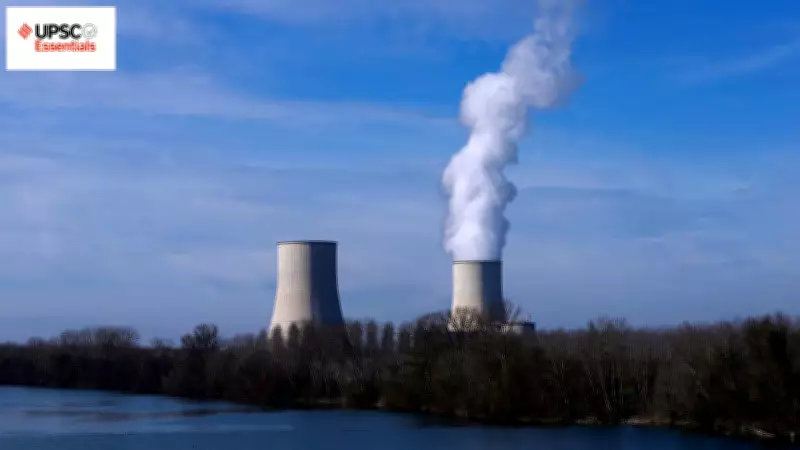
This topic holds immense relevance as India renews its focus on advanced nuclear technologies, including Pressurized Heavy Water Reactors (PHWRs), Advanced Heavy Water Reactors (AHWRs), and thorium fuel cycles. These align with India's three-stage nuclear program, gaining prominence amid global energy volatility and climate commitments. The issue connects science and technology, energy security, climate change, and strategic autonomy, making it a high-probability area for GS Paper 3.

Note: This is not a model answer but provides a thought process to incorporate into your responses.
Introduction: India's nuclear strategy is built on a three-stage program, addressing the constraint of limited uranium reserves against abundant thorium resources. Transitioning to thorium-based nuclear power is critical for achieving energy independence, requiring the buildup of fissile uranium-233 through thorium irradiation in thermal or fast reactors.
Body Points to Consider:
- In the first stage, PHWRs utilize uranium to generate electricity and produce plutonium. The second stage employs fast breeder reactors with this plutonium to multiply fuel, paving the way for the final phase where thorium is converted into uranium-233 for sustainable energy.
- The Nuclear Energy Mission targets 100 GWe of nuclear capacity, with PHWRs forming the bulk. Scaling up offers opportunities to produce uranium-233 at scale, accelerating the shift to thorium-based power.
- Thorium-HALEU-based drop-in fuel for PHWRs could yield economic, safety, and security benefits while efficiently converting thorium to uranium-233.
- Achieving 50-75 GW of PHWR capacity by 2047 demands adding 3 GWe annually, equivalent to 5-8 reactors per year, necessitating significant financial resources and private sector involvement.
- While progress continues in fast reactor development, delays in full-scale deployment for thorium conversion highlight the need to balance work on metal fuel reactors, molten salt reactors, and other advanced technologies.
Conclusion: Prioritizing development of futuristic technologies like thorium fuel cycles, alongside leveraging proven imports, is essential for India's energy future.
Question 2: Enhancing India's Economic Competitiveness
Discuss the role of manufacturing-led growth, supply chain resilience, and regulatory reforms in enhancing India's economic competitiveness in a geo-economically uncertain world.
This question is timely as India transitions from post-pandemic recovery to structural growth, facing global slowdowns, geopolitical uncertainties, and supply-chain realignments. It tests understanding of fiscal policy trade-offs, crucial for analyzing India's readiness in the Amrit Kaal era of high-growth aspirations.
Note: This is not a model answer but provides a thought process to incorporate into your responses.
Introduction: India's economy shows robust performance with projected GDP growth of 7.4%, controlled inflation at 1.7%, and supportive monetary policy. Surging global interest, such as investment proposals for data centers from tech firms, underscores India's potential for digitization and growth.
Body Points to Consider:

- Manufacturing-Led Growth: Elevating manufacturing's share in GDP to 25% is key, but requires addressing global competition concentrated in few hubs. Focus on resilient supply chains by identifying vulnerabilities in critical imports to prevent disruptions.
- Supply Chain Resilience: Review customs tariffs to eliminate inverted duty structures, ensuring lower duties on raw materials than intermediates and finished goods. Align industrial power tariffs with costs, advance land reforms, and expedite logistics projects to enhance factor market competitiveness.
- Regulatory Reforms: Boost private capital expenditure through clear targets for public-private partnerships and asset monetization. Ease of doing business reforms, like rationalizing environmental approvals and decriminalizing minor offenses, can accelerate capital deployment and foster entrepreneurship.
- Resource Security and R&D: Secure access to essential resources and advance R&D via collaborative frameworks. Consider a deep tech venture fund to support startups in AI, robotics, semiconductors, space, and advanced manufacturing.
Conclusion: With strong growth and fiscal discipline, India can invest in manufacturing resilience, regulatory ease, and innovation to drive productivity, attract global investment, and position as a self-reliant, technology-powered leader.
Points to Ponder and Further Study
For thorium power, explore thorium-based fuels, locations of thorium reserves in India, and related previous year questions on energy independence and nuclear expansion. For economic competitiveness, consider sustainability if private investment lags, balancing self-reliance with WTO commitments, and analyzing fiscal tools like the Fiscal Health Index.
Engage with these topics by sharing your views in comments or via email, and stay updated with UPSC resources for comprehensive preparation.