Teachers' Federation Condemns Budget Priorities Amid Rural Education Deficits
The All India Federation of University and College Teachers' Organisations (AIFUCTO) has launched a sharp critique of the government's 2026-27 budget, accusing it of an excessive focus on 'digital infrastructure' while neglecting the stark ground realities faced by students in rural India. At a conference held in Madurai on Saturday, the federation highlighted that many students still lack basic necessities such as functional classrooms and reliable electricity, undermining educational equity.
Major Conference Addresses Democratic and Inclusive Higher Education
More than 1,200 educators from across the nation gathered for the 38th edition of the XXXIV Statutory Conference, which centered on the theme "Towards democratic, scientific, inclusive, publicly funded higher education in India." This assembly served as a platform to voice concerns over recent policy shifts and budgetary allocations impacting the education sector.
Viksit Bharat Shiksha Adhishthan Bill 2025 Draws Strong Opposition
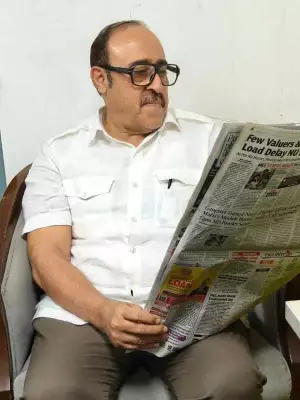
Arun Kumar, the general secretary of AIFUCTO, expressed deep apprehension regarding the clearance of the Higher Education Commission of India Bill under its rebranded name, the Viksit Bharat Shiksha Adhishthan (VBSA) Bill, 2025. He described this development as a decisive and troubling moment for Indian higher education, warning that it centralizes power excessively.

"The bill undermines institutional autonomy by granting overriding authority to a centrally controlled commission, whose regulations require prior government approval," Kumar stated. He emphasized that this legislation must be viewed in continuity with the National Education Policy (NEP) 2020, a period during which universities have already been struggling with issues like a diluted curriculum, admissions delays through the Common University Entrance Test (CUET), and increased costs associated with the four-year undergraduate programme.
Unilateral Implementation of NEP and Call to Action
Kumar revealed that AIFUCTO has consistently opposed the NEP and had submitted an 'alternative policy on higher education' report to the central government. However, he noted that the implementation of NEP proceeded unilaterally, without adequate consideration of these alternative proposals. In response, AIFUCTO has urged teachers and state governments to reject the VBSA Bill, 2025, advocating for a more collaborative and inclusive approach to educational reform.
Budgetary Allocations Deemed Insufficient Amid Inflation
The conference also scrutinized the financial aspects of higher education. AIFUCTO compared the 2025-26 budget allocation of ₹1,21,949 crore (as per revised estimates) with the ₹1,39,289 crore earmarked for 2026-27, concluding that the increase is negligible when adjusted for inflation. Specifically, higher education spending was fixed at ₹55,747 crore, a figure that remains almost unchanged from the 2023-24 budget, indicating stagnation in real terms.
International Issues on the Agenda
Beyond domestic concerns, delegates engaged in discussions on various international matters, including the attack on Venezuela, recent developments in Nepal, violence in Bangladesh, and the ceasefire and peace plan for Gaza. These deliberations underscored the federation's broader commitment to global educational and democratic issues.
In summary, AIFUCTO's conference in Madurai has brought to the forefront critical challenges in India's education system, from infrastructural neglect in rural areas to contentious policy reforms and inadequate funding, calling for immediate attention and action from policymakers.