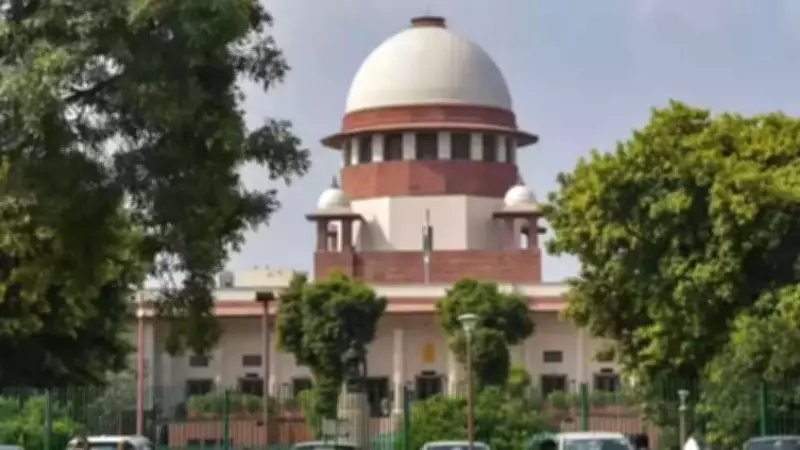
New Delhi: In a significant development, the Supreme Court of India on Thursday put an immediate hold on the implementation of the controversial University Grants Commission (Promotion of Equity in Higher Education Institutions) Regulations, 2026. The apex court expressed serious reservations about multiple provisions within these regulations, warning that they could potentially fuel societal divisions and have a dangerous impact on the nation's long-standing goal of achieving a casteless society.
Court Questions Constitutional Validity and Language
A bench comprising Chief Justice Surya Kant and Justice Joymalya Bagchi heard three separate petitions challenging the regulations. The justices explicitly stated that while the implementation of the 2026 regulations would remain suspended until further orders, the earlier 2012 regulations would continue to be in force to address grievances related to caste-based discrimination against students on educational campuses across the country.
"We are sorry to say, the Regulations, prima facie, the language is completely vague, the provisions are capable of being misused, and the language needs to be re-modulated and redesigned," the bench observed during the hearing. The court emphasized the need for clarity and precision in regulatory language to prevent potential misinterpretation and abuse.

Concerns About Regressive Policies
Chief Justice Surya Kant went further to term the new regulations as potentially regressive, posing a critical question about India's social progress. "In the country, after 75 years, whatever we have gained to move towards the goal of casteless society, are we enacting a regressive policy? No doubt, there has to be some effective mechanism to deal with caste-based discrimination," he remarked, acknowledging the need for protective measures while cautioning against backward steps.
The justices clarified that they fully support regulations aimed at creating "a free, inclusive and an equitable atmosphere in Universities" but identified four or five serious concerns about the current formulation. "If those are not addressed, the Regulations will otherwise have sweeping consequences that will divide society and lead to many dangerous impacts on the country," the bench warned, highlighting the far-reaching implications of poorly drafted policies.
Specific Provisions Under Scrutiny
One particularly contentious provision that drew the court's attention was the proposal for separate hostels based on students' caste backgrounds. Chief Justice Kant expressed strong disapproval of this approach, stating, "For God's sake, please do not do that. In hostels, students from every community live together. There are inter-caste marriages also. We should move towards a casteless society by assimilating students of all regions and (students of) all castes must have equal rights and live harmoniously in universities. We cannot go backwards. There must not be any segregation."
Broader Context of the Hearing
The court proceedings took place against a backdrop of agitation by sections of upper-caste students who have protested against the regulations, alleging that they are discriminatory and exclusionary. Critics argue that the regulations fail to account for India's changed socio-economic landscape, where newly empowered Other Backward Classes (OBCs) have also been accused of discriminating against others, including those from upper castes. Notably, OBCs do not fall under the purview of the 2012 regulations, which have been reinstated following the Supreme Court's order.
Advocate Vishnu Shankar Jain, representing the petitioners, argued that the regulations operate on the presumption that only students from specific caste categories face discrimination in universities. He contended that by keeping general category candidates outside their scope, the regulations leave such students without legal remedies for discrimination they might experience.

Petitioners' Additional Arguments
The petitioners further pointed out that the regulations focus exclusively on caste-based discrimination while ignoring other significant factors that contribute to campus inequities. They noted that issues like ragging, North-South regional divides, and cultural diversity—which also lead to various forms of discrimination—remain unaddressed by the current regulatory framework.
Echoing these concerns, the CJI Kant-led bench acknowledged, "Ragging is the worst thing that happens on campuses. Children coming from south India to north India and vice-versa, and from north-east to other states of the country, carry their cultural values with them," suggesting that a more comprehensive approach to campus equity might be necessary.
Court Directs Formation of Expert Panel
In a decisive move, the Supreme Court has asked the Centre and UGC to respond to the petitions by March 19. The bench declared, "We want to examine the constitutional validity and legality of 2026 Regulations. We would like the Union govt, with the concurrence and approval of the court, to constitute a panel of experts comprising eminent academicians and scholars who understand our social conditions to study the regulations and its possible impacts."
This directive indicates the court's intention to undertake a thorough review of the regulations' foundations, potentially leading to substantial revisions before any future implementation. The formation of an expert panel suggests a collaborative approach to addressing the complex social dynamics in higher education institutions while balancing constitutional principles with practical realities.