Princeton University Maintains Grading Stance Amid Ivy League Grade Inflation Debate
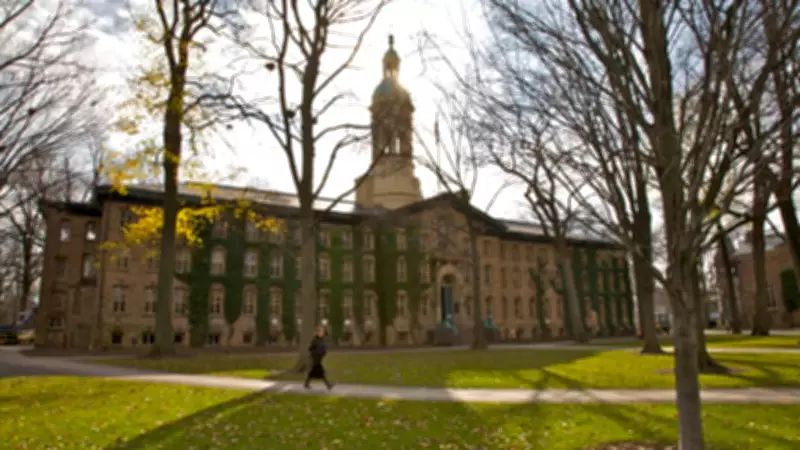
Debates surrounding grade inflation have reignited across multiple Ivy League institutions, yet Princeton University has clearly indicated it will not modify its existing grading framework, despite a consistent upward trend in top academic marks. This position emerges as peer universities contemplate significant policy adjustments.
Steady Increase in Top Grades at Princeton
A comprehensive grading report from December 2025 reveals that 66.7 percent of all grades awarded during the 2024 to 2025 academic year fell within the A range. This marks a substantial increase from the 2002 to 2003 academic year, when the figure was notably lower at 47.9 percent. The data underscores a long-term trend of rising grade distributions at the prestigious institution.
Michael Gordin, Dean of the College at Princeton, has explicitly stated that the University has no intentions to revise its grading practices in response to this trend. In an official statement provided to The Daily Princetonian, Gordin emphasized that discussions occurring at other universities are matters for those specific institutions to address internally.

"The fact that there is interest in Cambridge and New Haven to change their grading policies in light of their own data is a matter for those institutions to consider," Gordin stated. "We have no plans to do so here."
Historical Context: Grade Caps and Their Reversal
Princeton University previously confronted the issue of grade inflation in 2004 by implementing nonbinding caps designed to limit A-range grades to 35 percent of coursework and 55 percent of independent work. However, this policy was officially rescinded in 2014 following a thorough review by an ad hoc committee.
The committee concluded that the numerical targets were frequently misinterpreted as rigid quotas, which inadvertently increased student stress and fostered unhealthy competition. "Such targets are too often misinterpreted as quotas," the 2014 report asserted. "They add a large element of stress to students’ lives, making them feel as though they are competing for a limited resource of A grades."
Instead of enforcing central caps, the committee recommended that individual academic departments develop and implement grading standards specifically tailored to their respective disciplines. The report made a critical distinction between grading standards, which define evaluative expectations, and actual grades, which measure how well students meet those established expectations.
Continued Upward Trend in Grade Distributions
Since the reversal of the 2004 policy, the proportion of A-range grades has continued its upward trajectory. From 2010 to 2013, A-range grades accounted for an average of 41.8 percent of all course grades. By the 2024 to 2025 academic year, this share had escalated to 66.7 percent, indicating a significant and sustained increase.
The December 2025 report also highlighted that eight of the ten largest departments at Princeton awarded B grades or higher to 94 percent of senior theses during the 2024 to 2025 period. Additionally, the report noted that faculty usage of A-plus grades "does not currently reflect the stated policy." Some instructors reportedly use the A-plus designation to identify the top percentage of students in a class, rather than reserving it exclusively for truly exceptional work that surpasses standard A-grade criteria.
At a December faculty meeting, Dean Gordin presented these findings and acknowledged ongoing concerns regarding grade inflation. He reiterated that grading standards are determined at the departmental level rather than by central administration, as reported by The Daily Princetonian.
Peer Institutions Contemplate Policy Changes
The discussion at Princeton unfolds concurrently with significant developments at other Ivy League universities. At Harvard University, an October 2025 report found that 60 percent of undergraduate grades were straight A's, sparking intense faculty debate over the potential implementation of grade caps. A faculty committee has proposed limits on the number of A's awarded, although a Harvard Undergraduate Association survey revealed that 85 percent of students oppose such a plan.

At Yale University, Yale College Dean Pericles Lewis informed the Yale Daily News that the institution is closely monitoring grading policy changes at both Harvard and Princeton. Lewis expressed a desire for an A grade at Yale to maintain comparable value to an A awarded at peer institutions, ensuring consistency and credibility across the Ivy League.
In contrast, Princeton's administration has not signaled any similar policy shifts. When questioned about when the University might reconsider its approach if grade inflation continues, Gordin responded, "I have no idea, as the future is uncertain," according to The Daily Princetonian.
The Faculty Committee on Examinations and Standing is scheduled to convene on March 17. For the present, Princeton's official position remains one of continuity rather than correction, even as the proportion of A-range grades continues its upward climb across the campus.