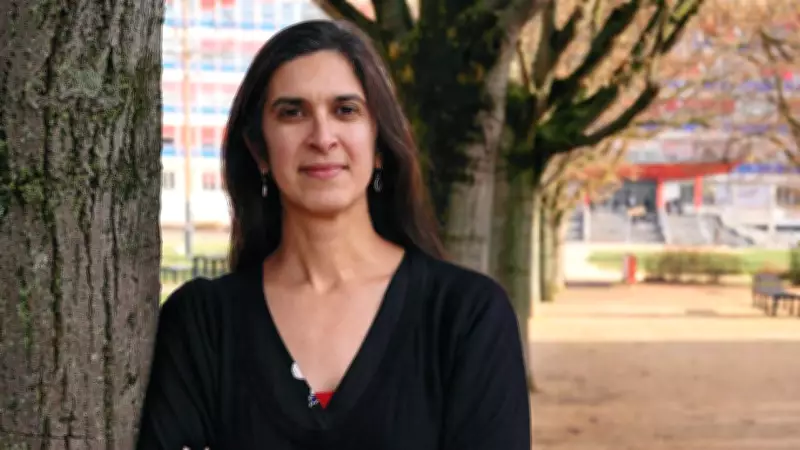
Nalini Anantharaman: A Trailblazer in Interdisciplinary Mathematical Research
In the vast landscape of scientific inquiry, certain researchers stand out by tackling questions that transcend traditional boundaries, operating at the intersection of multiple disciplines. Within the realms of mathematics and theoretical physics, one such distinguished scholar is Nalini Anantharaman. Renowned for her pioneering contributions to dynamical systems and quantum chaos, she has meticulously constructed an academic career that seamlessly integrates geometry, analysis, and mathematical physics. Her innovative research has garnered numerous international accolades, including the prestigious Henri Poincaré Prize and the Infosys Prize, firmly establishing her among the foremost experts studying the mathematics underlying chaotic systems.
Early Life and Educational Foundations
Nalini Florence Anantharaman was born on February 26, 1976, in Paris, France, into a family deeply rooted in mathematical traditions. Both of her parents were accomplished mathematicians who served as professors at the University of Orléans, fostering an environment where mathematical discourse was a regular part of daily life. In a 2019 interview with Bhāvanā: The Mathematics Magazine, she reflected on her upbringing, noting, "I always understood mathematics very well, but the same was also true for other subjects at school." This early exposure nurtured her intellectual curiosity and set the stage for her future pursuits.
Growing up in Orléans, Anantharaman later relocated to Paris to pursue advanced studies. Demonstrating exceptional academic prowess, she commenced her undergraduate education at the age of 16 and gained admission to the École Normale Supérieure in 1994, one of France's premier institutions for mathematics and science. She completed her doctoral studies in 2000 at Université Pierre et Marie Curie under the mentorship of mathematician François Ledrappier, with her dissertation focusing on dynamical systems and the intricate geometry of geodesic flows.

Academic Trajectory and Research Focus
Following her PhD, Anantharaman embarked on a distinguished academic journey, holding positions at various esteemed research institutions. She achieved the rank of full professor at the University of Paris-Sud in 2009, and her career has been enriched by visiting appointments at leading global centers. In 2008, she served as a Visiting Miller Professor at the University of California, Berkeley, and later spent time at the Institute for Advanced Study in Princeton in 2013. Currently, she holds a professorship at the University of Strasbourg and occupies the Spectral Geometry Chair at the Collège de France, a testament to her scholarly impact.
Her research primarily delves into dynamical systems and quantum chaos, areas that investigate how systems behave when motion becomes unstable or unpredictable. To elucidate these complex concepts, Anantharaman often employs accessible analogies. In the same Bhāvanā interview, she explained, "Imagine a ball rolling on a billiard table and bouncing off the edges. In the idealized case where there is no friction, this motion will continue indefinitely. This exemplifies a dynamical system." Her work extends to critical questions in quantum unique ergodicity and the behavior of eigenfunctions of Schrödinger operators, bridging classical chaos with the principles of quantum mechanics.
Major Awards and Global Recognition
Anantharaman's profound contributions have been celebrated through a series of major international awards, underscoring her influence in the field. In 2011, she received the Salem Prize and the Grand Prix Jacques Herbrand from the French Academy of Sciences. The following year, she was honored with the Henri Poincaré Prize for her exceptional work in mathematical physics. Her recognition continued in 2015 with her election as a member of the Academia Europaea, and she was invited as a plenary speaker at the International Congress of Mathematicians in Rio de Janeiro in 2018.

In 2018, she was awarded the Infosys Prize in Mathematical Sciences for her advancements in quantum chaos, followed by the Nemmers Prize in Mathematics in 2020. Today, her research continues to shape and inspire studies in mathematical physics, dynamical systems, and geometry, offering deep insights into the interplay between order and randomness within complex systems.