Supreme Court's Landmark Ruling on Menstrual Health Meets Reality Check at Lucknow University
The Supreme Court of India has made a historic declaration, recognizing menstrual health as a fundamental right under Article 21 of the Constitution, which guarantees the right to life and personal liberty. This judicial pronouncement has shifted national attention toward the practical implementation of this constitutional guarantee within educational institutions across the country.
Ground Reality Contradicts Legal Mandate at Lucknow Campus
A detailed investigation conducted at Lucknow University (LU) has revealed a significant disconnect between the Supreme Court's directives and the actual conditions on campus. The apex court has explicitly ordered schools and colleges to provide free sanitary napkins, maintain clean washrooms with running water and soap, and ensure functional vending machines, emphasizing that menstrual health is intrinsically linked to human dignity and the right to life.
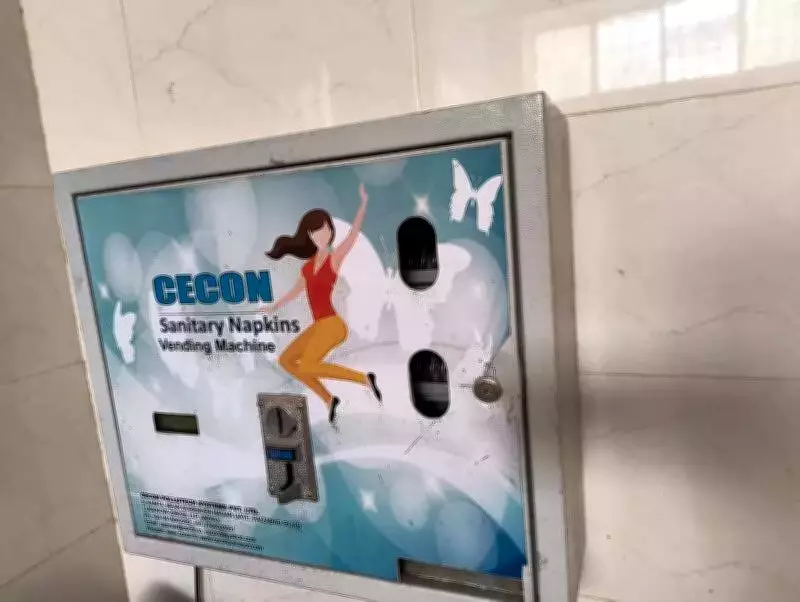
However, multiple students from various departments have reported that the university's facilities fall dramatically short of these mandated standards. Despite the installation of sanitary napkin vending machines in some campus buildings, many remain non-functional or empty for extended periods, leaving students in precarious situations during emergencies.

Student Testimonies Highlight Systemic Failures
Sakshi Misra, a postgraduate student from the arts faculty, provided a candid assessment: "The vending machines exist only on paper. Most of the time they are empty or not working, and there is no system to ensure regular refilling. In moments of urgency, students are left completely helpless. Furthermore, the washrooms frequently lack basic soap, proper disposal facilities, and regular cleaning."
Simran Arora, another student, described additional challenges: "Many girls' washrooms are either locked or in extremely poor condition. During emergencies, it becomes both stressful and humiliating to search for a usable toilet. This lack of basic facilities directly impacts both attendance and academic focus, creating unnecessary barriers to education."
Aisha Singh, an undergraduate student, offered further insight: "The condition of washrooms is truly pathetic. We often find ourselves looking for cleaner facilities outside the campus entirely. Soap is frequently absent, vending machines remain empty, hygiene standards are poor, and foul odors are constant. I have rarely witnessed cleaners maintaining these essential spaces properly."
Specific Locations with Documented Deficiencies
Students identified several specific areas where facilities are particularly inadequate:
- Washrooms near Gate 4 parking area
- Department of Commerce facilities
- Department of Western History washrooms
- Physics department restrooms
These locations reportedly suffer from either non-functional equipment, empty vending machines, or poor maintenance standards that compromise basic hygiene.
Medical Professionals Emphasize Health Implications
Healthcare experts have underscored that menstrual hygiene transcends mere infrastructure concerns, representing a significant public health issue. Dr. Veena Tiwari, a practicing gynecologist, explained: "Poor menstrual hygiene can lead to serious infections and long-term health complications. Educational institutions must treat this as a fundamental health priority rather than a peripheral welfare addition. Proper facilities are essential for preventing reproductive health issues."
University Administration Responds to Concerns
Mukul Srivastava, the official spokesperson for Lucknow University, addressed the situation: "In accordance with Supreme Court guidelines, the university has installed sanitary vending machines and established hygiene facilities across campus. While availability has been limited at some locations, the administration is prioritizing these improvements. Significant progress has been made in enhancing hygiene standards, and we remain committed to continuous improvement for the convenience and well-being of our female student population."

The gap between legal recognition and practical implementation highlights the ongoing challenges in translating constitutional rights into tangible campus facilities. As educational institutions nationwide grapple with these mandates, the experiences at Lucknow University serve as a crucial case study in the work still required to ensure menstrual health as a realized fundamental right for all students.