JNU Students Stage Fiery Protest Against UGC Regulations and Supreme Court Decision
In a dramatic display of dissent, students at Jawaharlal Nehru University (JNU) in New Delhi have launched a significant protest against the University Grants Commission (UGC) regulations. The demonstration, which took place recently, saw participants burning an effigy in a symbolic act of defiance, directly responding to a recent decision by the Supreme Court of India. This event underscores the escalating tensions between student bodies and regulatory authorities over the governance and autonomy of higher education institutions in the country.
Background of the UGC Regulations and Supreme Court Involvement
The controversy stems from the UGC regulations, which are designed to standardize and oversee various aspects of university operations across India. These rules have been a point of contention for many student groups, who argue that they infringe upon academic freedom and institutional independence. The Supreme Court's decision, which upheld or reinforced certain aspects of these regulations, has further fueled the discontent among students. This judicial backing has been perceived by protesters as a setback to their demands for more flexible and student-centric policies in higher education.
Historically, JNU has been a hotspot for student activism, with its community often at the forefront of debates on educational reform and social justice. The current protest is part of a broader pattern of resistance against what students view as top-down impositions that could affect curriculum design, admission processes, and faculty appointments. By taking to the streets and resorting to symbolic acts like effigy burning, the students aim to draw national attention to their cause and pressure policymakers to reconsider the regulations.

Details of the Protest and Student Demands
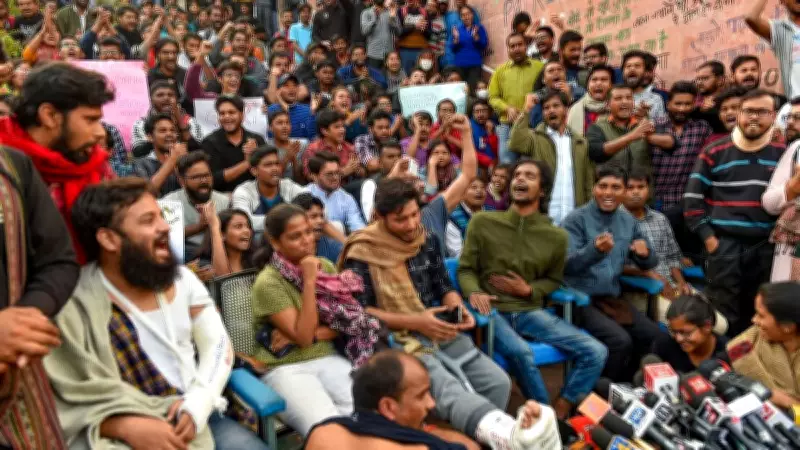
During the protest, JNU students gathered in large numbers, chanting slogans and holding placards that criticized both the UGC and the Supreme Court's ruling. The burning of the effigy, a traditional form of protest in India, served as a powerful visual metaphor for their rejection of the perceived injustices. Organizers emphasized that this action was not merely a spontaneous outburst but a calculated move to highlight the urgency of their concerns.
The students have outlined several key demands, including:
- Revision of UGC Regulations: They call for a comprehensive review and amendment of the regulations to better align with the needs of students and academic institutions.
- Greater Autonomy for Universities: There is a push for increased decision-making power at the university level, reducing reliance on centralized bodies like the UGC.
- Dialogue with Authorities: Protesters are urging government and judicial officials to engage in meaningful discussions with student representatives to address grievances.
- Protection of Academic Freedom: Ensuring that policies do not stifle innovative teaching and research practices is a top priority.
This protest reflects a growing sentiment among Indian students who feel marginalized in policy discussions that directly impact their education and future careers. By mobilizing in such a visible manner, the JNU community hopes to inspire similar movements across other universities and foster a nationwide conversation on educational reform.
Implications for Higher Education in India
The ongoing row over UGC regulations and the Supreme Court's decision has significant implications for the landscape of higher education in India. On one hand, regulatory frameworks are essential for maintaining standards and accountability across diverse institutions. On the other hand, excessive control can hinder creativity and adaptability, potentially stifling the growth of universities like JNU, which are renowned for their critical thinking and research output.

Experts suggest that finding a balance between regulation and autonomy is crucial for the future of Indian education. The protest at JNU serves as a reminder that student voices are a vital component of this dialogue. As the situation develops, it will be important to monitor how authorities respond to these demonstrations and whether any concessions or reforms are implemented to address the underlying issues.
In conclusion, the JNU students' protest against UGC regulations and the Supreme Court decision is a poignant example of the ongoing struggles within India's higher education sector. By burning an effigy and voicing their demands loudly, they have brought renewed attention to the need for inclusive and responsive educational policies. This event is likely to resonate beyond the campus, influencing debates on governance and student rights in the coming months.