Jamia Millia Islamia Seminar Charts Path for Disability Inclusion and Social Transformation
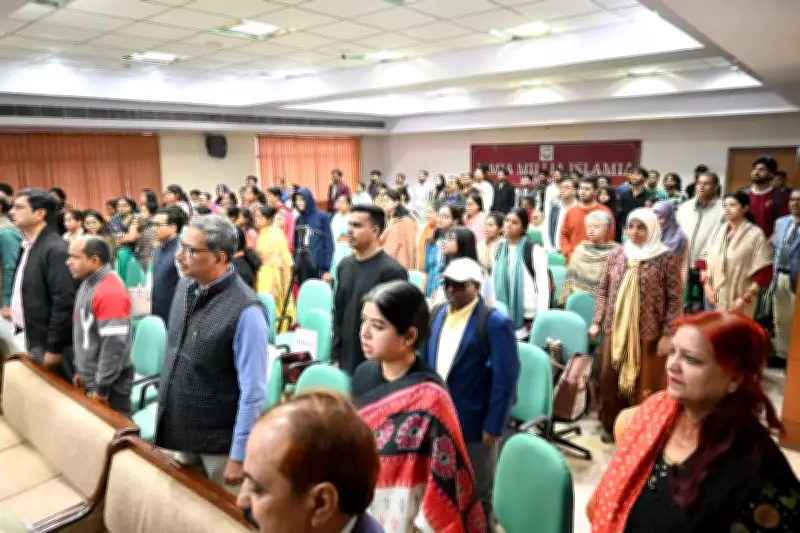
On February 18, the Centre for the Study of Social Inclusion (CSSI) at Jamia Millia Islamia (JMI), in partnership with the Office of the Dean, Academic Affairs, organized a comprehensive day-long seminar and workshop titled 'Disability and Social Inclusion in India: A Roadmap for Change'. The event drew active participation from a diverse group of academics, policymakers, practitioners, and students, fostering a dynamic dialogue on advancing inclusivity.
Leadership Emphasizes Justice and Recognition in Opening Remarks
In her welcome address, Prof. Tanuja, Officiating Director of CSSI and Dean of Academic Affairs, framed inclusion as a fundamental issue of justice and pluralism, setting a tone of urgency for the discussions. Dr. Arvind Kumar, the seminar convenor, highlighted the Centre's achievements by recognizing Faisal, an alumnus and Hellen Keller awardee, as a symbol of success in disability advocacy.
Experts Advocate for Mindset Shifts and Policy Reforms
Dr. Ashima Mangla, Joint Secretary of the University Grants Commission and Guest of Honour, called for a transformative mindset shift to treat differently-abled individuals as equal and creative citizens. Prof. Nilofer Afzal, Dean of Student Welfare at JMI, expanded on this by urging deep-seated sensitization across physical, academic, and social aspects of university life to create a more inclusive environment.

The Chief Guest, Prof. Sohrab Ahmad Khan, Dean of the School of Allied Health Sciences and Research at Jamia Hamdard, stressed the importance of strict adherence to UGC accessibility guidelines. He highlighted the need to support the high prevalence of disability among the elderly and working population through robust infrastructure and policies.
Adv. Dr. K. C. George, Secretary and Chief Executive of Deepalaya and former Joint Director at the Ministry of Women & Child Development, Government of India, emphasized the principle of 'include everyone, exclude none'. He advocated for sign language literacy and empowering decision-making processes to ensure full participation of disabled individuals in society.
Keynote Addresses Intersectionality and Research Innovations
In her keynote speech, Prof. Nilika Mehrotra from JNU addressed the intersectionality of disability with gender and caste, calling for curriculum and attitude shifts to address these complex dynamics. Dr. Rasheed, Assistant Professor in the Faculty of Law at JMI, introduced 'Blind Ethnography' as a sensory research method to overcome traditional biases, promoting more inclusive academic practices.
Prof. Md. Mahtab Alam Rizvi, Registrar of JMI, concluded the event by reaffirming the transformative power of education. He called for a rejection of discriminatory attitudes that treat differently-abled people as inferior, urging a collective effort towards equality.
Technical Sessions Explore Structural Barriers and Agency
The seminar featured two technical sessions that delved into critical aspects of disability discourse. The first session, 'Discourses on Disability in the Indian Context', chaired by Prof. Rakesh Kumar Sharma from the University of Delhi, examined structural and legal barriers facing the disabled community, highlighting systemic challenges.
The second session, 'Narratives of Disability: Agency, Representation, and Frameworks', chaired by Prof. Sarika Sharma, Professor in the Faculty of Education at Jamia Millia Islamia, focused on reimagining disability through rights-based and agency-centered perspectives. Distinguished speakers shared insights on empowering narratives.

Alumni and Advocates Highlight Self-Advocacy and Policy Leadership
Faisal Ashraf Nomani, a JMI alumnus, emphasized self-advocacy and visibility as key elements in reshaping disability narratives, inspiring attendees with personal examples. Anwesha Baruah, associated with JMI, underscored the role of policy advocacy and leadership platforms in advancing disability rights, calling for sustained efforts to drive change.
Overall, the seminar served as a pivotal platform for mapping a comprehensive roadmap towards greater social inclusion, with participants unanimously urging changes in mindsets, curricula, and attitudes to foster a more equitable society for all.