India's Nobel Prize Gap: Why Decades Pass Without Science Laureates
Almost 130 years after Alfred Nobel's death, the prestigious prize bearing his name remains one of the world's most coveted honors, celebrating extraordinary achievements across physics, chemistry, medicine, literature, peace, and economic sciences. The Nobel Prize's origins trace back to a fascinating story of legacy reconsideration. In 1888, a French newspaper mistakenly published Alfred Nobel's obituary, confusing him with his deceased brother, and reportedly labeled him the "merchant of death" who amassed wealth "by finding ways to kill more people faster than ever before." This jarring portrayal is believed to have prompted Nobel to reconsider how he wished to be remembered.
When Alfred Nobel died in 1896 in San Remo, Italy, his will directed that the bulk of his fortune establish prizes for those who had "conferred the greatest benefit to humankind." Since 1901, Nobel Prizes have been awarded annually by institutions including the Royal Swedish Academy of Sciences, the Karolinska Institute, the Swedish Academy, and the Norwegian Nobel Committee. Despite this long and celebrated association with intellectual excellence, India has witnessed relatively few Nobel laureates in recent decades, experiencing significant gaps between recognitions.
India's Nobel History and Notable Achievements
India's Nobel journey began in 1913 when Rabindranath Tagore became the first Asian Nobel laureate, honored for Literature for his "profoundly sensitive, fresh, and beautiful verse." In science, C.V. Raman secured the Physics Nobel Prize in 1930 for discovering the groundbreaking Raman Effect, which revolutionized understanding of light scattering. Other distinguished laureates include Hargobind Khorana (Physiology/Medicine, 1968), Venkatraman Ramakrishnan (Chemistry, 2009), and Kailash Satyarthi (Peace, 2014).

Additionally, several Indian-origin scholars like Amartya Sen (Economics, 1998) and V.S. Naipaul (Literature, 2001) have been honored while affiliated abroad. Collectively, these achievements underscore India's rich intellectual tradition. However, the intervals between such recognitions have frequently been lengthy, sparking debates about the country's research ecosystem, institutional support for fellowships, and pathways for groundbreaking work to gain global visibility.
India's last Nobel Prize in a science category was C.V. Raman in Physics in 1930. From 1930 to 2026, this represents 96 years without a Nobel in Physics, Chemistry, or Physiology/Medicine.
The Complex Case of Mahatma Gandhi
The Nobel Prize encompasses complex layers beyond mere achievement recognition, as illustrated by Mahatma Gandhi's story. Widely revered as the most powerful symbol of non-violence in the 20th century, Gandhi pioneered satyagraha, a philosophy of peaceful resistance, initially in South Africa and later during India's independence struggle.
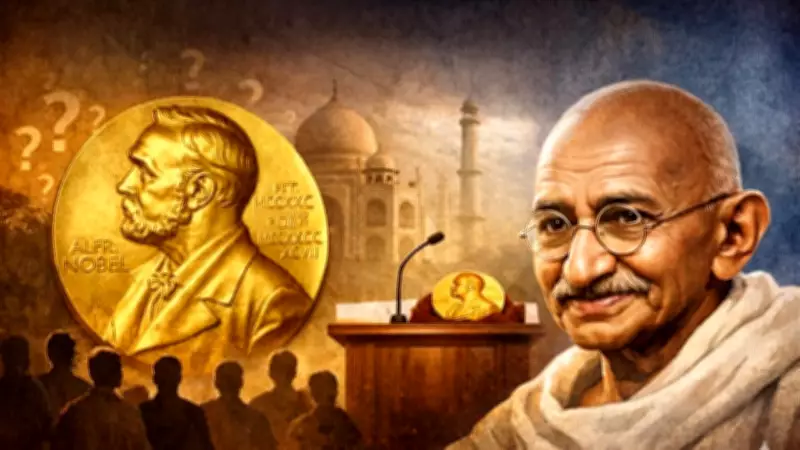
Mahatma Gandhi was nominated for the Nobel Peace Prize five times—in 1937, 1938, 1939, 1947, and shortly before his death in January 1948—yet never selected. Historians and Nobel scholars cite multiple reasons: committee members admired him personally but hesitated amid complex political conflicts, particularly communal violence surrounding India's partition. Some advisers questioned whether Gandhi's efforts were primarily nationalist rather than universally applicable, while others interpreted his 1947 statements as less than strictly pacifist.
Until 1960, the Nobel Peace Prize was awarded almost exclusively to Europeans and Americans, and Gandhi did not fit the traditional laureate profile of that era. After his assassination, the Nobel Committee seriously considered a posthumous award, permitted under then-existing rules, but ultimately decided against it, citing no "suitable living candidate." Øyvind Tønnesson, Peace Editor from 1998–2000, noted in "Mahatma Gandhi: The Missing Laureate" that while posthumous awards were possible, none had ever been granted. Gandhi left no organization, property, or will, complicating practicalities. Later, committee members publicly regretted his omission, and his legacy has often served as a moral benchmark.

Structural and Institutional Challenges
The absence of frequent Nobel wins does not necessarily indicate a lack of scientific or literary excellence, but it raises important questions about why some countries consistently produce laureates while others, despite immense intellectual potential, experience prolonged gaps.
Brain Drain: A 2024 study by A. Shaji George and Dr. T. Baskar highlights brain drain in India, with many skilled professionals leaving due to limited opportunities and better prospects abroad. India has seen a steady exodus of talented researchers and scientists seeking superior funding, modern laboratories, and international collaboration opportunities. With R&D investment at approximately 0.64% of GDP and limited academic positions, talented individuals often face difficult choices between pursuing research dreams or seeking stability overseas.
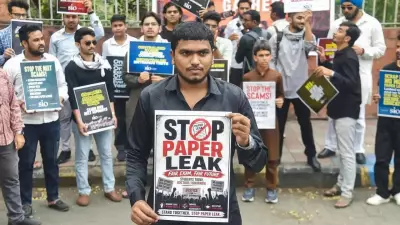
Limited Funding and R&D Expenditure: Financial constraints and infrastructure remain major bottlenecks. Tushar Goyal, a JRF researcher at Jawaharlal Nehru University, notes that without adequate financial support, many scholars rely on part-time jobs, hampering academic focus and research quality. India's R&D expenditure is significantly lower than in many research-intensive economies. The Non-NET fellowship, providing Rs 8,000 monthly for PhD students in central universities, was last revised in 2012 and has remained unchanged for 14 years despite rising living costs.
According to a 2025 parliamentary reply by Jitendra Singh, minister of state for science and technology, the private sector contributes only about 36% of India's Gross Expenditure on Research and Development (GERD), whereas in advanced economies, private industry often exceeds 70%.
Excessive Focus on Publications: Despite ranking third globally in research publications, India faces a paradox with long Nobel gaps. PhD scholars report that work culture prioritizes publications in high-impact journals over long-term innovation. Bhargav Jyoti Bora and Anshid, PhD scholars in chemistry, explain: "Here, the work is mainly focused on publication. People seek better impact factor journals to secure jobs. Otherwise, there is no placement option." This pressure can limit pursuit of novel or risky ideas, often foundational for globally recognized research.
Career Uncertainty and Societal Pressures
Research in India often feels precarious, with limited job opportunities and uncertain career paths discouraging long-term planning. PhD scholars highlight societal and parental expectations favoring stable professions. "There is pressure to choose a secure job," one scholar noted, adding that many researchers prioritize publications for placements over pursuing long-term innovative work.
Cinema has explored these institutional and social pressures. Films like Ek Doctor Ki Maut (1990), directed by Tapan Sinha, portray how groundbreaking research can meet apathy, skepticism, and bureaucratic hurdles. The film follows Dr. Dipankar Roy, who discovers a leprosy cure but faces ridicule and bureaucratic delays, highlighting how dedication can blur professional and personal lines.
Global Recognition and Translation Infrastructure
Ditsa Mandal, a research scholar in Liberal Arts at IIT Hyderabad, emphasizes that translation infrastructure crucially determines whether literary works gain global recognition. "Translation infrastructures are the most important criteria determining a work's capability to travel—publishers willing to invest, skilled translators, grants, international book fair representation, and academic promotion abroad all affect visibility," she observes. Literary works with limited translation funding may remain locally visible but not globally celebrated.
Awards like the Nobel Prize not only honor individual scholars but also signal the strength of a country's research ecosystem. Tushar Goyal notes that such recognition lends credibility to both researcher and institution, reflecting long-term support, funding, and intellectual freedom. Media coverage, translation, and international collaborations also play critical roles, as research published in accessible languages or circulated through global networks is more likely to be cited, discussed, and nominated for prestigious awards.
The Road Ahead
Who receives a Nobel Prize often remains speculative, as the Nobel Committee keeps nominations confidential for 50 years, with many factors shaping final decisions. India's Nobel journey reflects a complex interplay of history, institutional structures, and global visibility. Yet, it is not a story of failure; intellectual excellence continues through persistent inquiry, innovation, and resilience. From Rabindranath Tagore's literary contributions to C.V. Raman's light-scattering discoveries, India has produced thinkers with global impact.
Strengthening research ecosystems, maintaining robust scientific infrastructure, fostering meaningful collaboration, and valuing long-term dedication can help ensure future Nobel-worthy discoveries reflect not only individual brilliance but also India's systemic strength on the global stage.