Four Indian American Researchers Earn Prestigious 2026 Sloan Research Fellowships
In a significant recognition of scientific talent and innovation, four Indian American researchers have been named as 2026 Sloan Research Fellows. This honor is widely regarded as one of the most coveted early-career awards in the fields of science, mathematics, and engineering, celebrating scholars who demonstrate exceptional creativity and the potential to drive transformative research.
The Sloan Research Fellowship Program: A Legacy of Excellence
The Sloan Research Fellowship program, administered by the Alfred P. Sloan Foundation, annually honors outstanding early-career scholars whose work exhibits remarkable creativity and the promise to yield groundbreaking discoveries. Each winner receives a two-year fellowship worth USD 75,000, providing flexible funding to support independent research efforts. This financial backing is designed to accelerate breakthroughs in fundamental science and technology, enabling researchers to pursue high-risk, high-reward projects without the constraints of traditional grants.
Founded in 1955, the Sloan Research Fellowship stands as one of the oldest and most respected programs dedicated to nurturing young scientific talent in the United States and Canada. It targets researchers at a critical stage in their careers, identifying those poised to become leaders in their respective fields. The selection process is rigorous, involving nominations from peer scientists to ensure that only individuals with exceptional promise and impactful work are recognized.

Historically, past Sloan Fellows have gone on to achieve top honors such as Nobel Prizes, Fields Medals, and Turing Awards, underscoring the fellowship's role as a predictor of future scientific stars. This prestigious award not only provides essential resources but also helps early-career researchers build collaborations and explore bold research directions with greater freedom.
Meet the 2026 Indian American Sloan Fellows and Their Groundbreaking Work
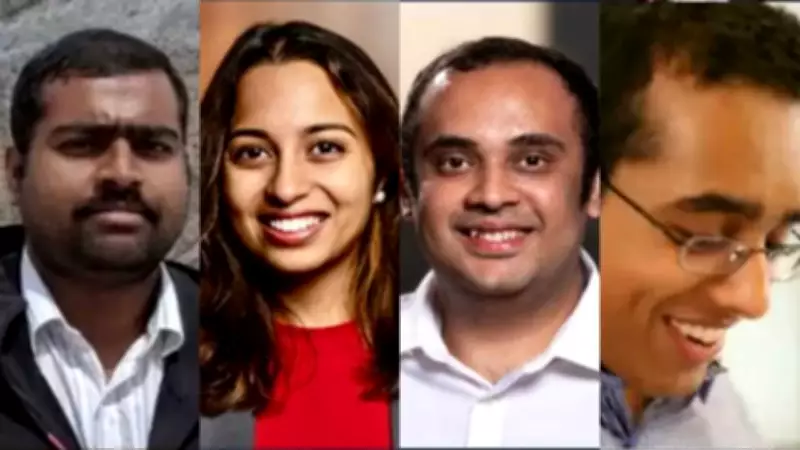
The 2026 class of Sloan Fellows includes Aayush Jain, Arun Kumar Kuchibhotla, and Aditi Raghunathan, all from Carnegie Mellon University, along with Anand Natarajan from the Massachusetts Institute of Technology. Their selection among 126 fellows highlights the growing influence of Indian-origin researchers in cutting-edge scientific domains that are shaping the future of computing, artificial intelligence, cryptography, and quantum information.

- Aayush Jain - Cryptography and Secure Computation: As an Assistant Professor of Computer Science at Carnegie Mellon University, Aayush Jain focuses on the mathematical foundations of modern cryptography. His research addresses computational hardness assumptions that underpin encryption systems, aiming to enhance long-term security, particularly in post-quantum cryptography. This work is crucial for safeguarding digital infrastructure against evolving cyber threats as societies become increasingly digitized.
- Arun Kumar Kuchibhotla - Statistics and Predictive Learning: Arun Kumar Kuchibhotla, an Associate Professor in the Department of Statistics and Data Science at Carnegie Mellon, develops advanced statistical techniques for uncertainty quantification and predictive learning. His creation of honest statistical procedures provides reliable inference in complex, high-dimensional settings, with applications in fields like machine learning, financial forecasting, and health data analysis.
- Aditi Raghunathan - Safe and Trustworthy AI: Aditi Raghunathan, an Assistant Professor of Computer Science at Carnegie Mellon, leads the AI Reliability Lab, focusing on making artificial intelligence systems more robust and dependable. Her research identifies failure points in AI and develops methods to ensure consistent and transparent behavior in real-world environments, addressing critical safety concerns in sectors such as healthcare, finance, and autonomous systems.
- Anand Natarajan - Quantum Complexity Theory: As an Associate Professor at MIT and a principal investigator at MIT's Computer Science and Artificial Intelligence Laboratory (CSAIL) and the MIT-IBM Watson AI Lab, Anand Natarajan explores quantum complexity theory. His work investigates the fundamental limits and capabilities of quantum computers, bridging theoretical computer science with emerging quantum technologies, with implications for cryptography and quantum system simulation.
The Broader Impact and Future Prospects
The recognition of these Indian American researchers as Sloan Fellows reflects not only their individual brilliance but also the expanding role of diaspora scientists in global research ecosystems. Their work spans fields central to tomorrow's technology landscape, from cryptography and AI safety to statistical theory and quantum computing. This trend aligns with recent years, where multiple Indian-origin researchers have gained prominence as Sloan Fellows, showcasing sustained Indian talent at the forefront of scientific innovation.
Such achievements emphasize how early-career support through fellowships like the Sloan can catalyze scientific progress. By offering flexible funding, these programs enable researchers to pursue ambitious projects that might otherwise be overlooked by traditional grants. The Sloan Fellowship is part of a broader ecosystem of awards that honor emerging scholars, helping to elevate their visibility, attract collaborators, and secure future funding for long-term research endeavors.
Looking ahead, the Sloan Fellowship provides these fellows with the freedom to deepen theoretical foundations, design safer AI systems, and probe quantum frontiers without restrictive constraints. Given their notable contributions to date, the coming years promise exciting advancements in technology, science, and academia, further solidifying the global influence of Indian-origin scientists and the strength of diaspora research excellence.